The short answer
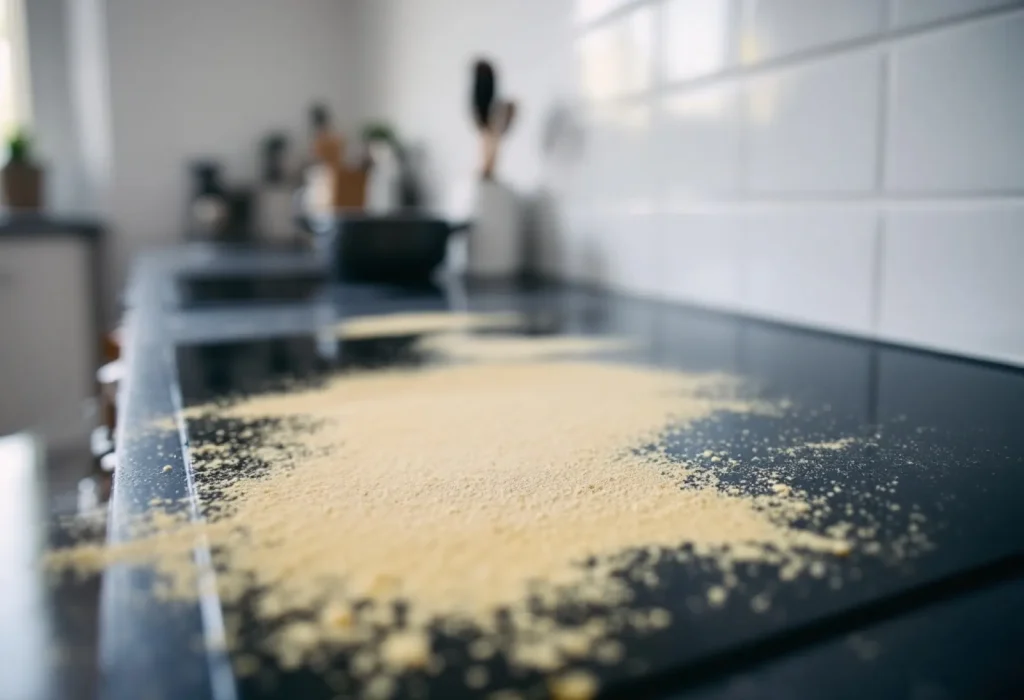
How to clean up fire extinguisher powder comes down to order: vacuum the loose dust with a HEPA filtered shop vacuum before any water touches it, then damp wipe what remains. Wash ABC (monoammonium phosphate) residue with a baking soda solution and BC (sodium bicarbonate) residue with dilute vinegar. Work the same day: NFPA 10 warns ABC powder can corrode metal above 50 percent relative humidity.
On this page
Which powder is on your floor? Read the agent off the label first
The cleanup changes with the chemistry, and the chemistry is printed on the cylinder. Kidde’s owner’s manual says the chemical name of the agent is printed on the extinguisher label, and Clemson’s sheet points to the class letters on the same label. A yellow powder is almost always ABC, according to the Amerex ABC dry chemical SDS, which describes a light yellow, odorless powder and lists a Yellow 14 pigment under 1%.
| Agent | What is in it | pH and wet behaviour | Cleanup method | Source |
|---|---|---|---|---|
| ABC multipurpose (yellow powder) | Monoammonium phosphate 55 to 77%, ammonium sulfate 15 to 45%, silicone oil under 1% | pH 4 to 5; turns pasty and mildly corrosive when wet | HEPA vacuum, no water for the bulk, then damp wipe; baking soda and hot water wash | Amerex ABC dry chemical SDS; Clemson University cleanup fact sheet; UCLA Campus Lab Safety |
| BC regular dry chemical (white powder) | Sodium bicarbonate 97%, coated with water repellent silicone | pH 8 to 9 (1% solution); Steel Fire BC about 8.3 | Vacuum or wet sweep; wash with vinegar in hot water, rinse | Buckeye standard dry chemical SDS; Strike First Steel Fire BC SDS; UCLA Campus Lab Safety |
| Purple K | Potassium bicarbonate | pH not found in a fetched SDS; read the label | Same dry chemical sequence as BC: vacuum, then wash and rinse | Fire Equipment Manufacturers' Association whitepaper |
| Class K wet chemical (kitchen hood units) | Potassium acetate more than 90% of listed ingredients, potassium citrate under 10%, in water | pH 8.5 to 9.0 as mixed; 10 to 11 in a 10% solution | Power and fuel off; hot soapy water, rinse, dry before restart; no bleach | Buckeye wet chemical SDS; OSHA extinguisher eTool; UCLA Campus Lab Safety |
| CO2 | Carbon dioxide gas | Leaves no residue | No cleanup of agent; clean the fire debris only | Clemson University cleanup fact sheet; Fire Equipment Manufacturers' Association whitepaper |
| Clean agent (Halotron I) | HCFC 123 more than 93% | No residue; fire can break it down to hydrogen fluoride (TLV 0.5 ppm) | No agent cleanup; ventilate the room first | Amerex Halotron I SDS; Clemson University cleanup fact sheet; Fire Equipment Manufacturers' Association whitepaper |
| Class D (metal fires) | Graphite, sodium chloride or copper powder | Not covered by these SDS sheets | HEPA vacuum, brush or dry cloth, bag it, damp wipe | UCLA Campus Lab Safety |
Cleanup recipes online often tell readers to use isopropyl alcohol to break up silicone without saying where the silicone comes from. The safety data sheets answer that: the Buckeye standard dry chemical SDS says the powder is coated with water repellent silicone and is not immediately soluble in water, and per the ABC sheet, methyl hydrogen polysiloxane, a silicone oil, makes up under 1%.
Why does ABC powder corrode metal once humidity passes 50 percent?
The Fire Equipment Manufacturers' Association whitepaper quotes NFPA 10 section 5.5.6.1 directly: multipurpose dry chemical exposed to temperatures above 250F (121C) or relative humidity above 50 percent can cause corrosion, and dry chemical residue will probably not be removable completely and immediately.
The Amerex ABC dry chemical SDS puts the dissolved mixture at about pH 4 to 5, mildly acidic, and tells owners not to store the agent in high humidity. Clemson’s custodial sheet describes what happens on the floor: wet ABC powder becomes pasty and mildly corrosive, and harder to pick up. That is why every credible sequence removes the dry bulk first and saves the water for the thin film left behind.
Kidde’s kitchen extinguisher manual, part number 368022A, says to clean up dry chemical powder immediately to avoid corrosion. None of the fetched sources gives a safe number of hours, so treat it as a same day job, before the next humid night.
Vacuum, wet sweep or dry sweep? Where the instructions disagree
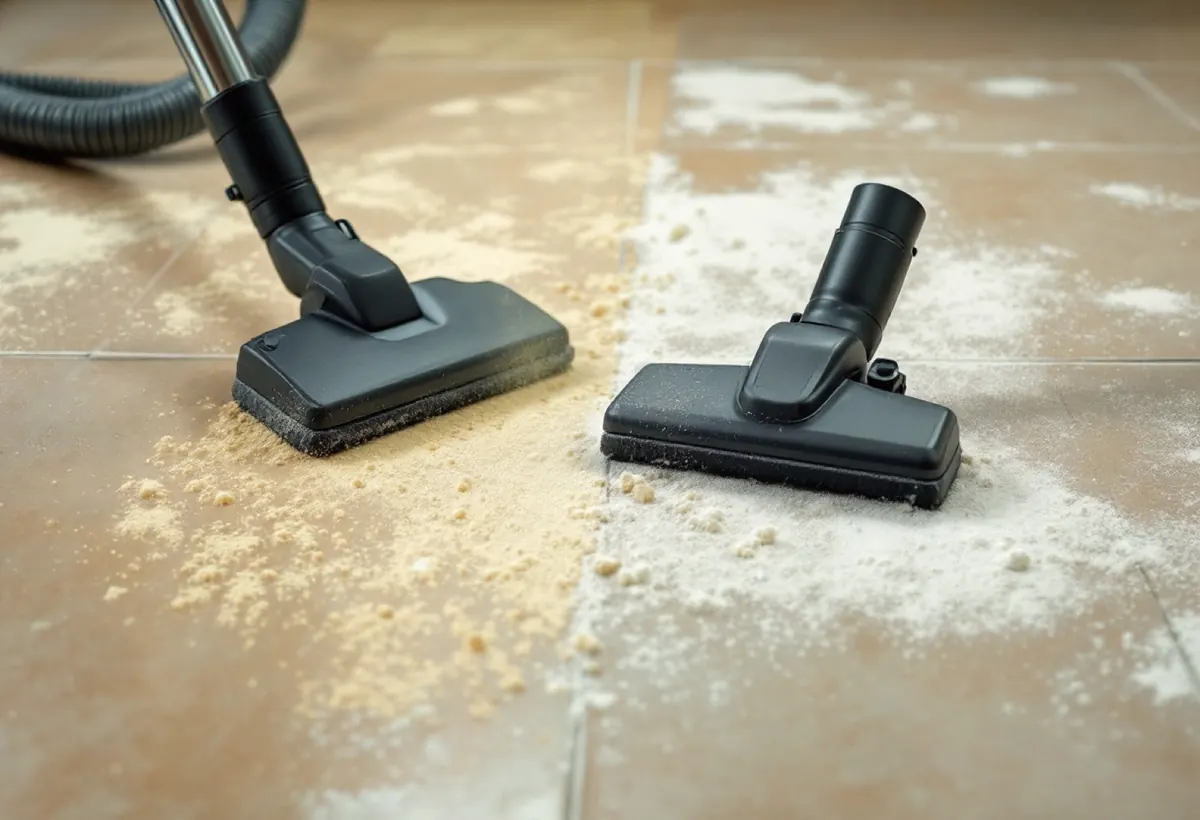
Five sources, three positions on the broom. The split matters because a dry broom lifts the finest particles back into the air, which is the exposure the Amerex ABC dry chemical SDS tells users to avoid.
| Source | Bulk removal | Warning | Final step | Link |
|---|---|---|---|---|
| Clemson University (ABC) | HEPA shop vacuum | Avoid sweeping; no water for bulk cleanup | Wet mop or damp sponge the leftover film | Clemson University cleanup fact sheet |
| Amerex ABC SDS, section 6 | Vacuum or wet sweep and shovel | Avoid dust formation | Ventilate, then wash the spill site | Amerex ABC dry chemical SDS |
| Strike First Steel Fire BC SDS | Vacuum, or wet the dust first | Do not dry sweep | Flush away traces of water | Strike First Steel Fire BC SDS |
| Kidde kitchen manual | Vacuum or sweep promptly | Do not scratch the surface | Dampened cloth or sponge | Kidde kitchen extinguisher manual |
| UCLA Campus Lab Safety | HEPA vacuum or sweep | Let washes sit about 5 minutes | Rinse with warm water | UCLA Campus Lab Safety |
Read together, the safest order for a house is the strictest one, Clemson’s, with the SDS steps added. The sequence below uses only steps that appear in at least one of the five sources.
- Block off the area so nobody tracks the powder through the house; it is step 1 on Clemson’s sheet.
- Put on goggles, nitrile gloves, long sleeves and a dust respirator, the minimum kit in section 6 of the Amerex SDS.
- Vacuum with a HEPA filter shop vacuum; Clemson specifies HEPA to prevent the dispersion of dust into the air.
- Bag the vacuum contents and any disposable filter. UCLA sends ABC, BC and Class K cleanup materials to regular trash; Clemson routes campus waste through its safety office.
- Damp wipe or wet mop the film that is left, using the wash that matches the agent (next section).
- Rinse with clean water and dry the surface, because wet ABC residue is the corrosive stage.
Baking soda for ABC, vinegar for BC: which wash goes on which residue?
The wash is plain acid and base chemistry. ABC residue sits at about pH 4 to 5 in the Amerex ABC dry chemical SDS, so UCLA Campus Lab Safety pairs it with baking soda in hot water. BC residue sits at pH 8 to 9 in the Buckeye standard dry chemical SDS, so UCLA pairs it with a weak vinegar solution. Both washes sit about 5 minutes before a warm water rinse in the UCLA instructions.
A US gallon is 128 fluid ounces, so the UCLA ratio converts to a weak solution of a few percent vinegar.
| Source | Published ratio | Same ratio, converted |
|---|---|---|
| UCLA Campus Lab Safety (BC residue) | 3 oz vinegar per gallon of hot water | 2.3 percent vinegar by volume (calculated) |
Two cautions come from the safety data sheets. The Amerex ABC dry chemical SDS lists strong alkalis and chlorine compounds as incompatible with ABC agent, so do not reach for bleach or an oven cleaner on that residue. The Buckeye standard dry chemical SDS says sodium bicarbonate reacts with strong acids to form carbon dioxide, which is one more reason to keep the vinegar dilute and the room ventilated.
For hardened ABC crust, UCLA allows isopropanol with warm water for the silicone film. Test it on a hidden spot of any painted or plastic surface first.
How do you clean extinguisher powder out of an oven, off a cooktop or a grill?
Do not run the self clean cycle. The Kidde kitchen extinguisher manual (part number 368022A) warns that under certain fire and heat conditions the dry chemical will damage oven surfaces or prove extremely difficult to remove, including on self cleaning models, and tells owners not to use the self cleaning feature to remove BC powder. Heat is also the second NFPA 10 corrosion trigger, above 250F.
Kidde’s manual gives the oven sequence: vacuum or sweep out the powder promptly, then wipe with a dampened cloth or sponge without scratching the surface. Wash racks and grill grates cold in the sink with the matching wash, and do not burn the residue off, since heat above 250F is the NFPA 10 trigger.
Class K wet chemical from a restaurant hood or a K extinguisher
The OSHA extinguisher eTool notes that the agents in many Class K extinguishers are electrically conductive and should be used only after power to the appliance is off, so keep it off through the cleanup. The Buckeye wet chemical SDS lists potassium acetate and potassium citrate in a liquid at pH 8.5 to 9.0, says to decontaminate with detergent and water, and lists bleach among incompatible oxidizers. UCLA’s sequence after a kitchen grease fire is hot soapy water, a rinse, and a full dry before restarting the equipment.
Food that sat open in the discharge cloud is a judgment call no fetched source settles. The Amerex ABC dry chemical SDS rates the agent relatively non-toxic but carries hazard statement H303, may be harmful if swallowed, and precaution P270, do not eat, drink or smoke when using this product. The cautious reading is to discard exposed open food and wash dishes and cookware before use.
Will the powder ruin a laptop, TV or electrical panel? What NFPA 10 says
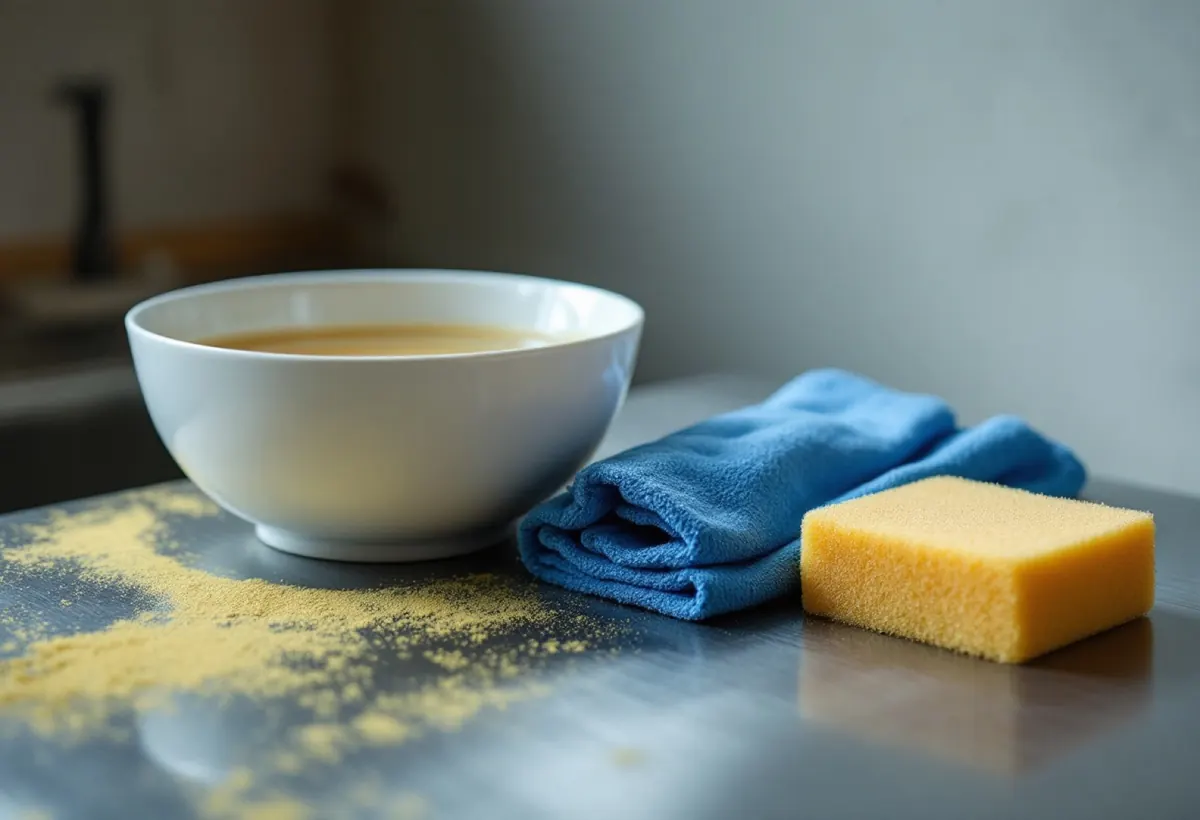
NFPA 10 treats this as settled. The Fire Equipment Manufacturers' Association whitepaper quotes section 5.5.6.1: dry chemical extinguishers shall not be installed to protect delicate electronic equipment, which the 2018 edition defines to include telecommunications, computers, servers, robotics and reproduction equipment. Annex F.5.2 recommends carbon dioxide or halogenated types with a 1-B:C rating or higher for TVs, computers and stereos at home.
For a device that was in the cloud, the order matters more than the product. Unplug it and leave it off: UCLA says to let equipment dry fully before power goes back on. Vacuum the outside and the vents with a HEPA vacuum while the powder is dry, then keep the device in a dry room, since per the NFPA 10 text humidity above 50% triggers corrosion.
Powder inside the case is a job for an electronics restoration vendor, given the NFPA 10 warning that residue will probably not come off completely. Ask whether they open the case and clean the boards, and whether they put findings in writing for the adjuster. Breaker panels go to an electrician.
Powder on a patio, driveway or in a car: keep it out of the storm drain
Outdoors, the water is the problem. The Amerex ABC dry chemical SDS carries hazard statement H411, toxic to aquatic life with long lasting effects, and section 6 says to prevent material from entering waterways. The Buckeye BC and wet chemical sheets say the same. Hosing a driveway into a curb drain does exactly that.
Vacuum or wet sweep the dry powder off hard surfaces and bag it, the method in section 6 of the Amerex SDS. Section 12 of the same sheet notes that the agent provides nutrient nitrogen and phosphorus to plant life and has harmful effects on aquatic organisms after long term exposure, so collect it dry rather than washing it toward a drain or a pond.
In a car, use the indoor order: HEPA vacuum seats, carpet and vents dry, then damp wipe hard trim with the matching wash. Powder in the engine bay sits on metal and wiring, where, per the NFPA 10 text, humidity above 50% causes corrosion, so leave it to a detailer or dealer.
Is fire extinguisher dust safe to breathe while you clean? The OSHA limit and the mask the SDS names
The Amerex ABC dry chemical SDS classifies the powder as a skin and eye irritant that may cause respiratory irritation, and rates acute toxicity as relatively non-toxic. The sheet lists its ingredients under OSHA’s particulates not otherwise regulated, with a PEL of 15 mg/m3 total dust and 5 mg/m3 respirable dust over an 8 hour shift.
UCLA Campus Lab Safety reports 3 workers who cleaned up leaked extinguisher material and developed sore throats and eye irritation, which is the case for gear. The Amerex SDS sets the minimum as safety glasses, gloves and a dust respirator, and names a NIOSH approved P100 for limited exposure. UCLA adds that in a workplace an N95 requires fit testing and medical clearance under its EH&S program.
If dust gets in the eyes, the Amerex SDS says to irrigate with water until pain free; on skin, wash with soap and water; if inhaled, move to fresh air. It says to get medical attention if irritation persists, and to call a poison center or doctor if you feel unwell.
For restoration contractors: scoping a discharge with or without a fire
A discharge with no fire is a dry chemical cleanup; a discharge on a real fire adds soot, odor and heat, and the scope moves to the fire loss. The fire damage and smoke damage repair pages cover that side, and homeowners who just put a fire out should start with what to do after a house fire.
Record the agent from the label and attach the maker’s SDS to the file; the pH difference between ABC (4 to 5) and BC (8 to 9) changes the wash. UCLA also advises getting approval from fire officials before cleaning, since they may need to preserve the scene for investigation, and replacing or refilling the extinguisher after any use.
Whether cleanup of extinguisher residue is covered depends on the policy wording and the adjuster’s reading of it; see does homeowners insurance cover fire damage for what to ask. More fire and smoke cleanup is on the fire and smoke hub.
Questions people actually ask
Is it safe to clean up fire extinguisher powder yourself?
For a household ABC or BC discharge, yes, with goggles, gloves and a dust respirator, the minimum the Amerex SDS lists. Clemson’s custodial staff clean ABC residue but do not touch Class D or Class K residue, and the Amerex sheet calls the powder relatively non-toxic but irritating to eyes, skin and the respiratory tract.
What should you do after inhaling fire extinguisher dust?
Move to fresh air, per section 4 of the Amerex ABC safety data sheet. Rinse eyes with water until they stop hurting and wash skin with soap and water. The sheet says to seek medical attention if irritation persists and to call a poison center or doctor if you feel unwell, with the product label at hand.
Does a CO2 or Halotron extinguisher leave residue?
No. The Fire Equipment Manufacturers’ Association whitepaper says carbon dioxide discharges as a gas and leaves no residue, and Clemson says CO2 and Halotron units need no cleanup. Ventilate after a Halotron I discharge on a fire: its SDS lists hydrogen fluoride as a fire decomposition product, ACGIH TLV 0.5 ppm.
Why is the powder yellow, and will it stain?
ABC agent is tinted. Per the Amerex ABC SDS, it is a light yellow powder with Yellow 14 pigment under 1% by weight. Vacuum fabric and carpet dry first, since water turns the powder into a paste per Clemson, then damp blot what remains before any machine wash.
Do you have to replace an extinguisher after a short spray?
Yes. UCLA says to replace or refill an extinguisher after use, and the Kidde kitchen manual warns not to test a unit by partly discharging it because loss of pressure will occur. A rechargeable unit goes to a service company; a disposable one is discarded per local rules.
Sources
- Clemson University cleanup fact sheet, Clemson University Office of Environmental Safety, ‘The Facts On Accidental Fire Extinguisher Residue Clean Up (Class ABC)’, updated 3 February 2022. Retrieved 11 November 2026.
- UCLA Campus Lab Safety, University of California, Los Angeles, ‘Clean up of Fire Extinguisher Materials Causes Eye and Throat Irritation’. Retrieved 11 November 2026.
- Amerex ABC dry chemical SDS, ABC Dry Chemical Fire Extinguishant, product codes CH550, F15, F18, Sava Fire Equipment edition for amerex-fire.com, revised 8 July 2020, Revision B, hosted by Uline. Retrieved 11 November 2026.
- Buckeye standard dry chemical SDS, Buckeye Fire Equipment Company, Standard Dry Chemical Fire Extinguishant, revised April 2019. Retrieved 11 November 2026.
- Strike First Steel Fire BC SDS, Strike First Corporation, Steel Fire Sodium Bicarbonate Base (BC) Dry Chemical, revised 24 January 2024. Retrieved 11 November 2026.
- Buckeye wet chemical SDS, Buckeye Fire Equipment Company, Wet Chemical Fire Extinguishant, revised June 2013, hosted by WebstaurantStore. Retrieved 11 November 2026.
- Amerex Halotron I SDS, Amerex Corporation, Halotron I, revised 15 April 2024, Revision I, hosted by Uline. Retrieved 11 November 2026.
- Kidde kitchen extinguisher manual, Kidde Safety, kitchen fire extinguisher owner’s manual, P/N 368022A, archived copy. Retrieved 11 November 2026.
- Fire Equipment Manufacturers' Association whitepaper, Fire Equipment Manufacturers’ Association, ‘Use of Dry Chemical Fire Extinguishers in Locations where Electronics and High Value Assets are Located’, September 2021, quoting NFPA 10 section 5.5.6 and Annex F.5.2. Retrieved 11 November 2026.
- OSHA extinguisher eTool, Occupational Safety and Health Administration, Portable Fire Extinguishers, Extinguisher Basics. Retrieved 11 November 2026.
- Vinegar ratio conversions are arithmetic on the published ratio, computed when this page was built. Our methodology sets out the standing rules.
Formulas differ between makers and change over time. Read the label and the current safety data sheet for the exact extinguisher that was discharged.