The short answer
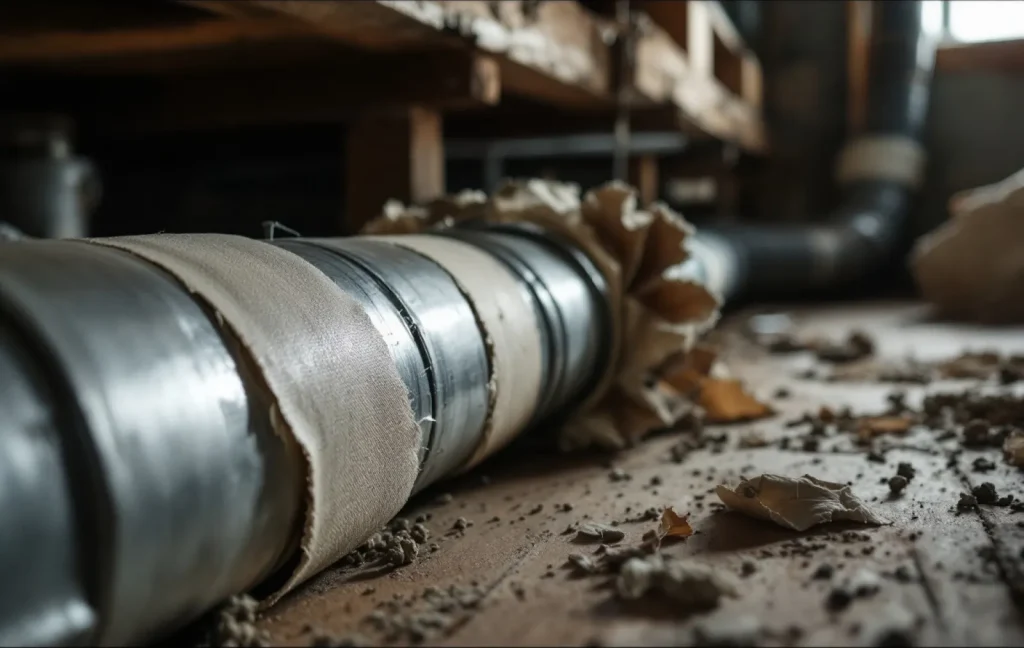
Asbestos duct tape is a fibrous cloth or paper tape wrapped around the seams of older sheet metal heating ducts. EPA’s 1985 building guidance lists asbestos textile tape at 90 percent asbestos. No federal rule ever set a ban date for tape, so a house’s age cannot clear it: only a polarized light microscopy result from an accredited lab confirms it.
Where on a forced air system did asbestos tape, wrap and cloth sit? Five points from furnace to register
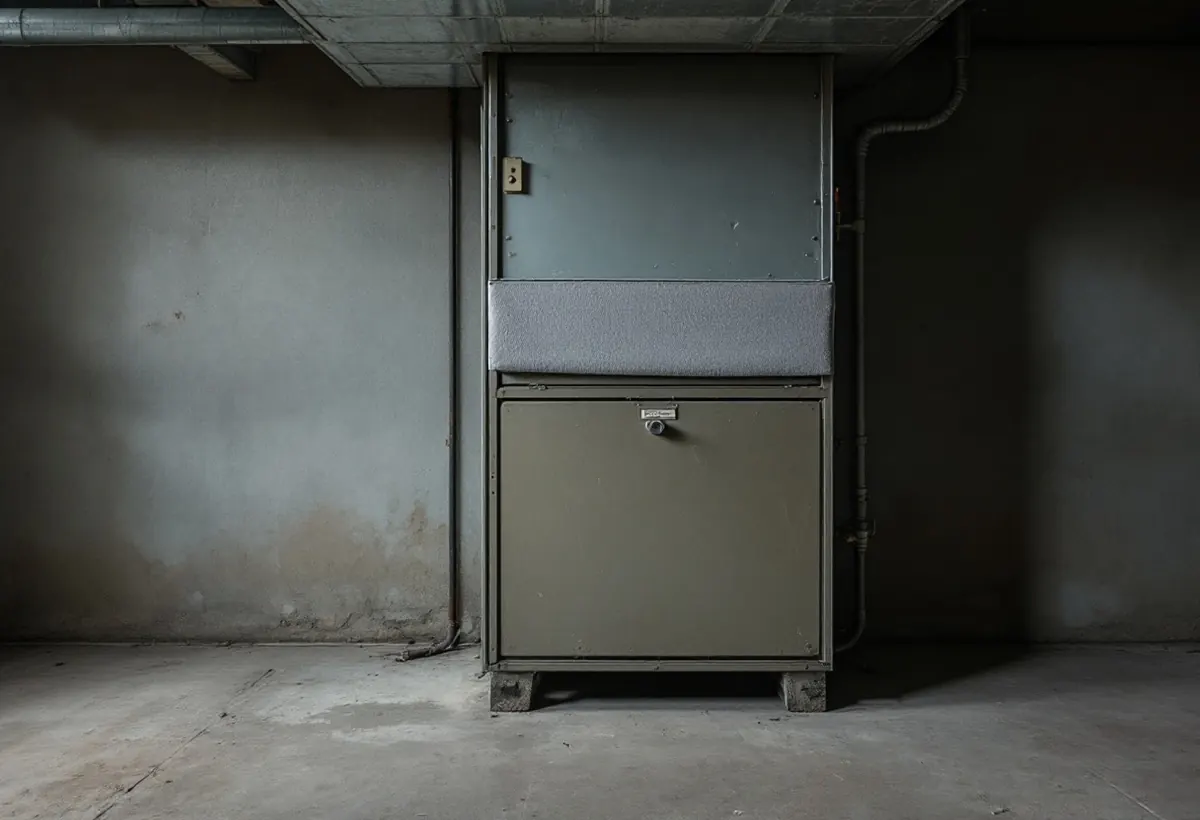
Lists from a state health department and a university safety office name the parts. The Minnesota Department of Health product list lists duct work insulation, HVAC vibration dampeners, thermal taping compounds and cement asbestos (Transite) ducts among products that may contain asbestos. The University of Texas at Austin suspect materials list adds ductwork flexible fabric connections, flexible fabric joints described as vibration isolation cloth, HVAC duct insulation and thermal paper products.
Point 1 matters most for sampling plans because it sits in the airstream next to a vibrating cabinet. EPA's 1985 Purple Book (EPA 560/5-85-024) flags exactly those two conditions: material subject to vibration from mechanical equipment, and material in an air plenum or near a forced airstream, which it says is likely to suffer surface erosion and can carry released fibers to other parts of the building.
Corrugated paper wrap with the honeycomb cut end is a separate product with its own lab results and history on our air cell asbestos page. Flat asbestos paper and felt products, including the ones that stayed banned after 1991, are mapped room by room in our guide to asbestos felt paper.
What is asbestos duct tape made of, and why can’t a photo confirm it?
Appendix A of EPA's 1985 Purple Book (EPA 560/5-85-024) groups asbestos tape with the textiles: tape and strip at 90 percent asbestos with a cotton or wool binder, in use from 1920 and still listed as current in 1985. Asbestos cloth, the woven fabric also used for flexible connectors, is listed at 100 percent. The same appendix puts duct and pipe mastics at 5 to 25 percent, which is why the adhesive under a tape band is a second suspect layer, not just glue.
Most descriptions of this tape lead with color: off-white, white or light gray, with a cloth-like texture. A color description is not a lab result, and EPA's homeowner asbestos page is blunt: generally, you cannot tell whether a material contains asbestos simply by looking at it, unless it is labeled.
Color narrows nothing anyway. A cream fabric tape can be cotton, fiberglass or chrysotile, and the 1985 table shows that the binder in asbestos tape was itself cotton or wool, so a fabric weave under a hand lens proves little. The lab section that follows names the test that does settle it.
When did they stop using asbestos tape on ductwork? No federal ban date exists
The 1989 rule would have covered it, but it did not survive. EPA's ban and phase-out page says EPA issued a final rule banning most asbestos products on 12 July 1989, and that the Fifth Circuit overturned it in 1991. What remained bans new uses plus five named products: flooring felt, rollboard, and corrugated, commercial and specialty paper. Tape and cloth are not on that list.
| Duct product | EPA 1985 dates of use | 1989 rule as amended (40 CFR 763.165, 763.169) | 2019 significant new use rule (40 CFR 721.11095) |
|---|---|---|---|
| Asbestos tape on duct seams (textile tape and strip) | 1920 to present (1985 listing) | Not named in 763.165 | Item (v): extruded sealant tape and other tape |
| Woven fabric collar (asbestos cloth) | 1910 to present (1985 listing, fire blankets) | Not named in 763.165 | Item (xvii): woven products |
| Flat insulating paper or wrap (commercial paper) | Not separately dated in Appendix A | Manufacture banned after 26 August 1996; distribution after 25 August 1997 | Excluded: stays banned under 763.165 |
| Corrugated paper wrap | 1910 or 1935 to present (1985 listing) | Manufacture banned after 26 August 1996; distribution after 25 August 1997 | Excluded: stays banned under 763.165 |
| Duct mastic or adhesive under the tape | 1920 to present (mastics, 1985 listing) | Not named in 763.165 | Item (i): adhesives, sealants, coatings |
The 2019 rule closes the door without naming a date. Under 40 CFR 721.11095, published 25 April 2019 at 84 FR 17359, anyone who wants to manufacture, import or process asbestos for extruded sealant tape and other tape, woven products, or adhesives and sealants must first notify EPA, which can then restrict or prohibit the use. Products already banned by 40 CFR 763.165 stay banned and cannot use that route.
In March 2024, per EPA's asbestos actions timeline, EPA finalized a rule prohibiting the remaining ongoing uses of chrysotile, the only form still imported. The ongoing uses EPA evaluated were diaphragms, sheet gaskets, oilfield brake blocks, aftermarket brakes, other vehicle friction products and other gaskets: no duct tape. So a cutoff year for a house comes from OSHA’s presumption, covered below, not from a ban: thermal system insulation in buildings constructed no later than 1980 is presumed asbestos until tested.
How does a lab confirm asbestos in duct tape: PLM, the 1 percent line and separate layers
The method is polarized light microscopy (PLM). NIST's NVLAP asbestos programme accredits labs for bulk PLM analysis under NIST Handbook 150-3 and lists EPA’s 1993 bulk building materials method, EPA/600/R-93/116, as the reference. NVLAP proficiency testing for PLM labs runs twice a year. Ask the lab for its NVLAP accreditation number before you ship a sample.
The regulatory line is 1 percent. 40 CFR 61.141 defines friable asbestos material and both nonfriable categories as material containing more than 1 percent asbestos by the PLM method in Appendix E to Subpart E of 40 CFR Part 763. A tape band at the 90 percent EPA reported in 1985 would clear that line many times over; a modern fiberglass tape would show none.
A taped seam is a layered system: fabric or paper, then the adhesive or mastic beneath it. EPA's 1995 multi-layer clarification restates EPA’s policy that each layer in a multi-layered system is analyzed as a separate material, with no averaging of an asbestos layer into non-asbestos layers; the only exception it names is wallboard with joint compound at joints and nail holes. Ask for tape and mastic on separate result lines.
Choosing a lab and reading its report has its own walkthrough on our asbestos testing lab page. EPA's homeowner asbestos page recommends that a trained and accredited professional take the sample, because sampling done incorrectly can release more fibers than leaving the material alone.
Is cracked tape on a supply trunk worse than intact tape in a dead return?
Yes, by EPA’s own assessment factors. EPA's 1985 Purple Book (EPA 560/5-85-024) says that if water damage, physical damage, deterioration or delamination is evident, fiber release has occurred, is occurring or is likely to occur, and that broken or crumbled material on horizontal surfaces indicates release. Its high potential category includes material that is exposed, in an air plenum or airstream, or subject to vibration.
EPA's homeowner asbestos page gives homeowners the same test in plain terms: look for tears, abrasions or water damage, and note that damaged material is particularly likely to release fibers if it is often disturbed or exposed to extreme vibration or air flow. Intact material that will not be disturbed by remodeling, EPA says, generally will not release fibers.
| What you see at the seam | EPA factor it matches | What to ask an inspector |
|---|---|---|
| Tape tight, painted or covered, on a return run | Good condition, low disturbance (Purple Book, EPA) | Is a sample needed now, or only before work? |
| Tape frayed or lifting on a supply trunk | Damage plus airstream (Purple Book high potential) | Sample tape and mastic; quote repair vs removal |
| Flakes on the duct top or floor below | Crumbled material on surfaces (Purple Book) | Wet cleanup scope; avoid dry sweeping (EPA) |
| Fabric collar torn at the furnace | Vibration plus airstream (Purple Book) | Replace the connector under containment? |
EPA's homeowner asbestos page also lists what not to do: do not dust, sweep or vacuum debris that may contain asbestos, and do not saw, sand, scrape or drill it. During repair work, it says, a contractor seals the area with plastic sheeting and turns off the heating and air conditioning system.
Encapsulate, enclose or remove: which fits tape, wrap and the furnace collar?
EPA's homeowner asbestos page names two repair types, both done by trained professionals. Sealing, or encapsulation, treats the material with a sealant that binds the fibers or coats the surface; EPA says pipe, furnace and boiler insulation can sometimes be repaired this way. Covering, or enclosure, places a wrap or jacket over it. In both, the asbestos stays in place.
EPA's 1985 Purple Book (EPA 560/5-85-024) recommends repair when damage to pipe or duct insulation is limited, calls encapsulant a temporary measure, and adds one line that fits this topic exactly: do not use duct tape for the repair, because it becomes brittle after exposure to high temperatures. Bridging versus penetrating sealants and the ASTM E1494 product standard are compared on our asbestos encapsulation page.
| Component | Encapsulate or enclose | Remove | Source basis |
|---|---|---|---|
| Intact tape bands on a trunk | Fits: limited, stable, accessible | Only before remodeling that will disturb it | EPA homeowner page; Purple Book 5.2 |
| Frayed tape on a supply run | Short term only; encapsulant is temporary | Usually the durable fix | Purple Book 5.2 |
| Paper or blanket duct wrap | Jacket or wrap over sound sections | Class I work for hired crews | EPA homeowner page; 29 CFR 1926.1101(b) |
| Fabric collar at the furnace | Weak fit: flexes under vibration | Replacement under containment | Purple Book vibration factor |
Replacing or cleaning the ductwork itself after a result is a heating trade decision covered by our sister site thehvacbrief.com. EPA’s homeowner page says that if material is more than slightly damaged, or a change to the home might disturb it, repair or removal by a trained and accredited asbestos professional is needed first.
For contractors: is removing asbestos duct wrap OSHA Class I work, and is seam tape?
29 CFR 1926.1101(b) defines thermal system insulation (TSI) as ACM applied to pipes, fittings, boilers, breeching, tanks, ducts or other structural components to prevent heat loss or gain, and Class I work as removal of TSI and surfacing ACM and PACM. Duct wrap applied as insulation fits that text word for word, and PACM covers TSI in buildings constructed no later than 1980 unless rebutted under paragraph (k)(5).
Seam tape is the judgment call. Class II covers removal of ACM that is not TSI or surfacing, and Class III covers repair and maintenance where ACM, including TSI, is likely to be disturbed. A band whose job was sealing an air joint rather than stopping heat loss can be argued either way, so the classification and its reason belong in the written bid.
The exposure limits in 29 CFR 1926.1101(c) apply to every class: 0.1 fiber per cubic centimeter as an 8 hour time-weighted average and 1.0 f/cc over 30 minutes. Class III work must use wet methods and, where feasible, local exhaust ventilation under paragraph (g)(9). Which other obligations switch on once a material is classed as TSI is set out in our thermal system insulation guide.
Can a homeowner remove asbestos duct tape? Puget Sound and Colorado draw different lines
Federal NESHAP rules mostly step aside for houses. 40 CFR 61.141 excludes residential buildings having four or fewer dwelling units from the definition of a facility, and the notification thresholds in 40 CFR 61.145 start at 260 linear feet on pipes, 160 square feet on other components or 35 cubic feet. State and local agencies set the rules a homeowner actually meets.
In the Puget Sound Clean Air Agency area of Washington, an owner who lives in a single-family house may survey and remove asbestos personally. Per the agency, removing friable material requires a Single-Family Residence Notification and a $25 fee, unless the job is under 10 linear feet of pipe or 48 square feet of surface per calendar year. Renters, landlords and condo owners must hire a certified abatement contractor.
In Colorado, the Colorado CDPHE asbestos guidance sets single-family trigger levels at 50 linear feet on pipes, 32 square feet on other surfaces or a 55-gallon drum. Above those, according to CDPHE, the work needs a Colorado-certified inspector first and friable removal must be done by a certified General Abatement Contractor; CDPHE lists a $60 single-family notice and $180 or $300 permits. All asbestos waste goes to an approved site regardless of quantity.
Tape is measured as surface area, so the question is how many taped joints add up to a threshold. On an 8 by 16 inch trunk with 4 inch tape, each joint is about 1.33 square feet, so roughly 24 joints reach Colorado’s 32 square feet, per the calculation below.
| Duct (example size) | Perimeter | Tape 3 in wide | Tape 4 in wide |
|---|---|---|---|
| Rectangular trunk, 8 by 16 in | 48.0 in | 1.00 sq ft at 3 in; 32 joints to 32 sq ft; 48 to 48 sq ft | 1.33 sq ft at 4 in; 24 joints to 32 sq ft; 36 to 48 sq ft |
| Rectangular trunk, 8 by 24 in | 64.0 in | 1.33 sq ft at 3 in; 24 joints to 32 sq ft; 36 to 48 sq ft | 1.78 sq ft at 4 in; 18 joints to 32 sq ft; 27 to 48 sq ft |
| Round branch, 6 in diameter | 18.8 in | 0.39 sq ft at 3 in; 81 joints to 32 sq ft; 122 to 48 sq ft | 0.52 sq ft at 4 in; 61 joints to 32 sq ft; 92 to 48 sq ft |
Bagging, labeling and landfill rules for whatever comes off the ducts are on our asbestos disposal page, including landfill rules in nine states. If you are in neither area, ask your state asbestos program three things: whether an owner-occupant exemption exists, what quantity triggers notice, and which landfill accepts the waste.
Abatement prices by scope tier and material, and how to compare three quotes, are on our asbestos removal cost page.
Out of scope: health effects. This page reads regulations, EPA guidance and agency product lists only; for health information see EPA's Learn About Asbestos page and CDC’s Agency for Toxic Substances and Disease Registry.
Questions people actually ask
Can I paint over asbestos duct tape to seal it?
EPA’s homeowner page describes sealing, or encapsulation, as a repair that coats the material so fibers are not released, and says it should be done only by a professional trained to handle asbestos safely. EPA’s 1985 Purple Book calls encapsulant a temporary measure for insulation. Ask the contractor which encapsulant they use and whether the duct runs hot enough to affect it.
Is asbestos duct tape friable?
Under 40 CFR 61.141, material is friable if it contains more than 1 percent asbestos and, when dry, can be crumbled, pulverized or reduced to powder by hand pressure. Old tape that has dried, cracked or flakes at a touch may meet that test; intact tape may not. The asbestos content comes from the PLM result, and the friability call comes from the inspector’s hand test on site.
Should I run the furnace if the tape on my ducts is damaged?
EPA’s 1985 guidance says material in an air plenum or near a forced airstream is likely to erode and that released fibers may be carried to other parts of the building. EPA’s homeowner page says contractors turn off heating and cooling during asbestos repair. Ask an inspector whether to keep the system off, or to seal the damaged run, until a sample result comes back.
What do asbestos duct boots look like?
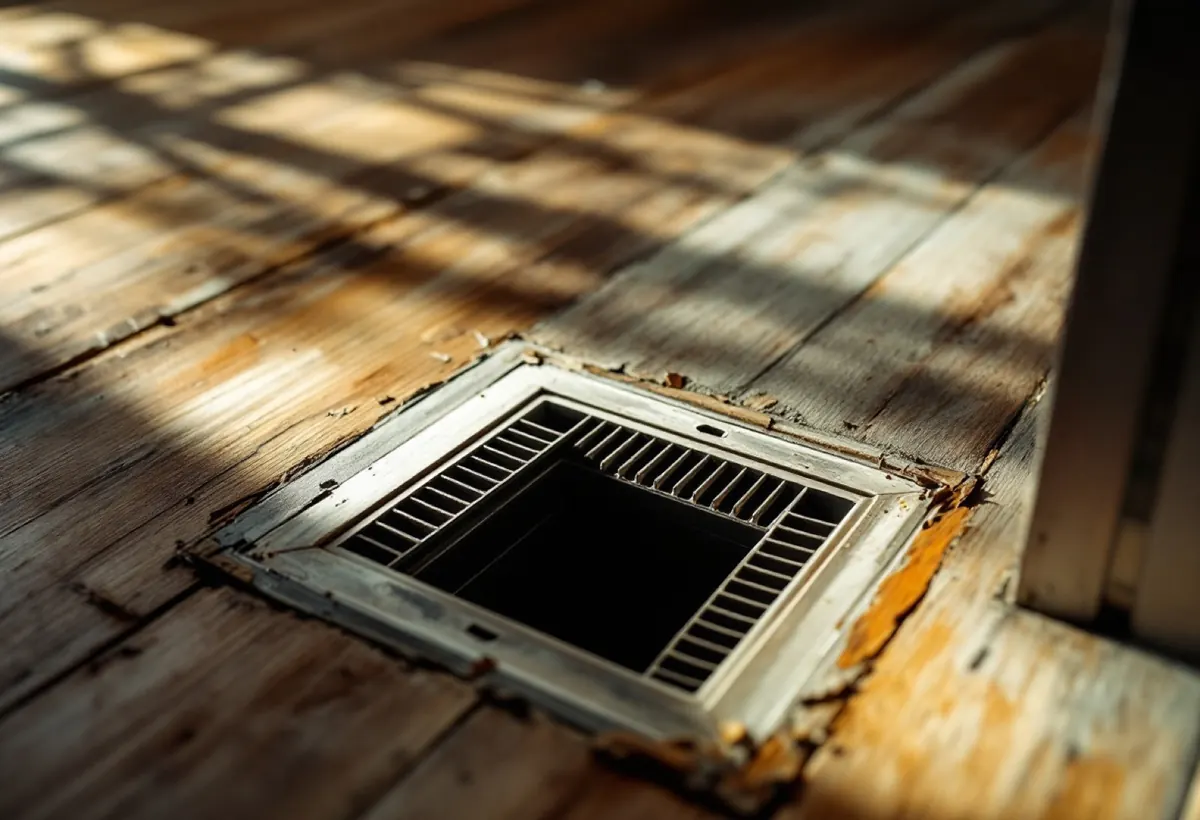
No federal, state or university list read for this page names a duct boot as a product. What a sampler checks at a boot is the material on it: tape or mastic at the boot to branch joint, any paper wrap, or, under a slab, a cement asbestos duct, which the Minnesota Department of Health lists among Transite products. Each of those is a separate sample.
How much does asbestos tape removal cost?
No published per-joint price for duct tape removal was found for this page. Two published fees, according to the agencies, frame the paperwork: Puget Sound Clean Air Agency charges $25 for a single-family notification, and Colorado CDPHE lists a $60 single-family notice and $180 or $300 permits above its trigger levels. Ask each bidder to price containment, disposal and clearance as separate lines.
Sources
- EPA's 1985 Purple Book (EPA 560/5-85-024), Guidance for Controlling Asbestos-Containing Materials in Buildings, U.S. EPA, June 1985, Appendix A, Chapter 4 and Section 5.2. Retrieved 11 November 2026.
- EPA's homeowner asbestos page, Protect Your Family from Exposures to Asbestos, U.S. EPA. Retrieved 11 November 2026.
- EPA's Learn About Asbestos page, Learn About Asbestos, U.S. EPA. Retrieved 11 November 2026.
- EPA's ban and phase-out page, Asbestos Ban and Phase-Out Federal Register Notices, U.S. EPA, citing 54 FR 29460. Retrieved 11 November 2026.
- EPA's asbestos actions timeline, EPA Actions to Protect the Public from Exposure to Asbestos, U.S. EPA. Retrieved 11 November 2026.
- 40 CFR 763.163, 40 CFR 763.165 and 40 CFR 763.169, TSCA asbestos product definitions and prohibitions, via Cornell LII. Retrieved 11 November 2026.
- 40 CFR 721.11095, Asbestos significant new use rule, 84 FR 17359, 25 April 2019, via Cornell LII. Retrieved 11 November 2026.
- 29 CFR 1926.1101, OSHA asbestos standard for construction, paragraphs (b), (c) and (g)(9), via Cornell LII. Retrieved 11 November 2026.
- 40 CFR 61.141 and 40 CFR 61.145, asbestos NESHAP definitions and demolition and renovation standard, via Cornell LII. Retrieved 11 November 2026.
- EPA's 1995 multi-layer clarification, 60 FR 65243, 19 December 1995, via govinfo.gov. Retrieved 11 November 2026.
- NIST's NVLAP asbestos programme, Asbestos Fiber Analysis LAP, National Institute of Standards and Technology. Retrieved 11 November 2026.
- Minnesota Department of Health product list, Common Asbestos-Containing Products, Minnesota Department of Health. Retrieved 11 November 2026.
- University of Texas at Austin suspect materials list, Operations and Maintenance Program, Appendix A, University of Texas at Austin Environmental Health and Safety. Retrieved 11 November 2026.
- Puget Sound Clean Air Agency, Homeowner Renovation, Puget Sound Clean Air Agency. Retrieved 11 November 2026.
- Colorado CDPHE asbestos guidance, Asbestos support and guidance, Colorado Department of Public Health and Environment. Retrieved 11 November 2026.
- The system diagram, status table and joint calculation are built from the sources above. Our methodology sets out the standing rules.
This page reads regulations, EPA guidance and agency lists; it reports no sampling or testing of its own and is not legal advice. Ask your state or local asbestos program whether its rules are stricter than the federal rules described here.
More rules pages sit on our standards hub.