The short answer
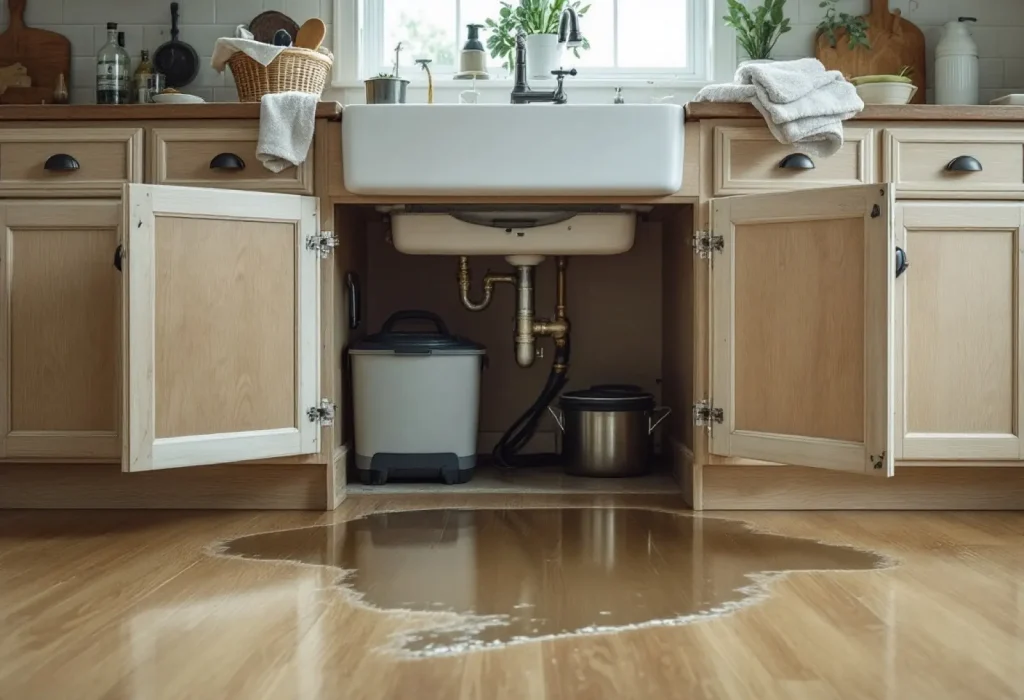
Should I file a home insurance claim for water damage? Compare the repair estimate with your deductible plus three to five years of surcharge: per the NAIC average HO-3 premium of $1,569 and a 16% one-claim increase reported by MoneyGeek, that line sits near $1,749 to $3,749. The policy duty to give prompt notice and protect the property applies either way.
What repair estimate makes a water claim pay more than it costs?
Under Section I Condition B of the NJM HO-3 the insurer pays only the loss above the deductible, and a paid claim can cost money in later premiums. The break-even repair estimate is the deductible plus the yearly premium increase multiplied by the years it applies. Below that line the claim is worth less than it costs on the arithmetic alone; above it the claim returns more.
Two inputs anchor the worksheet. According to the Insurance Information Institute, the National Association of Insurance Commissioners average HO-3 premium was $1,569 in 2022, the latest year shown. MoneyGeek reports, from Quadrant Information Services filed-rate data on a $250,000 dwelling with a $1,000 deductible, that one claim in five years lifts a $3,467 premium to $4,019, about 16%, and two claims to $4,483, about 29%. That is an all-claims publisher figure, not a filed water surcharge.
The year counts come from statute. Tex. Ins. Code 551.107 lets a Texas insurer surcharge at renewal after 2 or more claims in the preceding 3 policy years, and ORS 746.686 stops an Oregon insurer using a claim more than 5 years old to set rates. Hence the 3 and 5 year columns below.
| Scenario (data from NAIC and MoneyGeek) | Annual premium | Increase per year | Increase over period | Break-even estimate |
|---|---|---|---|---|
| NAIC 2022 average HO-3, $1,000 deductible, 3 years | $1,569 | $250 | $749 | $1,749 |
| NAIC 2022 average HO-3, $1,000 deductible, 5 years | $1,569 | $250 | $1,249 | $2,249 |
| NAIC 2022 average HO-3, $2,500 deductible, 3 years | $1,569 | $250 | $749 | $3,249 |
| NAIC 2022 average HO-3, $2,500 deductible, 5 years | $1,569 | $250 | $1,249 | $3,749 |
| MoneyGeek claim-free base, $1,000 deductible, 3 years | $3,467 | $552 | $1,656 | $2,656 |
| MoneyGeek claim-free base, $1,000 deductible, 5 years | $3,467 | $552 | $2,760 | $3,760 |
| MoneyGeek claim-free base, $2,500 deductible, 3 years | $3,467 | $552 | $1,656 | $4,156 |
| MoneyGeek claim-free base, $2,500 deductible, 5 years | $3,467 | $552 | $2,760 | $5,260 |
Your own worksheet, line by line
- Line A, repair estimate: a written, line-by-line bid, the format the California claims guide asks for.
- Line B, deductible: the dollar figure on the declarations page; under Section I Condition B of the NJM HO-3 the insurer pays only what exceeds it.
- Line C, annual premium: from the current declarations page.
- Line D, expected increase per year: ask the agent for the filed surcharge or tier change for one paid water claim, in dollars.
- Line E, claim-free or loss-free discount lost: the credit shown on the declarations page, in dollars per year, if a claim removes it.
- Line F, years: ask how many renewals the claim is used for; 3 and 5 are the Texas and Oregon statutory windows.
- Break-even = B + (D + E) x F. Compare it with A.
Does phoning your insurer to ask about a leak count as a claim?
In several states, not by law. The Washington Office of the Insurance Commissioner says an insurer submits a CLUE record when it starts, denies or pays out a claim, and that LexisNexis advises insurers not to report a call that only asks about coverage or the deductible. Three states put the line in statute.
| State | Rule | What is protected | The limit |
|---|---|---|---|
| Texas | Tex. Ins. Code 551.113 | A customer inquiry about terms, coverage, the claim process or whether a loss is covered may not be a basis to decline, nonrenew or cancel | Unless it concerns specific damage that results in an investigation or claim |
| Arizona | A.R.S. 20-1652(F) | An inquiry into whether a policy covers a loss is not a claim; it may not be reported to a consumer reporting agency | A claim that results in an investigation is claim activity |
| Oregon | ORS 746.686(3) | An inquiry, including about an actual loss, may not be used to issue, renew or rate a policy | The insurer may ask whether you are making a claim and rely on the answer |
| Washington | Washington Office of the Insurance Commissioner | Regulator page: LexisNexis advises insurers not to report a call that only asks about coverage or the deductible | Guidance, not a statute |
The wording matters. Under ORS 746.686(3) an Oregon insurer may verify whether you are making a claim and rely on your answer, and Tex. Ins. Code 551.113 loses its protection once the question concerns specific damage that results in an investigation or claim. Opening with “I am asking a coverage question and am not filing a claim” puts the distinction on the record.
Which HO-3 duties apply the day you find water, claim or not?
Section I Condition C of the NJM New Jersey HO-3 (03/18), “Duties After Loss”, lists 8 duties and says the insurer owes no coverage if failing them is prejudicial to it. Duty 1 is “Give prompt notice to us”. Duty 4 is to protect the property from further damage, make reasonable and necessary repairs, and keep an accurate record of repair expenses. Duty 8 is a signed, sworn proof of loss within 60 days after the insurer asks.
The California Department of Insurance Residential Property Claims Guide, Form 405 revised 28 February 2025, adds that a policy may not cover ensuing damage if reasonable steps to secure the property were not taken, that reasonable protection costs are reimbursed when receipts are kept, and that extensive permanent repairs should wait until the adjuster has assessed the damage.
Waiting has its own cost in the same NJM HO-3. It excludes constant or repeated seepage or leakage of water over a period of weeks, months or years unless the leak was unknown to every insured and hidden inside walls, ceilings or floors. A leak known for a month and not reported can drift from a covered loss toward that exclusion. Mold can start within days; timing is set out on our mold growth after water damage page.
Hard deadlines also exist. Fla. Stat. 627.70132(2) bars a Florida property claim unless notice was given within 1 year of the date of loss, and a supplemental claim after 18 months. The NJM form allows a lawsuit only within 2 years of the loss. This is the tension in the decision: prompt notice protects coverage, while an opened claim can create a CLUE record.
How big is the average water claim next to that line?
Far bigger. According to ISO data republished by the Insurance Information Institute, water damage and freezing ran at 1.50 claims per 100 insured homes a year from 2019 to 2023, with an average paid claim of $15,400. That average is about 2.9 times the highest break-even value in the worksheet, so the self-pay question mostly concerns small, contained leaks.
The average paid claim includes only losses that were paid, so it says nothing about the share of small leaks that were never claimed. Typical restoration line items are priced on our water damage restoration cost page, which helps fill Line A before a contractor visits.
How long can one paid water claim follow the policy and the house?
The record and the rate effect run on different clocks. The Washington Office of the Insurance Commissioner says a CLUE report generally holds up to 7 years of personal property claims, including the amount paid and the property address, so a claim can surface when the house is sold. How long it changes your premium is set by filed rules and state law.
| State | Rule | What it allows | What it excludes |
|---|---|---|---|
| Texas | Tex. Ins. Code 551.107 | Surcharge allowed after 2+ claims in 3 policy years; nonrenewal after 3+ claims, only after a written warning at 2 | Claims from natural causes and claims filed but not paid do not count |
| Texas | Tex. Ins. Code 544.353 | Insurers must file water claim underwriting rules | A prior appliance claim may not be used if remediated and inspected and certified, unless 3+ paid appliance claims in 3 years |
| Oregon | ORS 746.686 | Claims over 5 years old may not be used to rate or renew | The first claim in 5 years may not be the reason to nonrenew or decline |
| All states | 15 U.S.C. 1681j | CLUE keeps up to 7 years of property claims, per the Washington regulator | One free disclosure from each nationwide specialty agency every 12 months |
15 U.S.C. 1681j entitles you to a free disclosure every 12 months from each nationwide specialty consumer reporting agency. The LexisNexis consumer disclosure portal takes requests online, by mail or at 1-866-897-8126, and the Washington regulator says LexisNexis answers disputes within 30 days and lets you add a statement to an item. Pulling it before deciding shows whether an earlier claim is still in the window.
What should you ask the agent, the state department and an adviser before deciding?
No page can tell you what your policy pays. Three people can fill Lines B to F of the worksheet, and each question below maps to a line or to a rule from Texas, Arizona, Oregon or Florida cited above.
Your agent or the insurer’s service line
- “I am asking a coverage question and not filing a claim. Will this call be recorded as a claim or reported to CLUE?”
- “What is my deductible for water damage, and is there a separate water or all-perils deductible?”
- “In dollars, what would one paid water claim add at renewal, for how many renewals, and would I lose a claim-free discount?”
- “Does a claim that closes with no payment count against me?” Texas excludes it from the 551.107 count; ask what your state allows.
Your state insurance department
- Whether the state has an inquiry rule like Texas, Arizona and Oregon, and a claim-count or lookback rule like Texas 551.107.
- The notice deadline for property claims, such as the Florida 1 year bar.
- California: Consumer Hotline 1-800-927-4357 per the California claims guide. Washington: 800-562-6900 per the Washington Office of the Insurance Commissioner.
A licensed public adjuster or attorney, for larger losses
Ask how the fee is calculated and capped before signing; the public adjuster fees page sets out state caps. The California claims guide also advises getting an attorney’s fee structure in writing before hiring.
If you file, what happens in the first 60 days?
The California Department of Insurance Residential Property Claims Guide sets the order. Report the damage to the agent or company to start the claim, keep a log of every call and copies of all correspondence, list damaged items with brand and model numbers, and do not throw anything out until the adjuster says so. Ask about the deductible, the timeline of the water damage claim and whether you need repair estimates.
The adjuster may scope the loss on a first visit and return to finish the estimate. Under the NJM HO-3, a sworn proof of loss is due within 60 days of the insurer’s request; our proof of loss page covers that form, and the insurance adjuster after water damage page covers the inspection and the claim handling clocks.
Whether the loss is a covered peril at all is a separate question from whether to claim, and it is answered on our does homeowners insurance cover water damage page. The California claims guide notes that homeowners policies do not cover flood, which needs a separate policy. More claim topics sit in the insurance hub.
Questions people actually ask
Will my homeowners insurance go up if I file a claim for water damage?
It can. MoneyGeek reports, from Quadrant filed-rate data, that one claim of any type in five years raised a $3,467 premium to $4,019. Texas 551.107 allows a surcharge only after two or more claims in three policy years, but losing a discount or changing tier is not a surcharge under that law. Ask the agent for the dollar figure.
What not to say when filing a homeowners insurance claim?
Avoid guessing at a cause or a start date you do not know: the NJM HO-3 excludes seepage over weeks or months, so describe what you saw and when you found it. If you are only asking, say so, because Oregon ORS 746.686 lets the insurer rely on your answer about whether it is a claim.
When should you not file a home insurance claim?
There is no rule, only arithmetic and state law. If the written estimate is below the deductible plus the dollar increase times the years it applies, the claim costs more than it returns. Per the 2022 NAIC average HO-3 premium of $1,569, that line sits at about $1,749 to $3,749 for $1,000 and $2,500 deductibles.
Does a denied water claim still show on my CLUE report?
It can. The Washington Office of the Insurance Commissioner says an insurer submits a CLUE record when it starts, denies or pays out a claim. Texas 551.107 does not count a claim filed but not paid toward its surcharge and nonrenewal limits. A free LexisNexis disclosure every 12 months shows what was reported.
How long do I have to report water damage to my insurer?
Most forms say prompt notice rather than a day count; the NJM HO-3 lists it as Duty 1 after a loss. Florida 627.70132 sets an outer limit: a property claim is barred unless notice was given within 1 year of the date of loss, and a supplemental claim within 18 months.
Will a past water claim affect the buyer when I sell?
The CLUE record is tied to the property address as well as the person, per the Washington regulator, and only the owner can order it. Oregon 746.686(1)(c) bars using a prior owner’s claim against a buyer who shows the damage was restored and its cause repaired.
Sources
- California Department of Insurance Residential Property Claims Guide, Form 405 revised 28 February 2025, California Department of Insurance. Retrieved 9 November 2026.
- NJM New Jersey HO-3 (03/18), New Jersey Manufacturers Insurance Company policy jacket: Section I Conditions B, C and H, Section I water exclusions. Retrieved 9 November 2026.
- Washington Office of the Insurance Commissioner, CLUE (Comprehensive Loss Underwriting Exchange) consumer page. Retrieved 9 November 2026.
- 15 U.S.C. 1681j, Fair Credit Reporting Act free annual disclosure, via Cornell Legal Information Institute. Retrieved 9 November 2026.
- LexisNexis consumer disclosure portal, LexisNexis Risk Solutions. Retrieved 9 November 2026.
- Tex. Ins. Code 551.113, Tex. Ins. Code 551.107 and Tex. Ins. Code 544.353, Texas Insurance Code, via Texas Public Law. Retrieved 9 November 2026.
- A.R.S. 20-1652(F), Arizona Revised Statutes, Arizona State Legislature. Retrieved 9 November 2026.
- ORS 746.686, Oregon Revised Statutes, via Oregon Public Law. Retrieved 9 November 2026.
- Fla. Stat. 627.70132, Florida Statutes 2025, Florida Senate. Retrieved 9 November 2026.
- Insurance Information Institute, Facts and Statistics: Homeowners and renters insurance, with NAIC average premiums and ISO claim frequency and severity. Retrieved 9 November 2026.
- MoneyGeek, home insurance costs after a claim, updated 1 November 2026, using Quadrant Information Services data. Publisher analysis, not a filed rate. Retrieved 9 November 2026.
- Break-even values are arithmetic on the inputs above, computed when this page was built. No surcharge, premium or claim figure was estimated or invented. Our methodology sets out the standing rules.
This page describes HO-3 policy language, statutes and regulator guidance. It is not legal or insurance advice and does not say what any policy pays. Your declarations page and policy conditions govern; ask your insurer, your state insurance department or a licensed professional about your loss.