The short answer
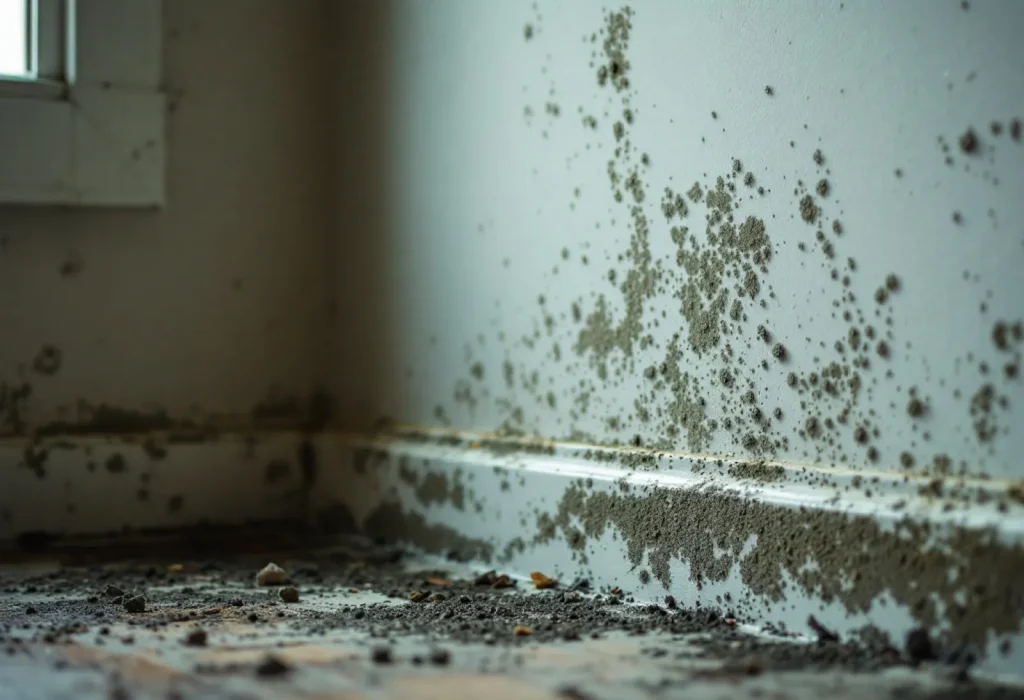
How to get a free mold inspection comes down to who you are. Renters file a housing code complaint with the city or county, housing voucher holders call their housing authority, and homeowners are usually left with a remediation company’s free estimate, which is a sales visit. Illinois, Washington DC and Onondaga County, New York all say they do not inspect homes for mold.
On this page
Which free route fits a renter, a voucher holder or a homeowner?
Homeowners have the thinnest list. No page read for this article offers an owner occupant a free government mold inspection, and the 9 rows in the table below mostly serve tenants. An owner’s real choices are an insurance claim after a sudden water loss, a means-tested program, or a company’s free estimate read with the conflict table further down in hand.
Who will come out for free, and who says no in writing?
The advice repeated across most search results, that the health department will do it, fails on contact with the departments themselves. This table quotes nine agencies and programs from their own pages, retrieved 2 November 2026. None of the government pages promises lab samples, and only the housing voucher rule states in writing that the household pays nothing.
| Agency or program | Who can use it | What it will do | What it will not do |
|---|---|---|---|
| Los Angeles County Public Health | Renters in the county; call 888-700-9995 or report online | “An inspector may be able to visit your home and determine if there is a mold problem that the property owner is required to solve.” | The page says may, so a visit is not promised. Its report route is headed for apartments and other rental units. |
| New York City HPD, through 311 | Apartment and rental building tenants; try the landlord first | Sends a uniformed Code Enforcement inspector if the condition was not corrected or HPD cannot reach you. The owner is not told the date. | Co-op and condo residents must go to the owner or board first. NYCHA tenants use a separate form. |
| Local housing authority | Families on a HUD housing choice voucher | Must inspect within 15 days of a non-life-threatening report and may not charge the family for the inspection. | Covers assisted units only. It tests the unit against housing standards, which is not a mold assessment. |
| New York Healthy Neighborhoods Program | Target neighborhoods in 17 funded counties and New York City | In-home assessment that includes indoor air quality. | Services vary by county and the state page lists no fee or eligibility rule, so ask the county office. |
| Weatherization Assistance Program agencies | Income-eligible households accepted into the program | Visual assessment. Nebraska’s form records mold as visibly present or not by room. | Nebraska: “This is not a mold inspection.” New Hampshire: “Mold testing is not an allowable cost.” |
| Onondaga County Health Department, New York | Not offered | Tells renters with a leaking roof or pipes to call local codes enforcement. | “Does not perform mold inspections or test for mold.” |
| Illinois Department of Public Health | Not offered | Gives advice by telephone and sends renters to municipal or county code officials. | “Does not perform inspections of residential environments for mold.” |
| DC Department of Energy and Environment | Not offered | Keeps the list of licensed mold professionals and publishes the landlord rules. | “DOEE does not conduct mold inspections.” |
| Floyd County Health Department, Indiana | Not offered | Fields calls and gives general mold information. | States “there are no regulations on mold in Indiana in residential settings.” |
The pattern is that housing and code offices act on the moisture problem and the landlord’s duty, while health departments tend to give advice. The Wisconsin DHS tenant fact sheet says the same in its own words: building inspectors and code enforcement can often order an owner to fix structural issues that cause excess indoor moisture. Search your county name with the words “housing code complaint” before you search “mold”.
Health questions about mold are out of scope for this page. The EPA Brief Guide to Mold and the CDC mold page publish that guidance.
How does a renter turn a mold complaint into an inspector at the door?
The closest thing to a free mold inspection for renters is a housing code complaint, and it starts in writing. The NYC311 mold complaint page says to try the landlord, managing agent or superintendent before filing, and asks for your contact information. The Wisconsin DHS tenant fact sheet tells tenants to document the condition with photos, date, time and who was notified, then contact the local building inspector or health department.
In New York City, per the NYC HPD maintenance page, HPD tries to reach the managing agent and then tries to call you back. Tell it the truth on that call, because a report that the condition was corrected closes the complaint. If it was not corrected or HPD cannot reach you, a uniformed inspector comes, and the owner or agent is not told the date. The same page gives an owner 21 days to correct a Class C mold violation. Neither city page lists a fee for the tenant.
Who pays for a mold inspection in an apartment?
Three rules put the duty on the owner. D.C. Code 8-241.04 requires a residential owner who gets written or electronic notice to inspect within 7 days and remediate within 30 days of that inspection, and the DOEE flyer says a licensed professional is required above 10 square feet. Va. Code 55.1-1220, subdivision A 5, requires a landlord to promptly remediate visible mold and reinspect the unit. 24 CFR 5.703(e) lists mold among the health and safety concerns in HUD housing.
Those sections say who must inspect and fix. They do not say a landlord must reimburse a private assessor a tenant hired without asking, so get that agreed in writing first or ask a tenant attorney or legal aid office in your state. Va. Code 55.1-1220 also requires a landlord to give the tenant a summary of mold remediation information from that tenancy and, on request, the full package of reports not protected by attorney-client privilege.
What does a housing voucher holder get that other renters do not?
A federal deadline and a federal bar on charging you. Under 24 CFR 982.405(d), when a participant family reports a potential deficiency, the housing authority must inspect within 15 days if it is not life-threatening, or within 24 hours if it is, and notify the owner of a confirmed deficiency. The owner then has 30 days to repair, or 24 hours in the life-threatening case. Subsection (g) states the housing authority may not charge the family for an initial inspection or reinspection.
Call the housing authority that issued the voucher, name the room and the leak, and ask for an interim inspection, which is the heading of 24 CFR 982.405(d). The section describes an inspection against housing standards and says nothing about lab samples, so do not expect a species name or a spore count from it.
Why can a remediation company’s free inspection not lead to its own removal job in some states?
Because in New York, Texas, Louisiana and Florida the person who assesses the mold generally cannot also be paid to remove it. A company that offers a free look and then sells the removal has to fit inside those rules, and the table quotes them. In other states a free estimate may be perfectly legal and still be a sales call, because the visitor earns on the finding. Our state mold licensing guide covers which states license the work at all.
| Jurisdiction | Rule | What it says | What to do with it |
|---|---|---|---|
| New York | N.Y. Labor Law 936, subdivisions 2 and 3 | “No licensee shall perform both mold assessment and mold remediation on the same property.” No person may own an interest in both. | Licensing applies to projects over 10 square feet (N.Y. Labor Law 930). Ask which license the visitor holds. |
| Texas | Tex. Occ. Code 1958.155(a) and (b) | “A license holder may not perform both mold assessment and mold remediation on the same project.” No shared ownership either. | An inspection to tell an owner about mold is itself mold assessment under Tex. Occ. Code 1958.001(5)(A), and Tex. Occ. Code 1958.101 requires a license for it. |
| Louisiana | La. R.S. 37:2187(B) | “No licensee shall perform both mold assessment and mold remediation on the same property.” No shared ownership either. | Same wording as New York. Added by Acts 2003, No. 880. |
| Florida | Fla. Stat. 468.8419(1)(d) and (2)(d) | No remediation on a structure the assessor or the assessor’s company assessed in the last 12 months, and the reverse for remediators. | Division I certified contractors are excepted. Paragraphs (1)(f) and (1)(h) also bar referral payments and fees that turn on the assessment’s conclusions. |
| Maine | 10 M.R.S. 1480 | Both services allowed only after a signed disclosure statement on the potential conflict of interest. | Ask for the signed statement before the visit, not at contract. |
| Kentucky | 40 KAR 2:330, Section 3(1) | A remediation company must give a written assessment and remediation plan before contract. Parts may come from an independent professional if the customer engaged one. | The rule contemplates one company doing both. It must hand over Form MRC-1 and Form MRC-2 at or before the first visit. |
| Washington, DC | DOEE final rulemaking notice | No ban. A commenter asked DOEE to forbid both roles on one project and DOEE rejected it, citing cost and delay, in rules final on 19 April 2021. | Licensed work is required above 10 square feet in rentals, so ask who else can review the scope. |
Five questions for any free inspection offer
- Which license do you hold, assessment or remediation, and what is the number? In Texas, New York and Florida those are separate credentials.
- If you find mold, can your company do the removal under this state’s rule, and if so which exception applies?
- Are samples included, which accredited lab reads them, and who pays? According to the EMSL 2026 commercial price list, one MOLDView spore trap sample runs $68 at two weeks and $339 at three hours, so free lab work is a cost someone recovers.
- Will I get a written report whether or not I hire you? The New York and Louisiana report duties attach to services performed for compensation, so a free visit may fall outside them.
- Who else can I show the finding to? Ask for photos, moisture readings and locations you can hand to a second firm.
Treat the 5 times gap on that EMSL line as a warning about the word test as well. A rush sample and a two-week sample are the same analysis at very different prices, per the list. If someone says the test comes free, ask what is being priced instead. Our mold testing guide explains what each sample type can show.
Will a homeowners insurer pay for mold testing after a water loss?
Some policy language does, but as a cost inside a limit rather than a free visit. According to the NJM HO-3 policy form, a New Jersey form, it pays up to $25,000 for the listed fungi costs, and item 13.a(4) includes “the cost of testing of air or property to confirm the absence, presence or level of fungi.” It adds that testing is provided only “to the extent that there is a reason to believe” fungi are present, and item 13.b ties the coverage to a Peril Insured Against during the policy period.
That is one insurer’s wording and it says nothing about your policy. Read your own form, then ask your agent or adjuster three things: does a fungi clause exist, does testing count against its limit, and will the company reimburse a test you ordered before the adjuster’s visit? Your state insurance department handles complaints about the answer. Our guide on whether homeowners insurance covers mold remediation compares more forms.
Can weatherization or a healthy homes visit stand in for an inspection?
Only as a look around. The New Hampshire weatherization health and safety plan, which follows federal Department of Energy guidance, allows a visual assessment and recommends moisture meters, then states “Mold testing is not an allowable cost” and “Mold cleanup is not an allowable H&S cost.” Severe mold and moisture problems that cannot be addressed require deferral, meaning the job waits. The Nebraska weatherization form WX5 states “This is not a mold inspection” and that the person making the assessment is not a mold inspector.
There is still value in the visit. Section 7.16 of the same New Hampshire plan allows correcting moisture and mold-creating conditions when needed to weatherize, with examples such as vapor barriers over dirt floors, minor plumbing leak repairs, gutter repairs and sump pumps. A deferral on mold can also delay energy work, so ask your agency how it handles a visible patch before the audit.
The New York Healthy Neighborhoods Program is the closest thing to a true home visit in the pages read. It provides in-home assessments in target neighborhoods of 17 funded counties plus New York City, and indoor air quality is one of its named topics. Call your county office to ask whether your address qualifies and whether mold is in its scope there, since the state page says services vary.
If no free route is open, do you still need a paid mold test?
Often no, and federal agencies say so directly. The EPA mold sampling page states: “In most cases, if visible mold growth is present, sampling is unnecessary,” and adds that no EPA or other federal limits have been set for mold or mold spores, so a number cannot show compliance. The CDC mold page says “CDC does not recommend mold testing.”
The free inspection most people can do is the one the Los Angeles County Public Health page describes: feel for soft spots, and look for warped or cracked flooring, gaps in the floorboards and musty odors. If the patch is under about 10 square feet, the EPA Brief Guide to Mold says in most cases you can handle the job yourself, and our DIY mold remediation guide covers how. Pay for an independent assessor when the smell has no visible source, when the water event was large, or when a landlord or seller disputes the finding. Prices are on our mold inspection cost page, and kits are reviewed on our at-home mold test page. Buyers should read what home inspectors actually check for mold first.
For contractors: can you advertise a free mold inspection?
Check the license first. N.Y. Labor Law 931, subdivision 1, makes it unlawful for a contractor to engage in mold assessment on a project, or to advertise as a mold assessment contractor, without a valid mold assessment license. Tex. Occ. Code 1958.001(5)(A) defines an inspection, investigation or survey to give an owner information on mold as assessment, and the definition has no carve-out for free visits. Fla. Stat. 468.8411 limits its definition to physical sampling and evaluation for growth over 10 square feet, and Fla. Stat. 468.8419(1)(c) restricts the assessor titles.
A safer offer in those states is a free estimate of a defined remediation scope from an assessor’s written protocol, naming the independent assessor. Confirm the wording with your state licensing agency and your attorney, since the rules here were read as published text and not as agency interpretation. More operating material sits in our mold hub.
Questions people actually ask
Do health departments test for mold for free?
Most pages read for this article say no. Onondaga County, New York states it does not perform mold inspections or test for mold, and the Illinois Department of Public Health does not inspect residences for mold. Los Angeles County is an exception for renters: an inspector may visit after a report to 888-700-9995, though the page does not promise samples.
Can I file a mold complaint anonymously?
Not on New York City’s form as written. The NYC311 mold complaint page says you must provide your contact information, and NYC HPD then tries to call the tenant back to confirm whether the condition was corrected. Before filing elsewhere, ask the code office whether it accepts an unnamed report and how an inspector would get into your unit without you.
Are free mold inspection offers a scam?
Not automatically, but the visitor usually earns from the finding. New York, Texas and Louisiana bar one licensee from doing both assessment and remediation on the same job, and Florida applies a 12 month bar with a contractor exception. Ask for the license number, the lab name and a written report you can keep before agreeing to anything.
Can my landlord refuse to test for mold?
Testing and fixing are different duties. Under D.C. Code 8-241.04 the owner must inspect within 7 days of notice, and Virginia Code 55.1-1220 requires prompt remediation of visible mold, but neither section names a lab test. EPA says sampling is usually unnecessary when growth is visible, so press for the repair and the moisture source first.
How long does a landlord have to fix mold?
It changes by jurisdiction. Washington DC allows 7 days to inspect and 30 more to remediate, New York City gives 21 days on a Class C mold violation, and a housing voucher unit gets 30 days after notice from the housing authority. Virginia’s statute says promptly without a number. Ask your local code office which clock applies at your address.
Does free mold testing include air sampling?
Do not assume so. None of the agency pages read here promises a lab sample, and New Hampshire’s weatherization plan bars testing as a cost. According to EMSL’s 2026 commercial list, one spore trap sample runs $68 to $339 by turnaround, so a company offering free air samples is recovering that money somewhere. Ask who reads the sample and who receives the report.
Sources
- Los Angeles County Public Health, Mold in the Home. Retrieved 2 November 2026.
- NYC311 mold complaint page and NYC HPD maintenance page, City of New York. Retrieved 2 November 2026.
- Onondaga County Health Department, Environmental Health, Sanitation. Retrieved 2 November 2026.
- Illinois Department of Public Health mold FAQ. Retrieved 2 November 2026.
- DOEE mold flyer, DC Department of Energy and Environment, 2021, and DOEE final rulemaking notice, 20 DCMR chapter 32. Retrieved 2 November 2026.
- D.C. Code 8-241.04, Council of the District of Columbia. Retrieved 2 November 2026.
- Floyd County, Indiana Health Department. Retrieved 2 November 2026.
- Wisconsin DHS tenant fact sheet, publication P-02069C. Retrieved 2 November 2026.
- 24 CFR 982.405 and 24 CFR 5.703, US Department of Housing and Urban Development, via Cornell LII. Retrieved 2 November 2026.
- Va. Code 55.1-1220, Code of Virginia. Retrieved 2 November 2026.
- N.Y. Labor Law 930, N.Y. Labor Law 931 and N.Y. Labor Law 936, New York State Senate. Retrieved 2 November 2026.
- Tex. Occ. Code 1958.001, Tex. Occ. Code 1958.101 and Tex. Occ. Code 1958.155, via Texas.Public.Law, which reproduces the statute. Retrieved 2 November 2026.
- Fla. Stat. 468.8411 and Fla. Stat. 468.8419, The Florida Legislature. Retrieved 2 November 2026.
- La. R.S. 37:2187, via PocketLaw, which reproduces the statute (Acts 2003, No. 880). Retrieved 2 November 2026.
- 10 M.R.S. 1480, Maine Legislature. Retrieved 2 November 2026.
- 40 KAR 2:330, Kentucky Legislative Research Commission. Retrieved 2 November 2026.
- NJM HO-3 policy form, New Jersey Manufacturers, Section I item 13. Retrieved 2 November 2026.
- New Hampshire weatherization health and safety plan, New Hampshire, 2024, section 7.16, via NASCSP. Retrieved 2 November 2026.
- Nebraska weatherization form WX5, State of Nebraska. Retrieved 2 November 2026.
- New York Healthy Neighborhoods Program, New York State Department of Health. Retrieved 2 November 2026.
- EPA mold sampling page and EPA Brief Guide to Mold, US Environmental Protection Agency. Retrieved 2 November 2026.
- CDC mold page, CDC, US Department of Health and Human Services. Retrieved 2 November 2026.
- EMSL 2026 commercial price list, EMSL Analytical, spore trap rates. Retrieved 2 November 2026.
- Standing rules are set out in our methodology.
This page describes published rules and agency positions, not legal advice or a statement about your lease or policy. Agency practice changes, so confirm with the office named before relying on it.