The short answer
Chinese drywall is the common name for problem gypsum board, most of it imported from China in 2006, that gives off reactive sulfur gases and blackens copper in a house. Under the CPSC and HUD identification guidance, a home qualifies only when copper wiring or AC coils are blackened, the board went in between 2001 and 2009, and two to four lab or marking clues line up.
Key takeaways
- The test starts at the copper, not the wall: blackened ground wiring or AC coils plus board hung 2001 to 2009.
- Install year sets the bar: 2005 to 2009 board needs two of five corroborating conditions; 2001 to 2004 board needs four.
- 2006 was the year: per the HUD import table, it accounts for 218,100 of the 230,850 metric tons from China in 2004 to 2007.
- The 2013 remediation guidance replaces all possible problem board, every smoke and CO alarm, receptacles, switches, breakers and fusible sprinkler heads. Wiring stays.
- The agencies say they have no scientific basis to back fixes that leave the board in place.
- Since 22 July 2015 drywall sold in the US must contain no more than 10 ppm of elemental sulfur under ASTM C1396-14a.
On this page
- Chinese drywall symptoms in a house: what you are looking at
- How to identify Chinese drywall: the federal two-step test
- Why the board blackens copper
- Chinese drywall years, ports and states
- Markings on the back of the board
- The decision path, in order
- Chinese drywall remediation: what the guidance replaces
- For contractors: scope and records
- What remediation cost
- The law since 2013, and who paid
- Questions people actually ask
Chinese drywall symptoms in a house: what you are looking at
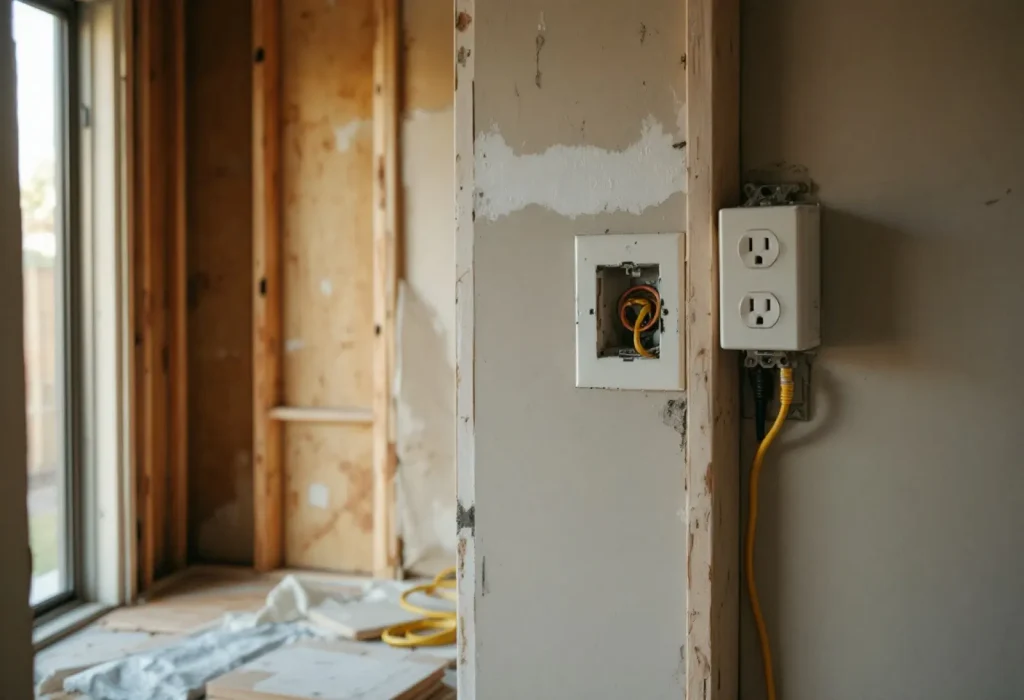
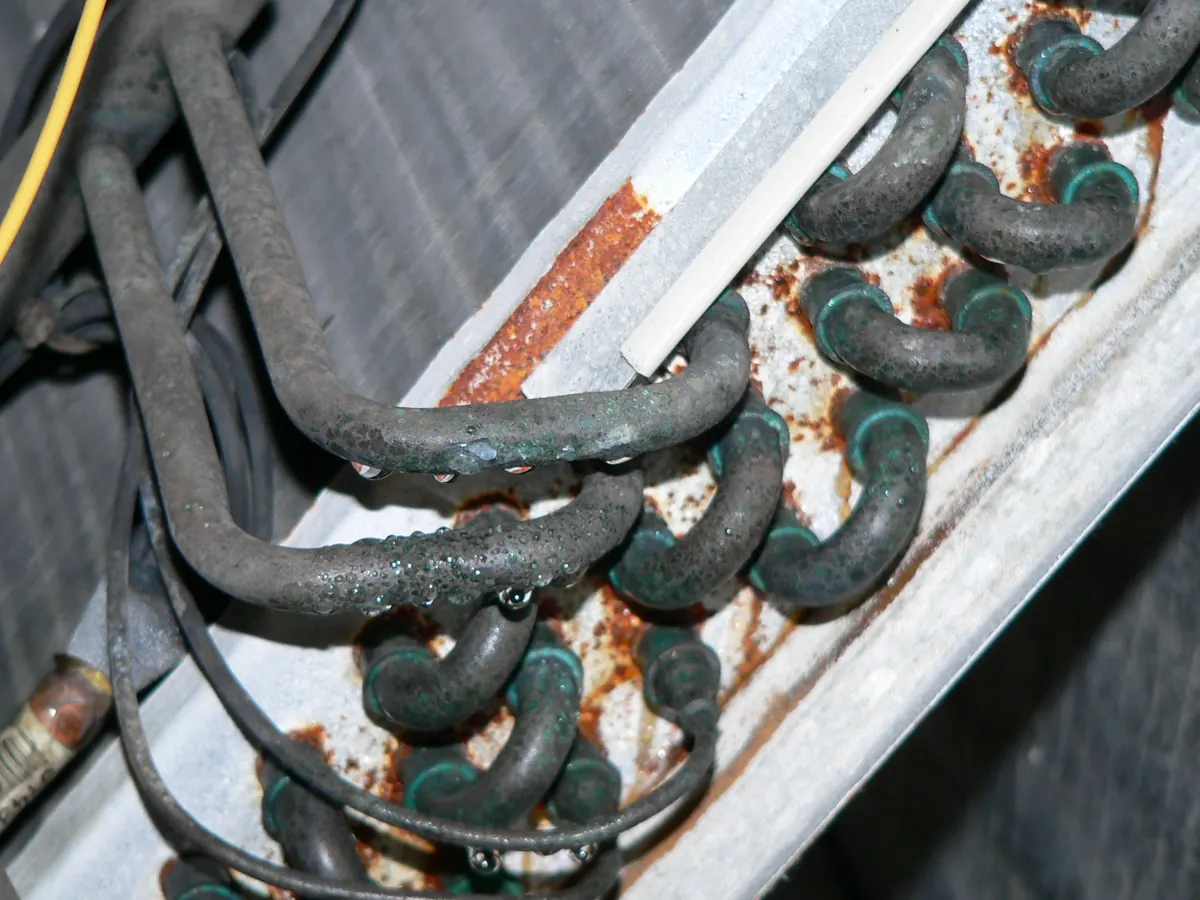
According to the CPSC's how-to-tell page, the signs are a blackened ground wire at the green screw of a receptacle (it should be copper coloured), blackened AC coils, blackened copper pipe, and MADE IN CHINA printed on the back of a sheet, where residents rarely see it. HUD’s report adds an odour often compared to rotten eggs and tarnish on silverware and jewellery, because the gases attack silver too.
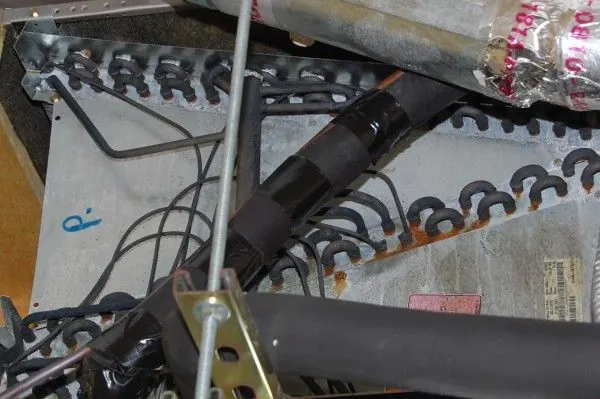

Per the CPSC and HUD identification guidance, homes get misclassified because sewer gas, well water and outdoor sources also carry sulfur compounds, and older homes can corrode for other reasons over time.
| What you see | What problem board does | Look-alike | How to separate them |
|---|---|---|---|
| Black ground wire at the receptacle screw | Copper sulfide forms a black coating | Sewer gas or a sulfur well | Lab confirms sulfur in the blackening; check traps and water |
| AC coil black, or replaced more than once | Same attack on copper return bends | Age or refrigerant leaks | Coil replacement records for blackened corrosion count in step one |
| Rotten egg odour | Hydrogen sulfide is one of the gases | Dry trap, sewer line, well water | Not a federal criterion; it points to testing |
| Green or blue copper patina | Not the signature: sulfide is black | Ordinary oxidation | Does not meet step one |
| Water stains, soft board | Not a sign of problem board | Leak or flood | A water loss; see wet drywall |
| MADE IN CHINA on a sheet | A corroborating marker only | Imported board without the defect | Not all Chinese board is problem board, per the CPSC |
How to identify Chinese drywall: the federal two-step test
The test in force is the CPSC and HUD identification guidance of 18 March 2011. It replaced the August 2010 revision, which had dropped strontium as proof after false positives, and it added 2009 to the window because board imported in 2006 and 2007 was still being hung that year.
| Board installed | Step 1: threshold inspection | Step 2: conditions needed |
|---|---|---|
| Before 2001 | Outside the window | Not applicable |
| 2001 to 2004 | Blackened copper wiring or AC coils, plus proof the board went in during the window | At least 4 of 5 |
| 2005 to 2009 | Same two criteria | At least 2 of 5 |
| 2010 onward | Outside the window | Not applicable |
Three of the five conditions need a laboratory, one needs metal coupons left in the house, and one needs a marking. The guidance says chamber tests may be costly and time consuming.
| Condition | What is measured | Threshold | Who does it |
|---|---|---|---|
| (a) Elemental sulfur | Board core sample | Above 10 ppm | Lab |
| (b) Corrosive conditions | Copper coupons in the home, or sulfur in wire or coil blackening | Copper sulfide in two weeks to 30 days | Assessor, then lab |
| (c) Chinese markings | Print on the board | Confirmed Chinese origin | Anyone who can see a sheet back |
| (d) Gas emissions | Hydrogen sulfide, carbonyl sulfide, carbon disulfide from samples | Elevated, by ASTM D5504-08 or similar | Lab chamber |
| (e) Chamber corrosion | Copper sealed with board samples | Copper sulfide forms | Lab chamber |
2006 board with a black ground wire and a Chinese print needs one more condition, often a core sulfur test; 2003 board needs three. Air sampling, covered on our indoor air quality testing page, is not one of the five.
Why the board blackens copper
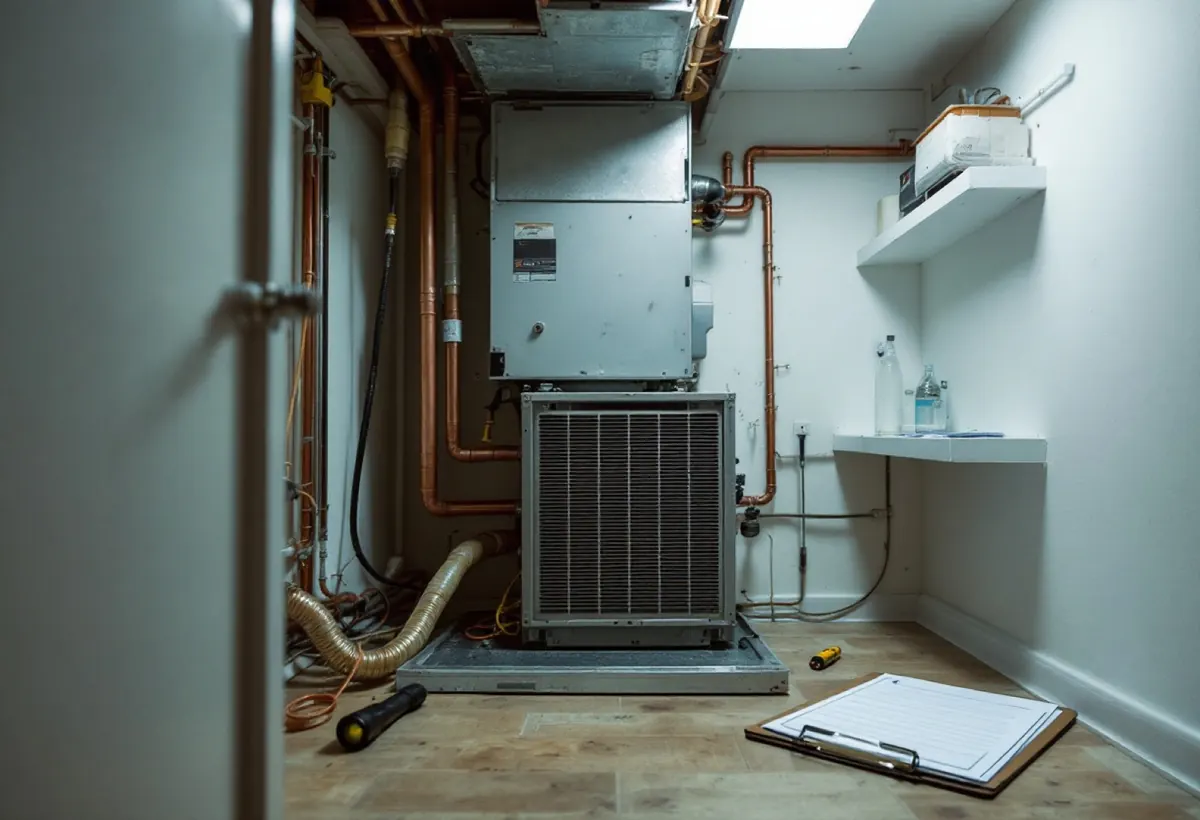
GAO reports, in GAO report GAO-13-735R, that CPSC testing found hydrogen sulfide emissions from several Chinese-made brands at 100 times those of board made elsewhere, and that a six-home CPSC study saw emissions rise in heat and humidity and fall in cool, dry spells. The copper in a receptacle box or an AC coil has been recording that exposure since the day the board went up, which is why the test starts there.

Chinese drywall years, ports and states
According to HUD's 2012 report to Congress, using USITC data, 2006 was the only year a large volume came from China, when the building boom met rebuilding after Hurricane Charley in 2004 and Katrina, Rita and Wilma in 2005. That year China supplied 22.0 percent of drywall imports; in 2004 it supplied almost none. The CPSC reports that most complaining owners said their homes were built in 2006 to 2007.
HUD reports that 70 percent of Chinese imports came through Florida and 16 percent through New Orleans and Mobile; GAO reports that 67 percent of the 2006 volume entered at Miami and Tampa.
Nobody counted homes, and the published estimates differ almost 30 fold. GAO tabulated them without vouching for any. HUD reports a best estimate of about 11,000: 25,000 homes that could have been built with Chinese board, times a 43 percent defect share.
Markings on the back of the board
The marking is the one condition an owner can check alone, on the back of a ceiling sheet in the attic or behind an outlet box. It is not required: per the guidance, some problem board shows no origin.
The federal court posted a photographic catalogue of markings under Pretrial Order No. 10, with photographs of end tapes and print by maker.
| Court’s group | Names as listed | What a match means |
|---|---|---|
| Chinese manufactured | Bedrock Gypsum; BNBM; C&K Gypsum; Crescent City Gypsum; Dragon Brand; IMG; IMT Gypsum; Knauf Dongguan; Knauf Tianjin; Knauf WuHu; Pro Wall; Taihe; Taian Taishan; Taishan; Venture Supply (Taihe) | Condition (c), and the maker that decides which settlement may apply |
| Chinese, maker unknown | Eleven unnamed exhibits | Origin without a maker |
| Non-Chinese, for comparison | Georgia Pacific; Lafarge; National Gypsum; USG | Not a Chinese marking |
| Unknown origin | Pro-Roc; four unnamed exhibits | Rely on the lab conditions |
The decision path, in order
- When was the board hung? Check permits, the certificate of occupancy and renovation invoices. Outside 2001 to 2009, look for another cause.
- Is copper blackened? With the power off, pull a few receptacle covers and look at the bare ground wire. Get any AC coil replacement records. No blackening ends it.
- Is there a marking? Check sheet backs in the attic. A Chinese print is one condition.
- Count the gap. 2005 to 2009 board needs two conditions; 2001 to 2004 board needs four.
- Rule out look-alikes. Fix or test for sewer gas and a sulfur well before paying for chamber work.
- Order the lab work. A core sulfur test or copper coupons usually close the gap. The guidance cites an FTC alert on bogus tests and treatments.
- If it qualifies, scope removal to the 2013 guidance and photograph everything first.
Escalation triggers. It is bigger than one room when blackening shows on more than one wall, the coil has been replaced for corrosion more than once, silver tarnishes, or fusible sprinkler heads or gas piping are present. Each touches a component the remediation guidance names.
Chinese drywall remediation: what the guidance replaces
The CPSC and HUD remediation guidance of 15 March 2013 is a conservative health and safety scope, not a list of what a settlement pays. Until single problem sheets can be picked out, it replaces all drywall in an identified home; board known to predate 2001, with no other conditions, may stay.
| Component | Guidance | Why, per the CPSC and HUD |
|---|---|---|
| All possible problem drywall | Replace | Removes the source |
| Smoke and CO alarms | Replace all | Small but significant performance changes in some tests |
| Receptacles, switches, GFCIs, breakers | Replace | Heavy contact corrosion in tests simulating 40 years |
| Fusible sprinkler heads | Replace all | One of 18 failed after a simulated 20 years |
| Glass bulb sprinkler heads | Test or replace per NFPA 25 | NFPA 25 calls for 5 year testing when corrosive |
| Gas piping | Pressure test (IFGC, NFPA 54) | Corrosion superficial, no pin holing |
| Wiring | Keep; trim or clean exposed ends | Cross section not significantly reduced |
| Studs, insulation, floors, cabinets | Not required | No scientific basis to require it |
| AC coils, water pipe, carpet, furnishings | Not included | No direct link to safety |
Three lines get lost. The agencies have no scientific basis to judge alternatives to removal and urge caution. They note some remediators HEPA vacuum, wipe and air out the house between tear-out and rebuild, without recommending it, but do say visible dust must be cleaned off framing. And removed board must not be reused or recycled into new drywall, a rule in section 5 of the Drywall Safety Act of 2012.
Coil replacement is outside the guidance; equipment choice sits with The HVAC Brief. Board older than the window raises a different question: asbestos in drywall.
For contractors: scope and records
The guidance requires work to follow building codes and occupational safety and environmental rules, and leaves electrical sign-off to the authority having jurisdiction. Expect an adjuster or settlement administrator to read the file line by line.
| Scope item | Document | What the reviewer asks |
|---|---|---|
| Identification | Install date proof, ground wire photos by location, coil invoices, lab reports | Which conditions, and do they meet the threshold for the install year? |
| Board removal | Room photos, marking photos, disposal tickets | All possible problem board out, none reused? |
| Devices and breakers | Count per room, panel photos, permit sign-off | All receptacles, switches, GFCIs, breakers replaced? |
| Wire ends | Before and after photos at boxes | Trimmed or cleaned to bright copper? |
| Alarms and sprinklers | New alarm models; head inventory; NFPA 25 results | Fusible heads replaced, glass bulb heads tested? |
| Gas piping | Pressure test record | Passed, and by whom? |
Estimate it as whole-interior reconstruction plus electrical, alarm, sprinkler and gas lines; photograph every marking, since GAO notes settlement money depended on the maker. See how Xactimate pricing works.
What remediation cost
The only government cost review is in HUD's 2012 report to Congress, and its figures date from 2009 and 2010. HUD reports that media reports put the cost to cure near $100,000 per home, and that Lennar set aside $80.7 million for 900 homes, or $89,700 each.
| Basis, per HUD | Published figure | Notes |
|---|---|---|
| Media reports | $100,000 per home | Press, 2009 to 2010 |
| Lennar fund | $89,700 per home | $80.7 million, 900 homes |
| Lowe’s settlement | Up to $100,000 | Domestic drywall cases |
| NAHB: one third of value | $72,600 | On a $222,900 new home |
| 50 to 55% of build cost | $42 to $46 per sq ft; South $38 to $42 | $101,000 to $111,000; South $92,000 to $101,000 |
| Floor area | $40 to $60 per sq ft | $96,000 to $144,000; no relocation |
| Relocation | 4 to 6 months | Six months rent $5,000 to $5,700 |
| One supplier settlement (GAO) | $7 per sq ft | A payment rate, not a price |
No current published price list was found, so none is quoted; see our remediation explainer.
The law since 2013, and who paid
The Drywall Safety Act of 2012, signed 14 January 2013, made the labeling provisions of ASTM C1264-11 a CPSC rule 180 days later, so board must name its maker and month and year of manufacture. It ordered a sulfur limit, which the CPSC met by adopting ASTM C1396-14a: per the CPSC's 2015 Federal Register determination, board may hold no more than 10 ppm of elemental sulfur under ASTM C471M, enforceable from 22 July 2015.
On money, GAO reports a settlement group guaranteeing more than $350 million, including an uncapped remediation fund from one primary maker plus $30 million for other costs. The MDL 2047 court page records final approval of the Knauf settlements on 7 February 2013 and of the Taishan class settlement on 10 January 2020.
Insurance is a policy question. GAO reports stakeholders said homeowners policies generally do not cover defective products, that related damage such as wire corrosion may be covered, and that coverage was litigated in several states. Read your policy and ask your state insurance department; our water damage coverage page shows how exclusions read. GAO notes a 2010 IRS casualty loss deduction, limited to 75 percent of amounts paid while a claim is pending; ask a tax adviser.
What this page does not cover. Health effects are out of scope; the CPSC Drywall Information Center links to the CDC’s response to imported drywall, and a physician is the right person for personal concerns. Nor does this page advise on any lawsuit, claim or policy.
Questions people actually ask
How do I know if my house has Chinese drywall?
Use the federal two-step test. Copper ground wiring or AC coils must be blackened and the board installed between 2001 and 2009. Then 2005 to 2009 board needs two of five corroborating conditions and 2001 to 2004 board needs four, such as core sulfur above 10 ppm or a Chinese marking.
What years was Chinese drywall installed?
The CPSC and HUD guidance covers board installed from 2001 through 2009. Most arrived in 2006: according to HUD’s import table, 218,100 metric tons came from China that year. Board hung in 2009 came from 2006 and 2007 stock, according to the CPSC.
Which states have the most Chinese drywall?
Florida, by far. As of October 2010 HUD counted 2,097 CPSC reports from Florida, 683 from Louisiana, 237 from Mississippi, 203 from Alabama and 153 from Virginia. GAO later reported that 86 percent of over 4,000 reports came from Gulf Coast states.
Can Chinese drywall be fixed without removing it?
Not under federal guidance. The 2013 CPSC and HUD remediation guidance replaces all possible problem board, alarms, receptacles, switches, breakers and fusible sprinkler heads, and the agencies say they have no scientific basis to judge methods that leave the board in place.
Is Chinese drywall still sold in the US?
Imported board is still sold, but under federal rules. Since 22 July 2015 all drywall made or imported for US use must hold no more than 10 ppm of elemental sulfur under ASTM C1396-14a, and since July 2013 it must carry its maker and month and year of manufacture under the Drywall Safety Act of 2012.
Does homeowners insurance cover Chinese drywall?
There is no general answer. GAO found coverage litigated in several states, and stakeholders told it that homeowners policies generally exclude defective products though related damage such as wire corrosion might be. Read your policy, contact your state insurance department, and ask a qualified professional.
How much does Chinese drywall remediation cost?
HUD’s 2012 report, the only government review, centred on about $100,000 per home, with a spread of $72,600 to $144,000 by method, in 2009 and 2010 dollars, plus four to six months of relocation. Treat those as historical figures.
Sources
- CPSC and HUD identification guidance, US CPSC and HUD, 18 March 2011. Retrieved 31 October 2026.
- CPSC and HUD remediation guidance, US CPSC and HUD, 15 March 2013. Retrieved 31 October 2026.
- CPSC Drywall Information Center and the CPSC's how-to-tell page, US CPSC. Retrieved 31 October 2026.
- HUD's 2012 report to Congress: Study of the Possible Effect of Problem Drywall Presence on Foreclosures, 17 July 2012. Retrieved 31 October 2026.
- GAO report GAO-13-735R: Information on Defective Drywall, US GAO, 31 July 2013. Retrieved 31 October 2026.
- Drywall Safety Act of 2012, Pub. L. 112-266, 126 Stat. 2437, via GovInfo. Retrieved 31 October 2026.
- the CPSC's 2015 Federal Register determination, 80 FR 3466, 23 January 2015. Retrieved 31 October 2026.
- MDL 2047 court page and photographic catalogue of markings, MDL 2047, US District Court, Eastern District of Louisiana. Retrieved 31 October 2026.
- Photos: US CPSC via Wikimedia Commons (public domain); Chinesedrywall via Wikimedia Commons (CC BY-SA 3.0).
- Every figure is quoted from the documents above. Our methodology sets out the standing rules.
Federal guidance and public records, not legal, tax or insurance advice. More on the standards hub.