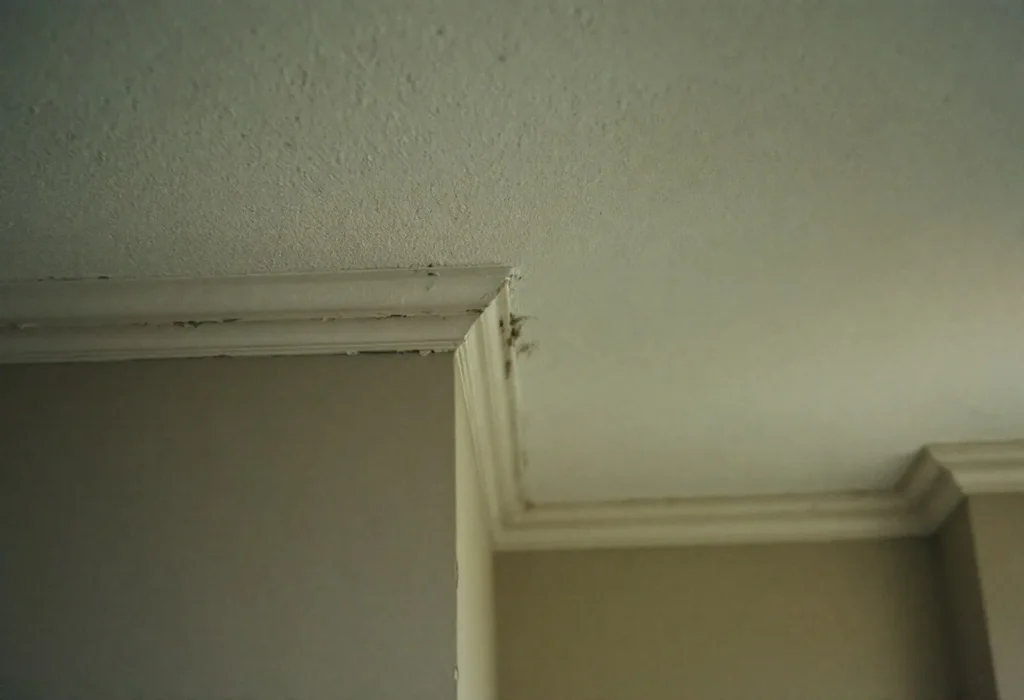
The short answer
Yes, asbestos paint existed, but in narrow product types: EPA and CPSC name textured paints, and EPA’s 1985 building guidance lists asphalt roof coatings at 4 to 7% asbestos and sprayed or troweled surfacing at 1 to 95%. Ordinary latex wall paint is not on those lists. Looking cannot tell you; a lab has to test each paint layer separately.
Searches for this phrase mix two different things. One is old paint or coating that had asbestos in it, which is what the rest of this page covers, layer by layer and rule by rule, from EPA's 1985 building guidance (EPA 560/5-85-024) and the federal regulations. The other is the encapsulant coating sold today to seal asbestos in place, which has its own page on asbestos encapsulation.
Which paints and coatings had asbestos, in which years, and how much?
The most complete primary list is Appendix A of EPA's 1985 building guidance (EPA 560/5-85-024), published by EPA in June 1985. EPA’s appendix lists a heading called “Paints and coatings” with exactly two entries: asphalt roof coating at 4 to 7% asbestos, in use from 1900, and “air tight” coating at 15%, in use from 1940. In the same EPA table, coatings sprayed or troweled onto ceilings and walls sit under a separate heading, surfacing material, at 1 to 95% asbestos and dates of use of 1935 to 1970.
The table below joins that appendix to the federal bans and the EPA and CPSC homeowner lists. Where EPA’s 1985 table says “present” for the end of a date range, it means the product was still in use when the guidance was printed, so the table reads “1985 listing” rather than inventing an end date. Per the same appendix, spackle (3 to 5%, 1930 to 1975) and fire and water sealants (50 to 55%) are included because they are applied with a knife or brush and are often mistaken for paint layers in a chip.
| Coating or product | Era documented | Asbestos content | Binder | Source |
|---|---|---|---|---|
| Sprayed or troweled surfacing | 1935 to 1970 | 1 to 95% | sodium silicate, portland cement, organic binders | EPA 560/5-85-024, Appendix A |
| Textured paint, walls and ceilings | CPSC guide says use banned in 1977 | No figure published | not stated | EPA Learn About Asbestos; CPSC guide |
| Fire and water sealants | 1935 to 1985 listing | 50 to 55% | castor oil or polyisobutylene | EPA 560/5-85-024, Appendix A |
| Mastics | 1920 to 1985 listing | 5 to 25% | asphalt | EPA 560/5-85-024, Appendix A |
| Air tight coating | 1940 to 1985 listing | 15% | asphalt | EPA 560/5-85-024, Appendix A |
| Plaster and stucco | date unknown to 1985 listing | 2 to 10% | portland cement | EPA 560/5-85-024, Appendix A |
| Vinyl wallpaper | date unknown to 1985 listing | 6 to 8% | not stated | EPA 560/5-85-024, Appendix A |
| Roof coating | 1900 to 1985 listing | 4 to 7% | asphalt | EPA 560/5-85-024, Appendix A |
| Joint compound | 1945 to 1975 | No figure published | asphalt (as printed) | EPA 560/5-85-024, Appendix A |
| Spackles | 1930 to 1975 | 3 to 5% | starch, casein, synthetic resins | EPA 560/5-85-024, Appendix A |
| Consumer patching compound | banned for sale after 11 June 1978 | about half of 1977 products had it | talc, clays, casein | 16 CFR 1304.4 and 1304.5 |
| Artificial fireplace ash and embers | ban announced 1977 | No figure published | not stated | 16 CFR 1305.4 |
| Ordinary latex wall paint | not listed | Not on EPA or CPSC lists | latex | EPA 560/5-85-024 recommends it as a sealant |
Two gaps are worth reading as findings, not oversights. No primary source opened for this page gives a percentage for “textured paint” as a product class, and EPA’s 1985 table gives no percentage for joint compound. Any page that quotes one is quoting something other than EPA’s appendix.
Why ordinary latex wall paint is not on EPA’s or CPSC’s lists
EPA's Learn About Asbestos page lists “textured paint and patching compounds used on walls and ceilings”, and the CPSC's Asbestos in the Home guide names “textured paints” next to patching and joint compounds. Neither list names flat or smooth wall paint, and the 1985 EPA appendix has no wall paint entry at all.
The 1985 guidance goes further: it recommends latex paint as a sealant over granular, cementitious asbestos material. Per the guidance, the paint should have a vehicle content of at least 60% by weight and at least 25% vehicle resin by weight, applied far thicker than normal, at no more than 100 square feet per gallon. EPA would not have told building owners to seal asbestos with a product class it regarded as a source of asbestos.
That makes the realistic question in a pre-1980 house not “is the paint asbestos” but “what is under the paint”. OSHA’s construction standard, 29 CFR 1926.1101, presumes that surfacing material in buildings constructed no later than 1980 contains asbestos until a test rebuts it. A smooth latex topcoat can sit over a sprayed texture, a skim of spackle or a plaster finish coat, each with its own page here: popcorn ceilings, plaster and stucco.
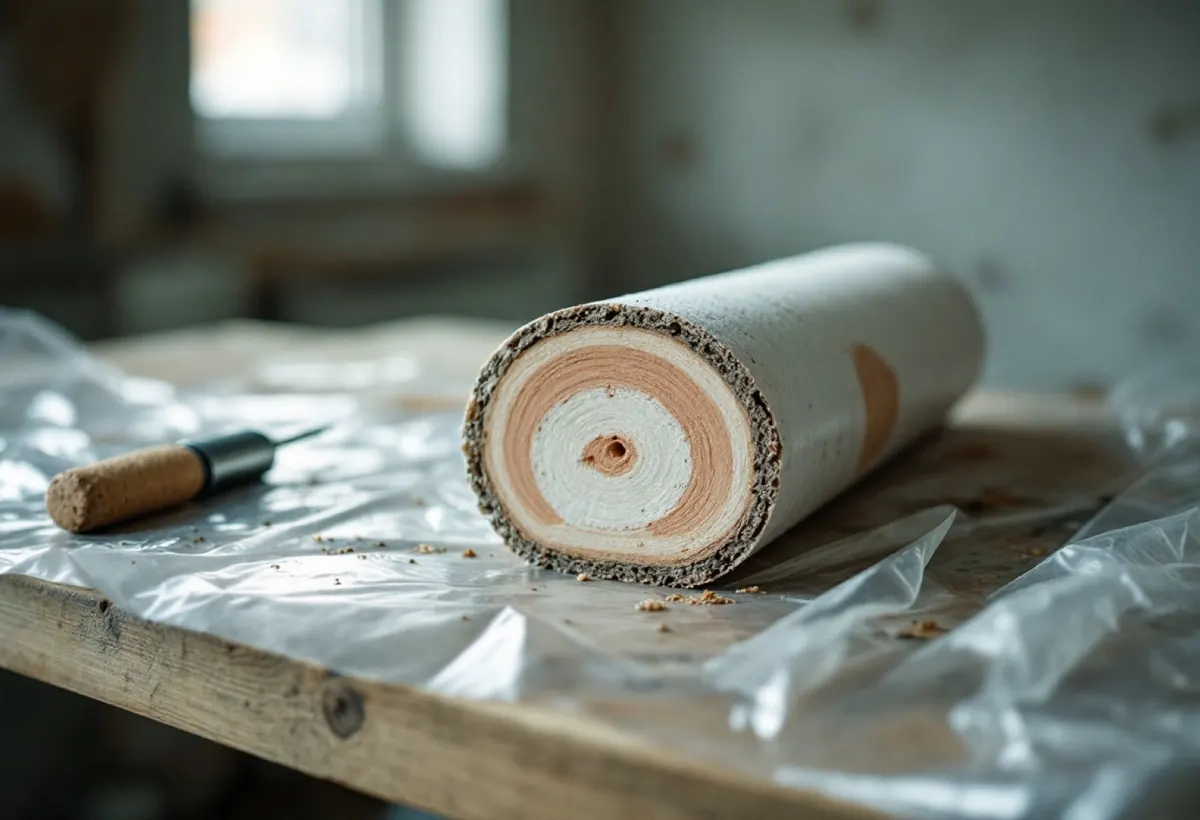
Did the 1977 CPSC ban cover textured paint, or only patching compounds?
The CPSC's Asbestos in the Home guide says asbestos may be in “textured paint and in patching compounds used on wall and ceiling joints” and that “their use was banned in 1977.” The regulation itself is narrower. 16 CFR 1304.1 applies to consumer patching compounds used to fill cracks, joints and holes and then sanded smooth, and 16 CFR 1304.3 defines a patching compound as talc, pigments, clays, casein, ground marble or mica with a binder, sold dry or as ready mix paste. Paint is not in that definition.
Under 16 CFR 1304.4, consumer patching compounds with intentionally added, respirable free form asbestos made after 16 January 1978 were banned, and all of them were banned after 11 June 1978. The CPSC release of 28 April 1977 paired that with artificial fireplace ash and embers, now banned under 16 CFR 1305.4. The findings in 16 CFR 1304.5 put scale on it: CPSC estimated that about half the consumer patching compounds sold in 1977 were formulated with asbestos.
Sprayed decorative coatings were stopped by EPA, not CPSC. According to EPA's record of its asbestos actions, EPA banned spray applied surfacing asbestos for fireproofing and insulating in 1973, banned spray applied surfacing for all other purposes in 1978, and in 1990 barred spray on material over 1% asbestos on buildings, structures, pipes and conduits. The current text, 40 CFR 61.146, still exempts spray on material whose fibres are locked in a bituminous or resinous binder and that is not friable when dry.
No federal rule found for this page bans brushed or rolled textured paint by name. That is why the CPSC guide’s 1977 line is a useful era marker for patching compound, not a promise that a textured wall finished in 1979 is clean. EPA’s 1989 rule, per EPA's record of its asbestos actions, still bans any new asbestos use first started after 25 August 1989.
Is a textured coat surfacing material or miscellaneous material under AHERA 40 CFR 763.83?
The school rule at 40 CFR 763.83 sorts building material into three classes, and the class decides the response. Surfacing material is anything “sprayed-on, troweled-on, or otherwise applied to surfaces” for acoustical, fireproofing or other purposes. Miscellaneous material is interior material such as floor and ceiling tiles that is neither surfacing nor thermal system insulation. A sprayed or troweled texture is surfacing; a thin brushed film of paint has no class of its own.
OSHA uses the same wording in 29 CFR 1926.1101 and ties work classes to it. Removing surfacing ACM is Class I work, the strictest tier; removing other ACM such as wallboard, floor tile and mastics is Class II. OSHA counts a material as ACM when it contains more than 1% asbestos, and the same 1% line runs through the EPA definitions in 40 CFR 61.141.
| Question | Surfacing material | Paint film or patch |
|---|---|---|
| Definition source | 40 CFR 763.83; 29 CFR 1926.1101 | No separate class in either rule |
| Typical example | Sprayed acoustic or textured coat | Smooth brushed or rolled paint |
| Presumed ACM by OSHA | Yes, if building built by 1980 | No presumption |
| OSHA removal class | Class I | Class II if ACM over 1% |
| Homogeneous area defined by | Uniform colour and texture | Not defined for paint |
How does a lab test a paint chip that has five layers?
Since the 1 August 1994 Federal Register advisory, EPA’s bulk method (EPA/600/R-93/116) directs laboratories to analyze each layer and report a separate result for each. The older 1982 method reported one number across all layers, and EPA said plainly that a multi-layered sample with asbestos in a single layer “may have been reported” as asbestos free. The advisory names plaster, stucco and similar layered systems as the materials to resample if old results were not reported by layer.
The 19 December 1995 clarification (60 FR 65243) closes the averaging route. A client may ask the lab to composite the layers of one core, but only with the gravimetric procedure in Section 2.3 of the method. Per the clarification, if the composite shows more than 1%, the whole system is treated as asbestos containing. If it shows 1% or less but some asbestos, EPA says the lab must go back and test layer by layer. The one exception is wallboard where joint compound sits only at joints and nail holes, and the 1994 advisory counts drywall itself as a single layer.
For the sample itself, the 1985 EPA guidance tells samplers to push the corer through “any paint or protective coating and all the layers of the material”, and the CPSC's Asbestos in the Home guide says to cut from the entire depth and send it to a lab accredited under the NIST NVLAP programme. A paint scraping that misses the lower layers misses the textured coat. Choosing that lab is covered in asbestos testing labs.
Old paint layers are tested for lead as well, and according to 16 CFR 1303.1 the CPSC limit fell from 0.06% to 0.009% lead on 14 August 2009; lead work has its own page on lead paint removal.
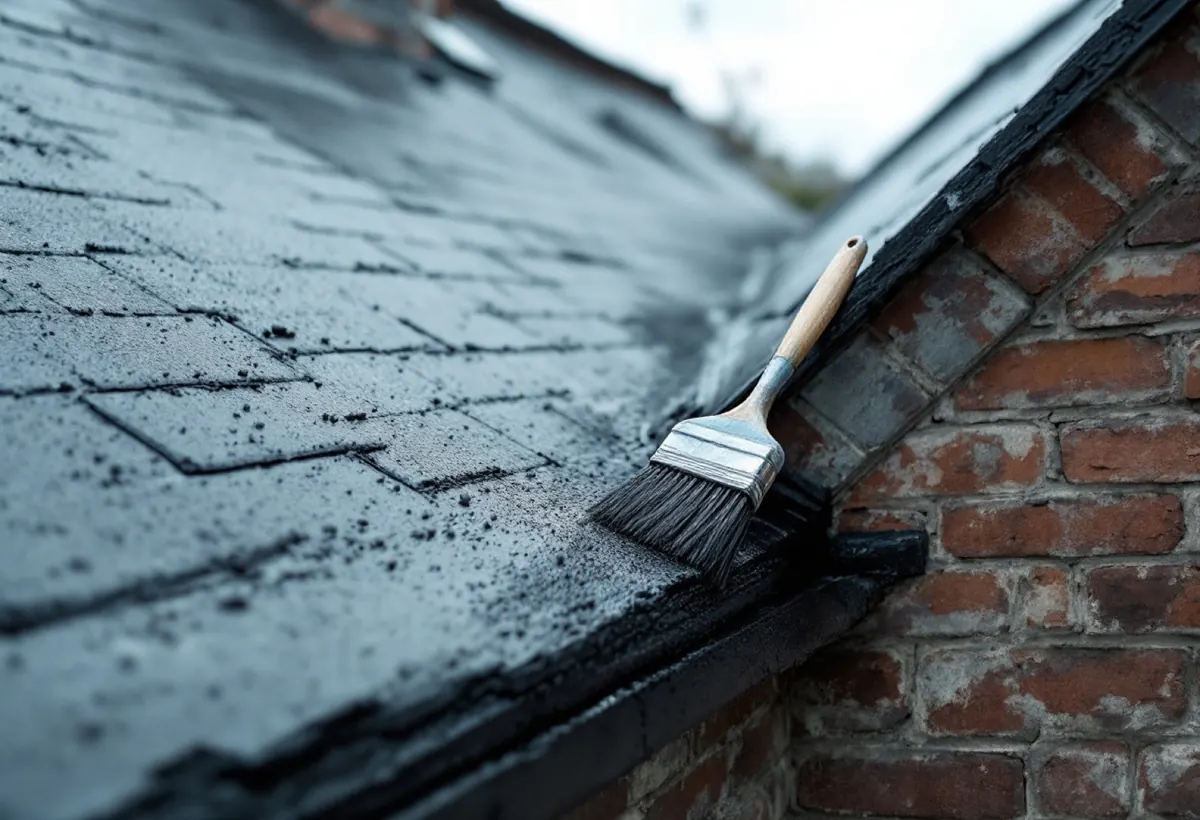
When does paint over EPA’s 1% line fall under the NESHAP before demolition?
EPA answered this for paint directly in its 11 April 1990 applicability determination, still posted on EPA. Per EPA, paint over 1% asbestos that is in good condition does not have to be removed before demolition or renovation. If that non friable paint will be burned, sanded, ground or abraded as part of the work, it has to be handled under the asbestos NESHAP. If it is already friable, it must be removed under the NESHAP first.
The test EPA gives is physical: paint is friable when it can be crumbled, pulverized or reduced to powder by hand pressure. 40 CFR 61.141 uses the same test, calls non friable material Category II, and makes it regulated material (RACM) when demolition forces are likely to crumble it. Category I is reserved for packings, gaskets, resilient flooring and asphalt roofing products.
Two more lines from the 1990 determination matter on site. Brushing an encapsulant over friable ACM does not take it out of the NESHAP. And PLM results below 5% can be inconclusive, so for friable paint under 10% EPA recommended point counting, the same 10% trigger now written into 40 CFR 61.141.
What to ask the inspector before you scrape, sand or demolish a painted wall
EPA's homeowner guidance says material in good condition that will not be disturbed should be left alone, and that sampling done wrong can be more hazardous than leaving it. Once work is planned, these questions turn the regulations above into a scope you can hold an inspector or lab to:
- Will each core go through every layer to the substrate, as EPA 560/5-85-024 Appendix G describes?
- Will the lab run PLM under EPA/600/R-93/116 and report a result for each layer, not one number for the chip?
- If any layer reads under 10%, will it be point counted, as 40 CFR 61.141 requires per the NESHAP for friable material?
- Is the lab accredited by NIST NVLAP for bulk asbestos?
- Is any textured coat being treated as surfacing material, which OSHA 29 CFR 1926.1101 presumes is ACM in buildings built by 1980?
- Will sanding or grinding turn a Category II paint into RACM under 40 CFR 61.141, triggering NESHAP handling?
For contractors
Under 29 CFR 1926.1101, removing a surfacing ACM texture is Class I work and removing other ACM is Class II, and repair or maintenance that is likely to disturb ACM is Class III. Do not rely on a latex topcoat to change the class: EPA’s 1990 determination says an encapsulant on friable ACM leaves it inside the NESHAP.
Health effects are outside the scope of this page. EPA's Learn About Asbestos page covers them.
Questions people actually ask
How can you tell if paint has asbestos?
You cannot tell by colour, texture or age alone. EPA’s homeowner guidance says asbestos cannot be identified by looking unless the material is labelled. A trained inspector cuts a core through all layers and sends it to an NVLAP accredited lab, which reports each layer separately under EPA/600/R-93/116. Per the EPA method, a result over 1% in any layer makes that layer asbestos containing material.
Is asbestos safe if painted over?
Painting over it does not change its legal status. EPA’s 1990 determination on paint says an encapsulant applied to friable asbestos material does not exclude it from the asbestos NESHAP. EPA homeowner guidance says material in good condition that will not be disturbed is best left alone; sanding, scraping or drilling a painted texture is what releases fibres, per CPSC.
Will a stain blocking primer seal asbestos paint?
EPA’s 1985 guidance accepted latex paint as a sealant only for granular, cementitious asbestos material, at least 60% vehicle by weight, at least 25% vehicle resin, and no more than 100 square feet per gallon. It also said not to encapsulate material that is delaminated or badly damaged. Any brand used should meet those numbers and be recorded.
What are the three most common asbestos types, and does paint colour show them?
OSHA’s 29 CFR 1926.1101 lists six regulated types: chrysotile, amosite, crocidolite, tremolite, anthophyllite and actinolite. Chrysotile is the only form EPA says is still imported. Fibre type is identified under a polarized light microscope, never by the colour of a paint or coating. The types page compares them in detail: types of asbestos.
Is asbestos paint dangerous?
The rules treat it by condition. EPA’s 1990 determination says intact paint over 1% asbestos need not be removed before demolition, but friable paint must be, and sanding, grinding or burning brings non friable paint under the NESHAP. Asphalt roof coatings in EPA’s 1985 list held 4 to 7% asbestos bound in asphalt, which 40 CFR 61.146 treats differently from friable spray.
What is the asbestos paint sold in hardware stores?
Products sold under that phrase today are encapsulants, coatings made to seal existing asbestos material, not paint that contains asbestos. EPA’s 1989 rule bans any new asbestos use started after 25 August 1989, and in March 2024 EPA finalized a rule ending ongoing uses of chrysotile. How encapsulants are applied is covered on the asbestos encapsulation page.
Sources
- EPA's 1985 building guidance (EPA 560/5-85-024), U.S. Environmental Protection Agency, June 1985: Appendix A (asbestos content and dates of use), Section 5 (latex paint as sealant) and Appendix G (sampling), hosted by WBDG. Retrieved 20 November 2026.
- EPA's Learn About Asbestos page, U.S. Environmental Protection Agency, last updated 13 July 2026. Retrieved 20 November 2026.
- EPA's homeowner guidance, U.S. Environmental Protection Agency, last updated 25 June 2026. Retrieved 20 November 2026.
- EPA's record of its asbestos actions, U.S. Environmental Protection Agency, last updated 21 January 2026: 1973, 1978, 1989, 1990 and 2024 actions. Retrieved 20 November 2026.
- How EPA Asbestos Regulations Apply to Paint, U.S. Environmental Protection Agency, last updated 9 November 2026, and the linked 11 April 1990 applicability determination, Stationary Source Compliance Division. Retrieved 20 November 2026.
- CPSC's Asbestos in the Home guide, U.S. Consumer Product Safety Commission. Retrieved 20 November 2026.
- CPSC release of 28 April 1977, U.S. Consumer Product Safety Commission. Retrieved 20 November 2026.
- 16 CFR 1304.1, 16 CFR 1304.3, 16 CFR 1304.4 and 16 CFR 1304.5, ban of consumer patching compounds containing respirable free form asbestos, via Cornell LII. Retrieved 20 November 2026.
- 16 CFR 1305.4, ban of artificial emberizing materials, via Cornell LII. Retrieved 20 November 2026.
- 16 CFR 1303.1, ban of lead containing paint, via Cornell LII. Retrieved 20 November 2026.
- 40 CFR 763.83, AHERA definitions, via Cornell LII. Retrieved 20 November 2026.
- 40 CFR 61.141 and 40 CFR 61.146, asbestos NESHAP definitions and spraying standard, via Cornell LII. Retrieved 20 November 2026.
- 29 CFR 1926.1101, OSHA asbestos standard for construction, definitions and work classes, via Cornell LII. Retrieved 20 November 2026.
- 1 August 1994 Federal Register advisory, EPA notice on EPA/600/R-93/116, reprinted by the Connecticut Department of Public Health. Retrieved 20 November 2026.
- 19 December 1995 clarification (60 FR 65243), EPA, Asbestos NESHAP Clarification Regarding Analysis of Multi-Layered Systems, via GovInfo. Retrieved 20 November 2026.
- Tables and charts reproduce figures as printed in these sources; nothing is averaged or estimated. Our methodology sets out the standing rules, and more rules pages sit in the standards section.
This page describes federal rules and published guidance. State and local asbestos rules can be stricter; ask your state asbestos programme which survey and notification rules apply before renovation or demolition.