The short answer
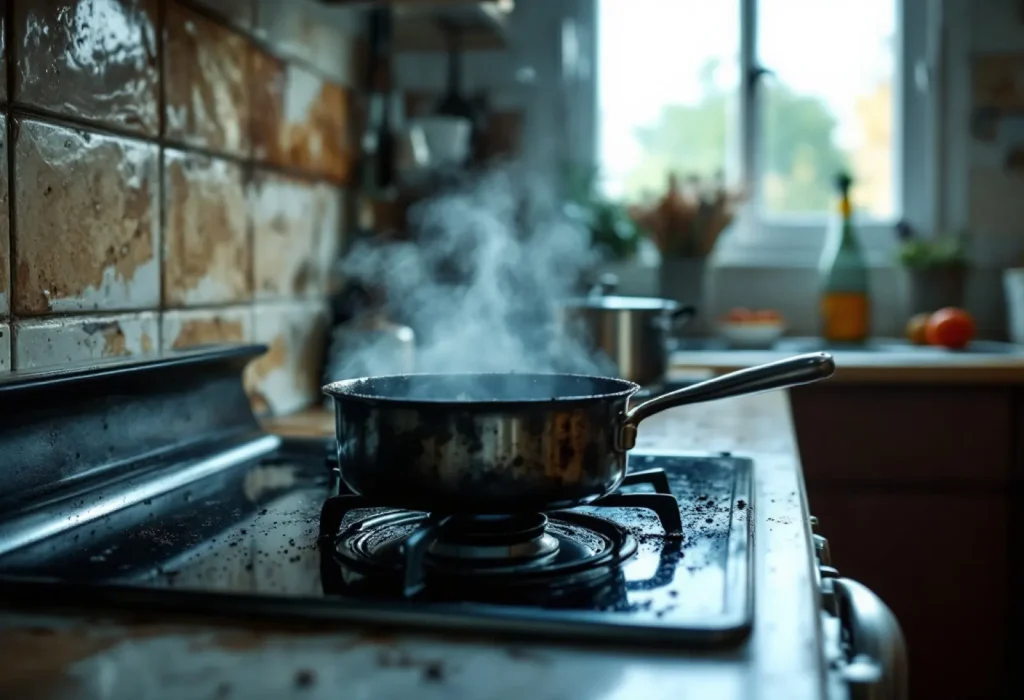
A burnt smell in house air usually traces to cooking, but if you cannot find the source, or it smells like hot plastic near an outlet, switch or appliance, treat it as electrical: CPSC and NFPA both list that odor as a warning sign. If there is smoke, heat, sparking or a sounding alarm, get everyone out and call the fire department from outside.
On this page
Is a burnt smell with no smoke an emergency right now?
Run four checks in order of danger before you open a single window. The U.S. Fire Administration says residents could have less than 2 minutes to escape a home fire once the smoke alarm sounds, so any visible smoke, sparking, a sizzle at an outlet or an alarm ends the investigation: everyone out, then call the fire department from the outside meeting place, as the USFA escape plan guidance sets out.
No smoke does not mean no problem. The CPSC electrical safety sheet lists the odor of overheated plastic, hot switch plates and outlet covers, and sizzle or buzzing sounds as electrical system hazard warning signs, and the NFPA electrical safety tip sheet tells you to call a qualified electrician or your landlord for a burning or rubbery smell coming from an appliance, discolored or warm outlets, or flickering lights. If the smell keeps growing and you still cannot place it after the four checks, call the fire department and tell them which room it is strongest in and when it started.
Do not take an outlet or switch apart to look: the CPSC sheet treats the electrical system as a job for an electrician, and an opened box exposes live conductors with a shock hazard.
Which burnt smell is it? Six sources by character and location
Two clues narrow it down fastest: what the smell is like, and where it is strongest. Walk the house at nose height and note the room where it peaks. The table pairs each pattern with the published guidance behind the first action. According to the USFA cooking fire page and the USFA appliance and electrical fire page, there were an estimated 170,000 home cooking fires in 2021 against 24,200 residential building electrical fires, so the kitchen is the first place to look, not the last.
| Smell character | Where it is strongest | What it usually means | First action | Source |
|---|---|---|---|---|
| Burnt food: charred, sharp, sometimes sweet (popcorn, toast) | Kitchen, microwave, range hood; fades with distance | Something is or was overheating on the cooktop or in the microwave; cooking is the leading cause of home fires | Turn the burner off, cover a burning pan with a lid, then ventilate | USFA cooking fire page |
| Hot plastic or rubber, acrid | One outlet, switch, cord, power strip or appliance | Overheating wiring or a failing device; a listed electrical warning sign | Unplug only if the plug is cool and dry, stop using it, call an electrician; fire department if hot or smoking | CPSC electrical safety sheet; NFPA electrical safety tip sheet |
| Dusty burning when the heat first runs in autumn | Supply registers in every room at once | Heating equipment; USFA ranks heating the second leading cause of home fires in 2021 | If it does not clear, call an HVAC technician; annual cleaning and inspection is the USFA advice | USFA heating fire page |
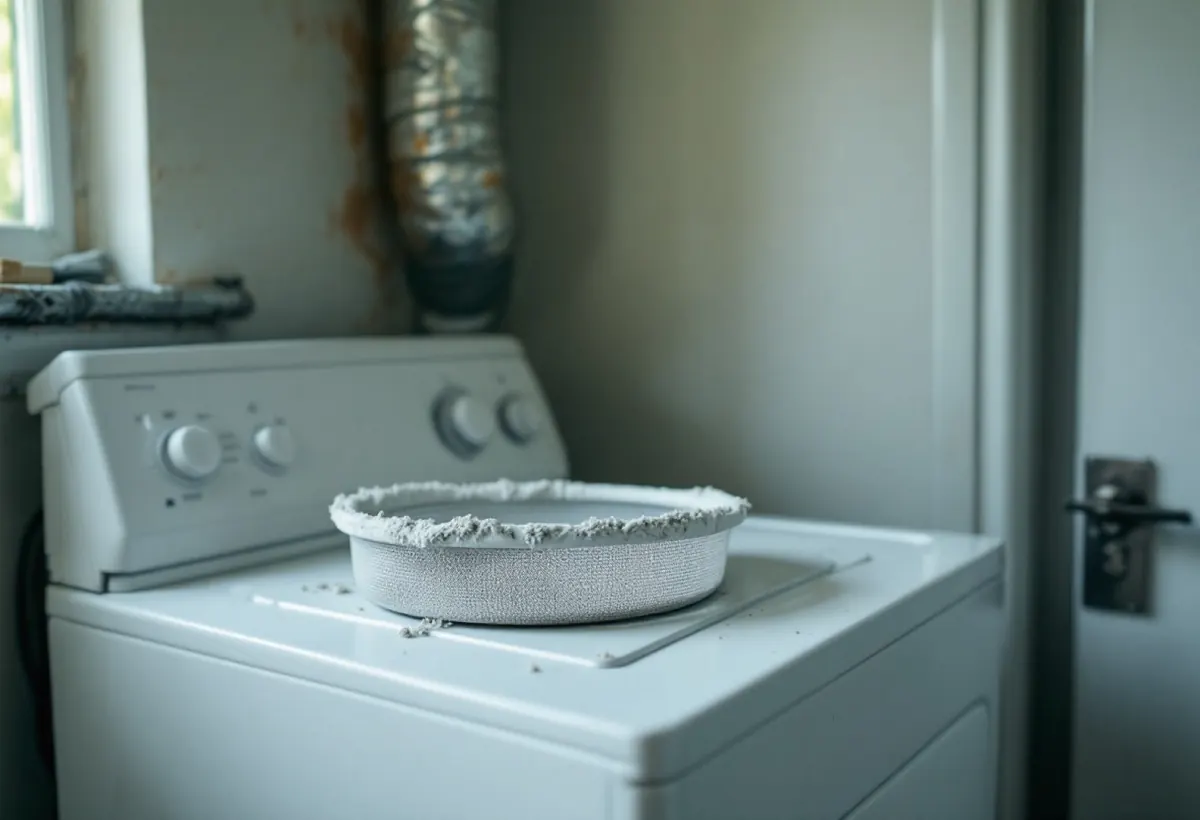
| Scorched fabric or hot lint | Laundry room, dryer vent outlet outside | Lint near the dryer heat source; failure to clean led dryer fire ignitions at 31% (2018 to 2020) | Stop the dryer, clean the lint filter every load and the vent duct every year | USFA appliance and electrical fire page; USFA basement and garage page |
| Woodsmoke or campfire, sometimes with haze | Stronger outdoors and near windows, doors and fresh air intakes | Wildfire or a neighbor’s fire; outside smoke infiltrates | Close windows and doors, set HVAC to recirculate, check AirNow | EPA wildfire indoor air page |
| Burning smell nobody else in the house notices | Everywhere and nowhere; follows one person | NIDCD defines phantosmia as the sensation of an odor that is not there; a clinician question, out of scope here | Rule out the five sources above first, then ask a doctor | NIDCD |
Carbon monoxide is not on the list for a reason: the USFA carbon monoxide page calls it a colorless, odorless gas that is undetectable to the human senses, so a burning smell is never evidence for or against it. CO alarms belong outside each sleeping area and on every level, per the same USFA page.
Furnace and heat pump smells are the trade of an HVAC technician, and The HVAC Brief covers them in depth.

Why does a burning smell at night deserve more caution than one at noon?
Timing matters. The USFA electrical fire infographic states that home electrical fire deaths peak between midnight and 8 a.m., and that December and January are the peak months for electrical fire deaths. A smell you notice at 11 p.m. and decide to check in the morning sits squarely in that window.
So do not go to bed on an untraced burning smell. Before sleep, press the test button on every alarm: the USFA smoke alarm page says to test smoke alarms every month, put them inside and outside each bedroom and on every level, and replace each alarm 10 years from its manufacture date. If an alarm is past that date or silent on test, the night is the wrong time to rely on it.
Overnight heating adds a second source. According to the USFA heating fire page, there were an estimated 32,200 home heating fires in 2021 and asks that anything that can burn stay at least 3 feet from fireplaces, wood stoves, radiators and space heaters, and that space heaters be turned off when you go to bed.
How fast does opening windows clear a burnt popcorn smell?
Faster than most people expect for the air, and not at all for the residue. According to CDC Table B.1, published in the CDC environmental infection control guidelines, the the minutes needed to remove an airborne contaminant at each air change rate are 138 minutes for 99% at 2 air changes per hour, 46 minutes at 6, 28 at 10 and 14 at 20.
Two conditions sit under those numbers. CDC says the values apply to a room with no continuing source and assume perfect mixing, which usually does not occur. A scorched pot left on the stove is a continuing source, so it goes outside first. The second limit comes from Texas A&M AgriLife Extension: ventilation dilutes smoke odor but does not remove it permanently, because tiny particles cling to walls, furniture, floors and clothing.
In practice that means the smell drops sharply within the first hour of cross ventilation and a range hood, then returns faintly when the windows close. That faint return is the residue on surfaces, and only washing removes it. If a smoke alarm sounds while you cook, the USFA smoke alarm page says to open a window or door and press the hush button, and never to remove the battery.
What clears a cooked food smoke smell, in what order?
This sequence is for smoke from food: a burnt pan, toast or a microwave popcorn bag, with no flames beyond the pan. A grease fire leaves a sticky film that needs a degreasing method, set out on the grease fire cleanup page. Odor that has reached the whole house after a real fire is a larger job, covered step by step on how to get smoke smell out of a house.
- Kill the source. Turn the burner off, cover a flaming pan with a lid or baking sheet as the USFA cooking fire page advises, and carry the cooled pot or popcorn bag outside. According to the same USFA page, unattended cooking was the leading ignition factor in nonconfined home cooking fires, at 37%.
- Ventilate across the house. Open windows on opposite sides and run the range hood and bathroom fans that vent outdoors for the first hour, using the CDC table above as the clock.
- Clean the microwave if that was the source. The University of Kentucky Cooperative Extension method: a cup of water with 2 tablespoons of lemon juice or baking soda, boiled inside for about 5 minutes, left standing about 5 minutes more, then the walls, ceiling, floor, door and door seals wiped dry.
- Wash hard surfaces in the smoke path. The FEMA tips reproduced by Texas A&M AgriLife Extension say to wash interior walls and hard surfaces with mild soap or another suitable cleaner and rinse thoroughly, including inside cabinets, drawers and closets. Start with the kitchen ceiling and upper cabinets, where smoke rises first.
- Launder soft goods. Curtains, dish towels and cushion covers hold odor. The same AgriLife sheet warns that machine drying clothes that still smell of smoke can set the odor, so smell each item before it goes in the dryer; it reports that some people add 1 cup of vinegar to the wash cycle.
- Change the HVAC filter if the system ran. The AgriLife sheet lists filter changes among the FEMA steps after smoke exposure.
Garments that still smell after 2 washes are a fabric problem with its own method, covered on the smoke smell out of clothes page.
Do baking soda and activated charcoal actually absorb a burnt smell?
They are the advice every extension sheet repeats, and the evidence behind them is thinner than the advice. The Texas A&M AgriLife Extension sheet, posted in 2016, recommends bowls of baking soda for several days and says activated charcoal may help; the 1997 University of Kentucky fact sheet lists both among household odor removers. Neither cites a measured test on smoke odor, and none turned up for this page.
| Remedy | What the source says | Source | Strength of the evidence |
|---|---|---|---|
| Bowls of baking soda left several days | Called a natural odor absorber; leave bowls around the room for several days | Texas A&M AgriLife Extension | Extension advice; no measured result cited |
| Bowls of powdered activated charcoal | May help to absorb smoke odors | Texas A&M AgriLife Extension | Extension advice, hedged as may help |
| Bowls of white vinegar, or a vinegar wipe | Wipe washable walls and floors; bowls left several days | Texas A&M AgriLife Extension; University of Kentucky Cooperative Extension | Extension advice; no measured result cited |
| Scented candles and perfumed aerosols | Most often only mask the odor temporarily | Texas A&M AgriLife Extension | Masking, not removal |
| Open windows | Dilutes the odor, does not remove it permanently | Texas A&M AgriLife Extension; CDC Table B.1 | Airborne fraction: CDC decay table |
| Ozone generator | Few scientific studies support odor removal; ineffective at concentrations within public health standards | EPA ozone generator page | Federal agency review; advises against |
The mechanism explains the ceiling on results. A bowl of baking soda or charcoal only touches the air that drifts past it, while the odor that lingers sits on surfaces, as Texas A&M AgriLife Extension describes. Absorbers are a finishing step after washing, worth a few dollars in a closed kitchen cabinet or a microwave between uses, which is where the University of Kentucky Cooperative Extension sheet puts its bowl of baking soda.
Why is an ozone generator a poor fix for a burnt smell at home?
The EPA ozone generator page, last updated 19 February 2026, says there are few scientific studies to support the claim that ozone effectively removes odors, and that at concentrations that do not exceed public health standards ozone is generally ineffective at controlling indoor air pollution. It adds that relatively low amounts can cause chest pain, coughing, shortness of breath and throat irritation, and notes the FDA limit of 0.05 ppm ozone output for indoor medical devices.
For a one pan kitchen smell the arithmetic is lopsided: an ozone run means leaving the house, while according to the CDC table 99% airborne clearance at under an hour at 6 air changes per hour. The machine itself, the exposure limits and the safe run sheet for professionals are on the ozone generator page.
When the burnt smell comes from outside, should the windows stay shut?
Yes, and that reverses the kitchen advice. When local officials advise staying indoors, the EPA wildfire indoor air page says to keep windows and doors closed, set an HVAC system with a fresh air intake to recirculate or close the outdoor damper, and fit a MERV 13 filter or the highest rating the system fan and filter slot can take. EPA also points to AirNow for current outdoor readings.
The test is simple: step outside for 2 minutes and compare. If the smell is stronger in the yard, the source is a wildfire or a neighbor’s fire, and opening up the house pulls more in. Cleaning settled residue after outside smoke is covered on the wildfire smoke damage page, and whose policy responds when the fire started next door is on the smoke damage from neighbor fire page. Both sit in the fire and smoke hub.
Questions people actually ask
Does carbon monoxide smell like burnt plastic?
No. The USFA describes carbon monoxide as a colorless, odorless gas that is undetectable to human senses. A fuel appliance that is malfunctioning can produce both a smell and CO, but the smell is never the warning. Only a CO alarm, placed outside each sleeping area and on every level, detects it.
What does an electrical fire smell like before it starts?
The CPSC electrical safety sheet names the odor of overheated plastic, and the NFPA tip sheet describes a burning or rubbery smell from an appliance. Both list it alongside warm or discolored outlets, flickering lights and sparks. Any of these means an electrician, and heat or smoke means the fire department.
How long does a burnt popcorn smell last in a house?
The airborne part can fall quickly: according to CDC Table B.1 it takes 46 minutes to remove 99% of an airborne contaminant at 6 air changes per hour once the source is gone. The faint smell that returns later comes from residue on surfaces, which Texas A&M AgriLife says ventilation only dilutes; washing the microwave and nearby surfaces ends it.
Is it safe to sleep with a burning smell in the house?
Not until the source is found. USFA data show home electrical fire deaths peak between midnight and 8 a.m., and USFA says you may have less than 2 minutes to escape once a smoke alarm sounds. Test every alarm, and if the smell persists without a source, call the fire department before bed.
Why does my house smell burnt when the heat comes on?
A burning odor from every register at once points to the heating equipment, which the USFA ranks as the second leading cause of home fires in 2021. That is a question for an HVAC technician, especially if the odor lingers or smells like hot plastic; the USFA advises having heating equipment cleaned and inspected by a professional each year.
Sources
- USFA cooking fire page, U.S. Fire Administration, Cooking Fire Safety: 2021 estimates and cooking safety messages. Retrieved 17 November 2026.
- USFA appliance and electrical fire page, U.S. Fire Administration, Appliance and Electrical Fire Safety, page last reviewed 4 May 2023: 2021 electrical fire estimates and dryer ignition factor from NFIRS. Retrieved 17 November 2026.
- USFA basement and garage page, U.S. Fire Administration, Basement and Garage Fire Safety, page last reviewed 1 April 2023: lint filter and dryer vent cleaning. Retrieved 17 November 2026.
- USFA heating fire page, U.S. Fire Administration, Heating Fire Safety: 2021 estimates and annual inspection advice. Retrieved 17 November 2026.
- USFA electrical fire infographic, U.S. Fire Administration, Be fire smart with electricity in your home: peak hours and months for electrical fire deaths. Retrieved 17 November 2026.
- U.S. Fire Administration, Learn About Fire, page last reviewed 12 September 2024; and USFA escape plan guidance, page last reviewed 10 April 2025. Retrieved 17 November 2026.
- USFA smoke alarm page, U.S. Fire Administration, Smoke Alarms, page last reviewed 13 October 2026. Retrieved 17 November 2026.
- USFA carbon monoxide page, U.S. Fire Administration, Carbon Monoxide, page last reviewed 21 September 2026. Retrieved 17 November 2026.
- NFPA electrical safety tip sheet, National Fire Protection Association, Electrical Safety tip sheet, 2016, as hosted by the Kentucky Division of Fire Prevention. Retrieved 17 November 2026.
- CPSC electrical safety sheet, U.S. Consumer Product Safety Commission, Electrical Safety (NSN 06 3), warning signs list. Retrieved 17 November 2026.
- EPA ozone generator page, U.S. Environmental Protection Agency, Ozone Generators that are Sold as Air Cleaners, last updated 19 February 2026. Retrieved 17 November 2026.
- EPA wildfire indoor air page, U.S. Environmental Protection Agency, Wildfires and Indoor Air Quality, last updated 16 November 2026. Retrieved 17 November 2026.
- CDC Table B.1, Centers for Disease Control and Prevention, Guidelines for Environmental Infection Control in Health Care Facilities, Appendix B, Air: air changes per hour and removal times. Retrieved 17 November 2026.
- Texas A&M AgriLife Extension, Texas A&M AgriLife Extension Service, How to Remove Smoke Smell from a Home, posted February 2016. Retrieved 17 November 2026.
- University of Kentucky Cooperative Extension, University of Kentucky Cooperative Extension Service, HF LRA.125, Odors: What’s That Smell?, January 1997. Retrieved 17 November 2026.
- NIDCD, National Institute on Deafness and Other Communication Disorders, Smell Disorders, last updated 31 July 2023. Retrieved 17 November 2026.
- The diagnosis table, decision path and evidence grades are our compilation of the sources above; no figure on this page was estimated or invented. Our methodology sets out the standing rules.
This page is general safety information, not an inspection. Electrical diagnosis and repair are work for an electrician, as the CPSC sheet says, and any smoke, heat or sparking is a call for the fire department.