The short answer
Is feces a biohazard? Not under OSHA’s bloodborne pathogens standard: 29 CFR 1910.1030 leaves feces off its list of other potentially infectious materials unless blood is visible or the body fluids cannot be told apart. It is still treated as contamination: IICRC S500 puts sewage in Category 3, and EPA List K disinfectants for C. diff need 1.5 to 10 minutes wet.
Key takeaways
- OSHA: five letters from 1995 to 2024 say feces without visible blood is not OPIM and raw sewage is generally not regulated waste.
- Cleanup: IICRC S500 Category 3 covers sewage and backflows from beyond the trap whatever they look like; remediation comes before drying.
- Waste: Maine, North Carolina, Florida and Minnesota all keep plain feces out of medical waste; North Carolina says the same of soiled diapers.
Diaper, dog mess, flooded basement, pool: does OSHA’s blood rule apply in each of 7 cases?
One test settles the OSHA column every time: is the feces human, is blood visible in it, and can it be told apart from other body fluids? The other two columns come from different rulebooks, because OSHA’s standard decides worker protection, not how a surface is disinfected or where the waste goes. 29 CFR 1910.1030 says so in paragraph (d)(4)(iii)(C): disposal follows federal, state and local regulations.
| Scenario | OSHA bloodborne pathogens standard | Disinfection benchmark | Waste stream |
|---|---|---|---|
| Soiled diaper or adult brief, no visible blood | No. Feces and urine are not OPIM (23 October 2015 letter) | Registered disinfectant at its own label time on the changing surface | General solid waste per North Carolina DEQ medical waste guidance; Minnesota exempts households |
| Dog or cat feces in a home or yard | No. OPIM part 1 lists human body fluids only | Label contact time of the product used | Not a medical waste category in the four state rules read here |
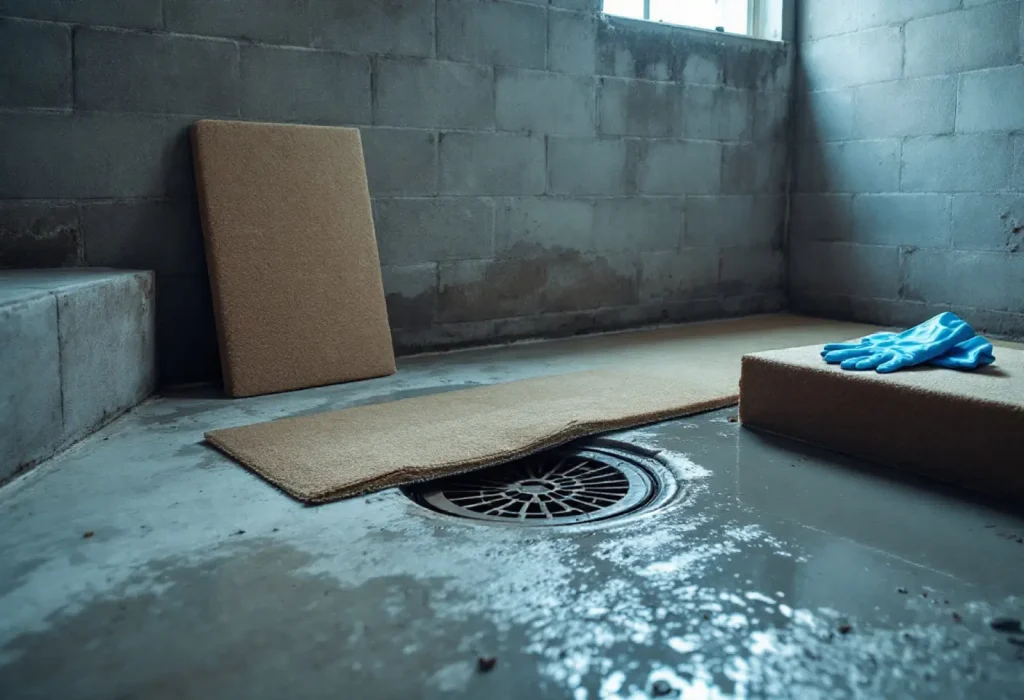
| Sewage in a flooded basement | No for BBP (28 August 1995 letter, 7 August 2007 letter); PPE under 1910.132 still applies | IICRC S500 Category 3; remediate before drying (S500 Consensus Body position statement of 10 February 2026) | Liquid to sanitary sewer; soaked porous debris through the hauler |
| Hoarding home, feces mixed with other fluids | Yes where fluids cannot be told apart, (b) and (d)(1) | Category 3 controls; registered product at label time | Regulated waste if it would release fluid when compressed; state medical waste route |
| Nursing home or hospital linen and bedpans | Feces not OPIM per se, but healthcare laundry is handled as contaminated laundry (23 February 2011 letter) | EPA List K product where C. diff is the target: 1.5 to 10 minutes | Feces not removed in surgery or autopsy may go to the sanitary sewer (North Carolina) |
| Public pool fecal incident | No blood, no BBP; CDC pool protocol governs | Formed: 2 ppm chlorine for 25 to 30 minutes. Diarrhea: CT 15,300, 20 ppm for 12.75 hours, per the CDC fecal incident response recommendations for aquatic staff | Net or bucket out, sanitary disposal; backwash filter to waste |
| Any stool with visible blood at work | Yes. A body fluid visibly contaminated with blood is OPIM | Gloves under (d)(3)(ix), registered disinfectant | Regulated waste; in Florida, saturated absorbent items are biomedical waste (Florida rule 64E-16.002) |
Two rows surprise people. The hoarding row turns into a full bloodborne job with no blood in sight, because 1910.1030(d)(1) orders that all body fluids be treated as potentially infectious where they cannot be told apart. And the flooded basement row carries the heaviest cleanup standard on the table while sitting outside the OSHA blood rule entirely, according to OSHA’s own 1995 and 2007 letters.
Which words in 29 CFR 1910.1030(b) leave feces out, and which two clauses pull it back in?
The definition of other potentially infectious materials in 29 CFR 1910.1030 has three parts. Part 1 names the human body fluids covered: semen, vaginal secretions, cerebrospinal, synovial, pleural, pericardial, peritoneal and amniotic fluid, and saliva in dental procedures. Parts 2 and 3 cover unfixed human tissue and HIV or HBV cultures. Feces is not in any of them.
Part 1 ends with the two clauses that matter for a feces job: “any body fluid that is visibly contaminated with blood” and “all body fluids in situations where it is difficult or impossible to differentiate between body fluids.” Paragraph (a) limits the whole standard to occupational exposure, defined in (b) as reasonably anticipated skin, eye, mucous membrane or parenteral contact that may result from an employee’s duties. A homeowner cleaning a toddler’s accident is outside 1910.1030 before any of the definitions are reached.
Regulated waste in (b) is built from the same terms: liquid or semi-liquid blood or OPIM, items that would release it if compressed, and items caked with it. If the feces is not OPIM, a bag of it is not regulated waste under OSHA, which is why the red bag question depends on the blood test first. The same pattern for another excretion is set out on our page asking is urine a biohazard.
What have OSHA’s letters from 1995 to 2024 said about feces, sewage and incontinence products?
OSHA has answered the feces question in writing at least five times over 29 years, and the answer has not moved. Letters of interpretation do not add duties; OSHA says they explain how the standard applies to the facts in the question.
| Date | Question put to OSHA | OSHA’s answer | Letter |
|---|---|---|---|
| 28 August 1995 | Sewage discharge from a device maker | Water, urine, feces and human wastes in sewage are not OPIM unless visibly contaminated with blood; sewage is not regulated waste under most circumstances | 28 August 1995 letter |
| 7 August 2007 | How to tell if raw sewage holds blood | Diluted raw sewage not from a health care facility or other bulk blood source is generally not covered; 1910.132 PPE still applies | 7 August 2007 letter |
| 23 February 2011 | Nursing home linen soiled with urine or feces | Urine and feces not containing blood are not per se OPIM, but healthcare laundry meets the contaminated laundry definition; staff must be offered hepatitis B vaccination | 23 February 2011 letter |
| 23 October 2015 | Waste with incontinence and hygiene products | OPIM does not include urine and feces; in the absence of visible blood the standard does not apply | 23 October 2015 letter |
| 22 March 2024 | Digital rectal examinations | Generally, feces are not OPIM; where feces is visibly contaminated with blood, universal precautions and the standard apply | 22 March 2024 letter |
The 23 February 2011 letter is the one healthcare employers should read in full. It agrees that urine and feces without blood are not OPIM, then refuses to let that decide the job: wound drainage, bed sores and sharps left in linen mean nursing staff and housekeepers in long term care facilities and hospitals are among those who must be offered the hepatitis B vaccination under 1910.1030(f)(1)(i). Contaminated laundry must be bagged where it was used and not sorted or rinsed there, under (d)(4)(iv)(A)(1).
The 28 August 1995 letter also names the trades that cross the line. OSHA wrote that plumbers and pipefitters are not generally considered to have occupational exposure, but plumbers working on drains in laboratories, operating rooms or mortuaries may. The difference is the source of the waste, not its look.
If OSHA’s blood rule is out, why does IICRC S500 still treat a toilet backflow as Category 3?
Because the two documents answer different questions. ANSI/IICRC S500, fifth edition 2021, defines Category 3 water as grossly contaminated water that can contain pathogenic, toxigenic or other harmful agents, and lists sewage and “wasteline backflows that originate from beyond any trap regardless of visible content or color” among its examples, as quoted in the S500 Consensus Body position statement of 10 February 2026.
The same statement quotes section 10.6.7: with Category 2 or 3 water, remediation should occur prior to restorative drying, and restorers shall use contamination controls and worker protection. That order matters on a sewage job. Drying soaked carpet pad in place before removal is the step S500 rules out. How the three categories work in full is on our IICRC water categories page.
OSHA lands in a similar place by another route. Its 2007 letter says exposure to raw sewage poses health hazards and points employers to 29 CFR 1910.132, the general personal protective equipment standard, which needs no blood at all. The job steps for a sewage loss are on our sewage damage cleanup page.
Is 10 minutes wet enough for C. diff? Contact times on all 94 EPA List K products
EPA’s page for EPA List K notes that C. diff spreads by fecal oral transmission, which makes it the right list to read for a feces cleanup in a healthcare or care home setting. On 16 November 2026 it held 94 entries, with contact times, the minutes a surface must stay wet, from 1.5 to 10.
Ten minutes is the most common time: 30 of 94 entries, about 32%, by our count of the EPA table. 59 entries need 5 minutes or more and 35 need less. A wipe that dries in two minutes on a product labelled for 10 has not met the label, according to EPA’s instruction to follow the C. diff directions including contact time.
EPA gives a two step check: find the EPA Reg. No. on the label and search for it exactly as printed, then confirm the label carries C. diff directions under Use Directions for Disinfection. Nearly every List K entry is for hard nonporous surfaces; the one porous claim is a laundry product at 6 minutes. The norovirus list, List G, is counted on our is vomit a biohazard page.

How long does a pool stay closed after formed stool versus diarrhea?
The CDC fecal incident response recommendations for aquatic staff split pool incidents into two cases, with the numbers tied to pH 7.5 or less and water ideally at 77 F or warmer. For formed stool the target is 99.9% kill of Giardia cysts, per the CDC table, which EPA’s disinfection profiling manual underlies: 1 ppm for 45 minutes; 2 ppm for 25 to 30 minutes; 3 ppm for 19 minutes.
CDC calls a diarrheal incident a high risk event for contamination caused by Cryptosporidium. Without stabilizer, CDC sets a concentration times time value of 15,300 according to the recommendations: 15,300 divided by 20 ppm is 765 minutes, or 12.75 hours, and at 10 ppm it is 25.5 hours.
Stabilizer stretches every number, according to the CDC sheet. Cyanuric acid, dichlor and trichlor slow chlorine, so with cyanuric acid at 1 to 15 ppm CDC gives 28 hours at 20 ppm, 18 hours at 30 ppm or 8.5 hours at 40 ppm, and above 15 ppm it says to drain partially and dilute before trying. CDC also says vacuuming fecal matter from the water is not recommended. These CT values are for pool water only; they are not a recipe for floors or carpet.
Are soiled diapers medical waste in Florida, North Carolina, Maine or Minnesota?
No, in all four, unless blood enters the picture. State rules are the second test after OSHA, and the four read here agree on feces while wording the blood exception differently. Maine is the bluntest: its exclusion list names urine and feces without any blood condition attached.
| Rule | Feces | Diapers and soiled items | Note |
|---|---|---|---|
| Florida 64E-16.002(4) | Excretions such as feces are not biomedical waste unless visibly contaminated with blood | Absorbent materials saturated with excretions contaminated with visible blood are biomedical waste, (2)(a) | Last amended 3 June 1997 |
| North Carolina, DEQ guidance on 15A NCAC 13B | Feces not removed during surgery or autopsy is outside blood and body fluids; may go to the sanitary sewer | “Soiled diapers are not regulated medical waste” and may go out as general solid waste | Rules last amended 1 November 2019 |
| Maine 06-096 CMR ch. 900, s. 7(C)(2) | “Urine and feces” listed flatly as not biomedical waste | Diapers not named; items soaked or dripping with human blood are biomedical waste, A(2) | No blood condition in the exclusion |
| Minnesota PCA w-sw4-30 | Feces listed as a non-infectious liquid unless overtly contaminated with regulated body fluids | Households and residential care sites of 6 or fewer residents may use normal solid waste | June 2025 edition |
Generator status is the other half. Minnesota PCA fact sheet w-sw4-30 makes trauma cleanup services and residential care facilities with more than 6 residents regulated infectious waste generators, so a crew removing bloody, fluid soaked materials in Minnesota is inside the rule even when the homeowner was not. Packaging and hauler steps for that material are on our biohazard waste disposal page.
Is dog feces a biohazard under 1910.1030, and what about mouse droppings?
Dog and cat feces never meet the OPIM definition in 29 CFR 1910.1030. Part 1 opens with “the following human body fluids”, and the only animal material in part 3 is blood, organs or tissue from experimental animals infected with HIV or HBV. A kennel worker picking up dog waste falls under general duties such as the PPE standard, 1910.132, not the bloodborne pathogens standard.
Rodent droppings are a pest control job. The CDC rodent cleanup page says not to sweep or vacuum them, to spray them with 1.5 cups of household bleach per gallon of water until very wet, and to let that soak 5 minutes or as the disinfectant label directs.
For contractors: when does a feces job need the full bloodborne pathogens program?
When any task on it can reasonably be expected to bring contact with blood or OPIM. The {L2024} restates the employer duty under 1910.1030(c)(2): decide which job classifications and tasks carry that exposure. On a hoarding, unattended death or long term neglect job, feces is rarely the only fluid, and the cannot differentiate clause in (b) and (d)(1) turns the whole mixture into OPIM.
Once that happens, the standard’s machinery applies: engineering and work practice controls under (d)(2)(i), gloves under (d)(3)(ix), hepatitis B vaccination offered under (f)(1)(i), and regulated waste labelled per (g)(1)(i), which the 1995 letter describes as fluorescent orange or orange red with the biohazard symbol. How those jobs are staged is on our hoarding cleanup page.
For a plain sewage or diaper job with no blood, three questions settle the paperwork before the crew starts: which OSHA letter covers the scenario, what IICRC category the inspection supports, and whether the state counts the company as a medical waste generator. Write all three answers on the job file. More rule explainers sit in our standards hub.
Out of scope. This page covers how regulations classify feces and fecal waste, not the health effects of contact. For health questions, see the CDC.
Questions people actually ask
Is it legal to make an employee clean up feces?
Yes, with protection. OSHA’s 7 August 2007 letter says employers must evaluate the workplace and protect employees exposed to raw sewage, pointing to the personal protective equipment standard, 29 CFR 1910.132. If blood is visible, the full bloodborne pathogens standard applies, including the hepatitis B vaccination offer under 1910.1030(f)(1)(i).
Is feces a hazardous substance?
Not as OSHA’s bloodborne pathogens standard uses its terms. OSHA’s 1995 letter says sewage would not meet the regulated waste definition under most circumstances, and Maine’s rule 06-096 CMR ch. 900 lists urine and feces as not biomedical waste. OSHA’s letters of 2007 and 2024 still say human wastes can pose health hazards, so PPE rules apply.
What qualifies as a biohazard under OSHA?
Blood and the other potentially infectious materials listed in 29 CFR 1910.1030(b): nine named human body fluids, any body fluid visibly contaminated with blood, fluids that cannot be told apart, unfixed human tissue and HIV or HBV cultures. Waste becomes regulated when it is liquid or semi-liquid OPIM or would release it when compressed.
Is human pee a biohazard?
Not by itself. OSHA’s 2015 letter on incontinence products says OPIM does not include urine and feces, and that in the absence of visible blood the standard does not apply. Florida rule 64E-16.002(4) uses the same visible blood test for urine. Stored urine does raise an ammonia problem, covered on the urine page.
Do I need a red biohazard bag for a dirty diaper?
Not under OSHA or the four state rules read here, unless blood is visible. North Carolina’s DEQ guidance says soiled diapers are not regulated medical waste and may go out as general solid waste, and Minnesota’s June 2025 fact sheet lets households use normal solid waste. A child care licensing rule may still set its own bagging requirement.
Sources
- Occupational Safety and Health Administration, 29 CFR 1910.1030, Bloodborne pathogens, paragraphs (a), (b), (d)(1) and (d)(4)(iii)(C), via Cornell Legal Information Institute. Retrieved 16 November 2026.
- OSHA, 28 August 1995 letter, Evaluation of raw sewage as regulated waste; product label compliance with the bloodborne pathogens standard. Retrieved 16 November 2026.
- OSHA, 7 August 2007 letter, Determining the presence of blood in mixture that comprises raw sewage. Retrieved 16 November 2026.
- OSHA, 23 February 2011 letter, interpretation on soiled linen, urine and feces in long term care facilities. Retrieved 16 November 2026.
- OSHA, 23 October 2015 letter, Incontinence and Feminine Hygiene Products. Retrieved 16 November 2026.
- OSHA, 22 March 2024 letter, Application of OSHA’s Bloodborne Pathogens standard to digital rectal examinations for rectal foreign bodies. Retrieved 16 November 2026.
- US Environmental Protection Agency, EPA List K, EPA’s Registered Antimicrobial Products Effective Against Clostridioides difficile (C. diff) Spores, last updated 3 June 2026. Retrieved 16 November 2026.
- Centers for Disease Control and Prevention, CDC fecal incident response recommendations for aquatic staff, Healthy Swimming (PDF). Retrieved 16 November 2026.
- ANSI/IICRC S500 Consensus Body, S500 Consensus Body position statement of 10 February 2026, Category of Water Damage and Weather Related Events, quoting the fifth edition S500 (2021). Retrieved 16 November 2026.
- Florida Department of Health, Florida rule 64E-16.002, Definitions, via Cornell LII. Retrieved 16 November 2026.
- North Carolina Department of Environmental Quality, North Carolina DEQ medical waste guidance. Retrieved 16 November 2026.
- Maine Department of Environmental Protection, Maine rule 06-096 CMR ch. 900, section 7, Definition of Biomedical Waste, via Cornell LII. Retrieved 16 November 2026.
- Minnesota Pollution Control Agency, Minnesota PCA fact sheet w-sw4-30, Infectious waste for generators, June 2025. Retrieved 16 November 2026.
- Centers for Disease Control and Prevention, CDC rodent cleanup page, How to Clean Up After Rodents, 8 April 2024. Retrieved 16 November 2026.
- The seven scenario table and the List K contact time count are our own compilation from the texts above; pool closure hours without stabilizer are our arithmetic, according to the CT value of 15,300 in the CDC sheet. Our methodology sets out the standing rules.
This page describes federal and state rule text and OSHA letters of interpretation, which explain but do not add to the standard. State plan states, local health departments and pool regulators can set stricter rules; confirm with the agency that licenses your site.