The short answer
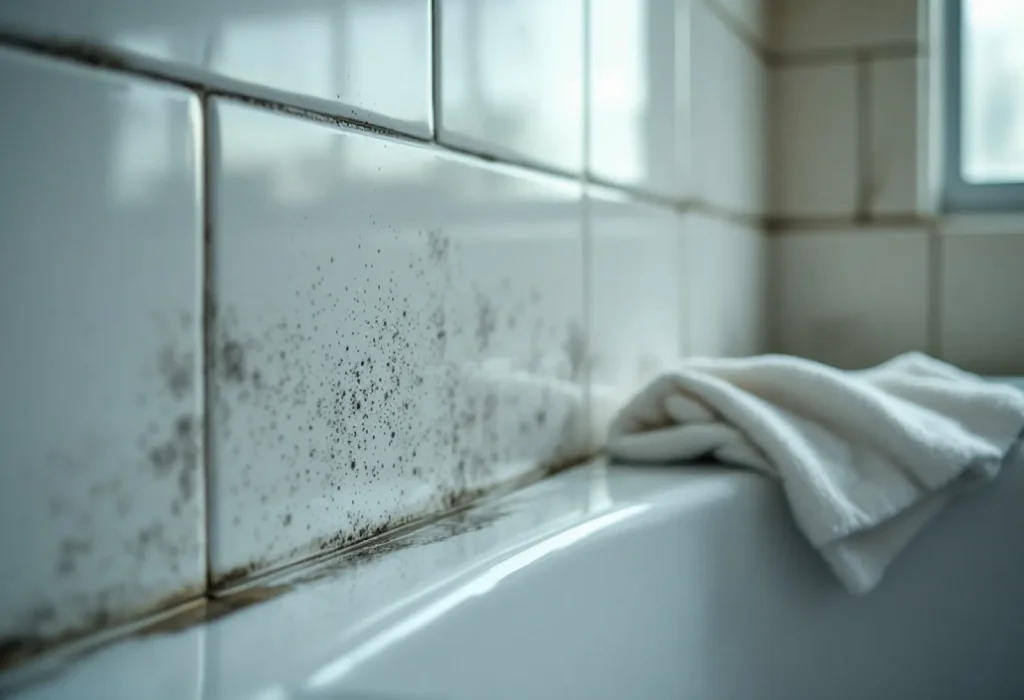
Does Lysol kill mold? Two of six Lysol EPA labels checked make a mold kill claim, both on hard, nonporous surfaces only: the bleach Mold & Mildew Remover (Reg. No. 777-83) after 5 minutes wet, 10 for Stachybotrys, and Disinfectant Spray (777-99) after 3 minutes for two named molds. Lysol wipes and cleaners only claim to control growth. No label covers drywall, carpet or fabric.
Which Lysol labels say “kills mold”, and which only say “controls”?
A Lysol product can only promise what its EPA-accepted label says. Under 40 CFR 152.15, a product sold with a claim that it prevents or destroys a pest must be registered, and under 40 CFR 156.10 the label must carry the number after the words “EPA Reg. No.”. The table reads six Lysol registrations held by Reckitt in EPA’s Pesticide Product Label System, most recent accepted label in each case, and copies the mold wording.
| Product as sold | EPA Reg. No., label and active | Exact mold claim and fungi named | Contact time | Surfaces on the label |
|---|---|---|---|---|
| Lysol Mold & Mildew Remover with Bleach | 777-83 (EPA label for Reg. No. 777-83, EPA record name: Lysol Brand Disinfectant Bleach Plus); sodium hypochlorite 2% | KILLS. Directions heading: “Kills Mold & Mildew”. Named fungi: Alternaria alternata, Aspergillus fumigatus, A. niger, Cladosporium sphaerospermum, Penicillium chrysogenum, Trichophyton mentagrophytes; Stachybotrys chartarum (black mold) separately | 5 min wet, then air dry; 10 min for Stachybotrys; repeat weekly | Hard, nonporous. Avoid clothes, fabric, wood, rubber, carpet, painted or paper surfaces, nonporous vinyl, finished floors |
| Lysol Disinfectant Spray (aerosol) | 777-99 (EPA label for Reg. No. 777-99, record name: BRACE); EPA lists ethanol 58% | KILLS TWO MOLDS: 3 minute fungal disinfection list names Aspergillus niger and Penicillium chrysogenum; optional claim “Kill(s) 99.9% of mold and mildew”. But the mold direction is headed “To Control and Prevent (the Growth of) Mold & Mildew”; fungistat list adds Alternaria alternata | 3 min visibly wet; hold 6 to 8 in away, spray 3 to 4 s | Hard, nonporous for mold. Soft surface fungus list is only Trichophyton interdigitale. Not on polished wood, painted surfaces, leather, rayon, acrylic plastics |
| Lysol All Purpose Cleaner (trigger) | 777-89 (EPA label for Reg. No. 777-89); EPA lists quaternary ammonium 1.1856% | CONTROLS AND PREVENTS: “To Control (and Prevent) (the Growth of) Mold & Mildew”; claim text: “Kills germs and controls the growth of mold and mildew”. Fungistat list: A. niger only | 3 min visibly wet, then air dry; repeat weekly | Hard, nonporous. Not on unfinished, oiled or waxed wood floors |
| Lysol Foaming Disinfectant Basin Tub & Tile Cleaner II | 777-71 (EPA label for Reg. No. 777-71); EPA lists three quaternary ammonium actives, 0.1% combined | CONTROLS AND PREVENTS, plus “Helps remove Mold & Mildew stains”. Fungistat: A. niger. Only fungus killed: Candida albicans, a yeast | 3 min wet before wiping | Hard, nonporous bathroom surfaces |
| Lysol Disinfecting Wipes | 777-114 (EPA label for Reg. No. 777-114, record name: Sting); EPA lists quaternary ammonium 0.26% | PREVENTS: “To Prevent the Growth of Mold and Mildew”; label calls it a mildewstat that will “inhibit” growth. Fungistat: A. niger | 3 min visibly wet, then air dry | Hard, nonporous. Not on unfinished, oiled or waxed wood, unsealed tiles or carpet |
| Lysol Disinfectant Direct Multi-Purpose Cleaner | 777-66 (EPA label for Reg. No. 777-66); two quaternary ammonium actives | CONTROLS AND PREVENTS on hard, nonporous surfaces. Fungistat: A. niger. Fungi killed: Candida albicans and T. interdigitale, not molds | 3 min visibly wet, then air dry | Hard, nonporous. Not on unfinished, oiled or waxed wood floors |
The split is sharp. The 777-83 bleach label carries a Fungicidal list of seven fungi and a direction headed “Kills Mold & Mildew”. The 777-99 spray label lists two molds under 3 minute fungal disinfection, yet heads its own mold direction “To Control and Prevent”. The four quat labels, 777-89, 777-71, 777-114 and 777-66, carry only a “Mildew Fungistat” list naming one test mold, Aspergillus niger, and wording that says control, prevent or inhibit.
Contact times quoted online for Lysol spray are often a generic “typically 10 minutes” with no product named; the 777-99 label says 3 minutes, and the 10 minute figure belongs to the remover’s Stachybotrys step. Even Lysol's own mold and mildew tips page names a remover and a “Blaster” that link to the same product page and gives no EPA Reg. No.
What is the difference between “kills mold”, “controls mold” and “removes mold stains” on a Lysol label?
Each phrase maps to a different list on the EPA label. A kill claim needs a Fungicidal list naming the species and a contact time: the EPA label for Reg. No. 777-83 names six fungi at 5 minutes and Stachybotrys chartarum at 10, and the EPA label for Reg. No. 777-99 names two molds at 3. A control claim sits on a “Mildew Fungistat” list. The EPA label for Reg. No. 777-114 spells out what that means: the product “is a mildewstat and will effectively inhibit” mold and mildew growth on hard, nonporous surfaces.
The third tier is cosmetic. The 777-71 label offers “Helps remove Mold & Mildew stains” as optional marketing text, and the 777-83 label lists “Removes mold and mildew stains”. Neither names an organism or a time, so neither tells you anything died. Stain products by brand are compared on our mildew remover page.
How long does Lysol take to kill mold: 3, 5 or 10 minutes?
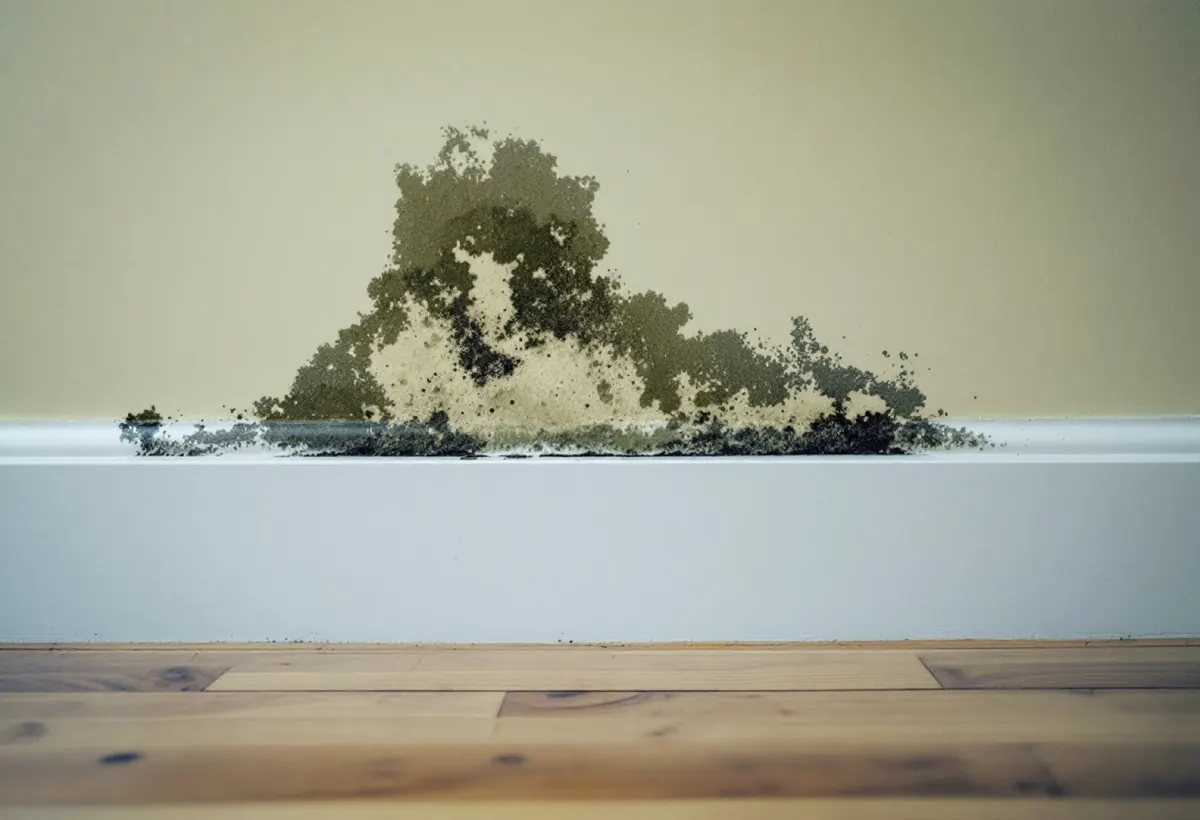
The clock depends on the registration, and the spray is the shortest. The EPA label for Reg. No. 777-99 says to hold the can upright 6 to 8 inches from a pre-cleaned surface, spray 3 to 4 seconds until covered with mist, and let it stay visibly wet for 3 minutes. The 777-83 bleach remover needs 5 minutes wet for its named molds and 10 minutes for Stachybotrys chartarum before air drying.
“Wet” is the operative word. A mist that dries in 60 seconds has not met a 3 minute direction, and EPA treats use inconsistent with the label as a violation: every label read here opens its directions with “It is a violation of Federal law to use this product in a manner inconsistent with its labeling.” On a warm, ventilated shower wall that can mean a second pass.
Every label also says pre-clean first. The 777-83, 777-89 and 777-99 directions each begin with “Apply to pre-cleaned surface” or “Pre-clean”, which matches the first step on EPA's Mold Cleanup in Your Home page: scrub mold off hard surfaces with detergent and water. The spray is the second step on glass or tile, never the first.
Does Lysol kill mold on wood, walls, carpet, fabric or concrete?
Every Lysol mold direction read here is limited to hard, nonporous surfaces, and several labels go further and name the porous ones to keep away from. The second column below quotes those exclusions; the third gives the cleanup methods EPA 402-K-01-001, Table 2, assigns to each material for jobs under 10 square feet.
| Surface | What the Lysol labels say | EPA Table 2 methods (under 10 sq ft) | Practical result |
|---|---|---|---|
| Glazed tile, glass, sealed porcelain, metal | Yes, all six labels: hard, nonporous | 1, 2, 3 | 777-83 kills; others control growth |
| Plastic (shower caddy, tub surround) | Yes if nonporous; 777-99 excludes acrylic plastics, 777-83 warns of discoloring plastic laminate | 1, 2, 3 | Test a hidden spot |
| Wood (trim, furniture, decks) | 777-83: avoid wood. 777-99: not polished wood. 777-114: not unfinished, oiled or waxed wood | 1, 2, 3 | EPA Method 2 for wood: wood floor cleaner |
| Painted drywall, plaster walls | 777-83: avoid painted or paper surfaces. 777-99: not on painted surfaces | 3 only | Drywall is porous; EPA lists discard from 10 sq ft |
| Carpet and rugs | 777-83: avoid carpet. 777-114: not on carpet | 1, 3 | No label mold direction covers carpet |
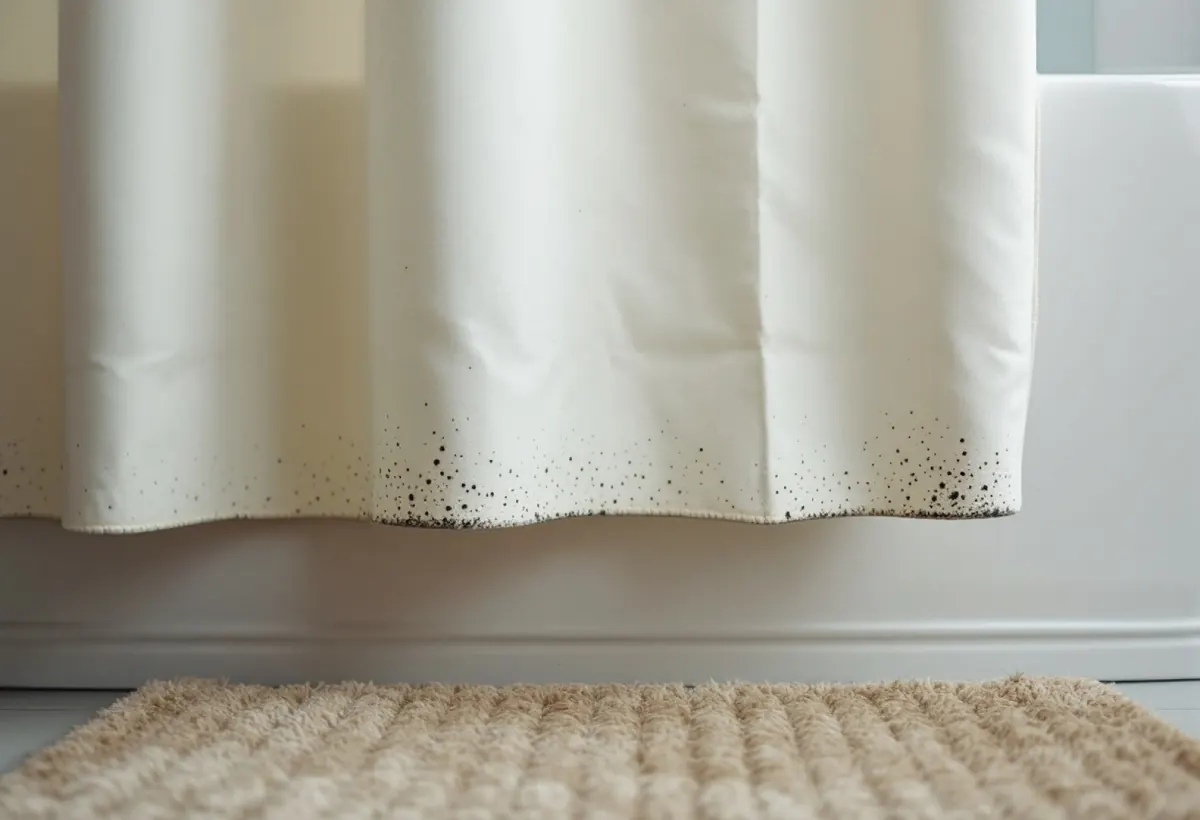
| Fabric, upholstery, shower curtains | 777-83: avoid fabric. 777-99 soft surface fungus list: T. interdigitale only | 1, 3 | Launder or discard |
| Concrete, cinder block | Not named as hard, nonporous on any label read | 1, 3 | No damp wipe method in EPA Table 2 |
Fabric is the most common mistake. The 777-99 label does carry soft surface claims, but its 9.5 minute soft surface fungus list names one organism, Trichophyton interdigitale, an athlete’s foot fungus, not a mold, and the label says “DO NOT SATURATE” fabric. So a quick spritz on a mildewed couch or curtain is outside what the label claims. Washing is covered on our mold on clothes page.
Walls and carpet fail for a reason EPA states plainly. EPA's Mold Cleanup in Your Home page, last updated 4 June 2026, says absorbent or porous materials such as ceiling tiles and carpet may have to be thrown away, because mold can grow in their crevices and be difficult or impossible to remove completely. A surface spray cannot reach growth inside the paper face of gypsum board.
If a Lysol EPA label says it kills 99.9% of a mold on tile, is the mold problem solved?
No, and EPA explains why in two sentences. EPA 402-K-01-001, EPA’s 2008 schools and commercial buildings guide, says the purpose of mold remediation is to remove the mold, that it is necessary to clean up contamination and not just kill it, and that dead mold is still allergenic. EPA's bleach and mold page, last updated 8 September 2026, repeats that a biocide is not recommended as a routine practice during mold cleanup.
A disinfectant spray kills in place and leaves the dead growth on the wall. That is fine for routine shower upkeep, which is how the labels frame it: 777-83, 777-89, 777-99 and 777-114 all say to repeat at weekly intervals or when growth appears, and the 777-83 label claims growth control for up to 7 days. Weekly repetition is a maintenance schedule, not a cure.
The fix is moisture. EPA's Brief Guide to mold says to dry water-damaged areas and items within 24 to 48 hours and that the key to mold control is moisture control. Once growth passes about 10 square feet, roughly 3 feet by 3 feet, EPA’s cleanup page says to consult its commercial buildings guide rather than treat it as a routine job. Where that line falls for a homeowner is covered on our DIY mold remediation page.
Out of scope: this page reads product labels and EPA cleanup guidance. For mold and health questions, start with EPA’s mold pages or the CDC.
Can you use Lysol with bleach, vinegar or hydrogen peroxide on the same patch?
Not at the same time. The 777-83 remover already contains sodium hypochlorite at 2%, per the EPA PPLS record, and Reckitt's SmartLabel for it warns that mixing with other chemicals such as ammonia, acids or detergents may release chlorine gas. EPA's bleach and mold page adds the general rule: never mix chlorine bleach solution with cleaning products that contain ammonia, because toxic fumes could be produced.
Vinegar is an acid, so it belongs on that list against the bleach remover, and as sold for the kitchen it carries no EPA Reg. No. or mold kill claim under 40 CFR 152.15. What it does on its own is on our does vinegar kill mold page, and peroxide has its own label audit on our does hydrogen peroxide kill mold page. If one product is used, rinse and dry before the next, and ventilate as EPA’s 2008 guide asks for any biocide.
Plain household bleach is a separate product with its own label and dilution rules, set out on our does bleach kill mold page. A cross-brand list of EPA-registered mold products sits on our mold killer page.
How do you check what the Lysol bottle in your cabinet claims?
- Find the “EPA Reg. No.” on the back panel; 40 CFR 156.10 requires it on every registered pesticide label. A Lysol product without one makes no federally reviewed mold claim.
- Type the number, for example 777-99, into EPA’s Pesticide Product Label System; the EPA PPLS record lists every accepted label PDF with its date.
- Search the label for “Fungicidal” and “Mildew Fungistat”. A species under Fungicidal is a kill claim; a species under Fungistat is a growth-control claim.
- Read the contact time for that list: 3, 5 or 10 minutes, wet the whole time.
- Read the advisory block for excluded surfaces, such as the 777-83 list of clothes, fabric, wood, rubber, carpet and painted surfaces.
Two minutes with the PDF settles what retail pages blur. The registered names rarely match the shelf name: EPA files the aerosol as BRACE and the wipes as Sting, so search by number, not brand.
Questions people actually ask
What happens if you spray Lysol on mold?
On tile or glass, the 777-99 Disinfectant Spray label promises to control and prevent mold and mildew growth after 3 minutes of visible wetness, and lists Aspergillus niger and Penicillium chrysogenum as molds it kills in 3 minutes. The dead growth stays on the surface until it is wiped off. On drywall or fabric, the label makes no mold claim at all.
Does Lysol kill airborne mold spores?
No Lysol label read for this page claims to kill mold in the air. The 777-99 aerosol label’s in-the-air claims are about odors only, while its mold directions apply to hard, nonporous surfaces. EPA’s 2008 guide says a background level of spores will remain in indoor air after any cleanup, roughly equal to or lower than outdoor air.
What kills mold better, vinegar or Lysol?
On a label basis, the Lysol bleach remover, EPA Reg. No. 777-83, has an EPA-accepted mold kill claim and vinegar does not; the label names Stachybotrys chartarum at 10 minutes. Food vinegar has no EPA registration for mold. Never use the two together: the 777-83 SmartLabel warns that acids mixed with it may release chlorine gas.
What is the best disinfectant to remove mold?
EPA’s answer is that removal, not disinfection, is the goal: scrub hard surfaces with detergent and water and dry them within 24 to 48 hours. If a kill step is wanted on a hard, nonporous surface, pick a product whose EPA label lists the mold under Fungicidal, and follow its contact time, such as 5 minutes for 777-83.
Does Lysol stop mold from coming back?
For about a week on hard surfaces, by its own label. The 777-83 label claims it prevents and controls mold and mildew growth for up to 7 days, and the 777-99 spray label carries an optional “for up to 7 days” prevention claim. Both say to repeat weekly. Regrowth stops only when the water source is fixed, per EPA’s Brief Guide.
Sources
- EPA label for Reg. No. 777-83, Lysol Brand Disinfectant Bleach Plus, US EPA PPLS, label accepted 5 October 2022 (PRN 98-10 notification). Retrieved 11 November 2026.
- EPA label for Reg. No. 777-99, BRACE (Lysol Disinfectant Spray), US EPA PPLS, label amendment accepted 13 January 2025. Retrieved 11 November 2026.
- EPA's 10 January 2014 letter, Lysol Disinfecting Spray, EPA Registration No. 777-99, US EPA PPLS. Retrieved 11 November 2026.
- EPA label for Reg. No. 777-89, Lysol Brand All Purpose Cleaner, US EPA PPLS, notification accepted 20 May 2022. Retrieved 11 November 2026.
- EPA label for Reg. No. 777-71, Lysol Brand Foaming Disinfectant Basin Tub & Tile Cleaner II, US EPA PPLS, notification accepted 2 June 2022. Retrieved 11 November 2026.
- EPA label for Reg. No. 777-114, Sting (Lysol Disinfecting Wipes), US EPA PPLS, label accepted 10 August 2026. Retrieved 11 November 2026.
- EPA's November 2012 letter, Sting, EPA Registration Number 777-114, alternate brand names, US EPA PPLS. Retrieved 11 November 2026.
- EPA label for Reg. No. 777-66, Lysol Brand Disinfectant Direct Multi-Purpose Cleaner, US EPA PPLS, label accepted 10 August 2026. Retrieved 11 November 2026.
- EPA PPLS record for 777-83, with the same records read for 777-66, 777-71, 777-89, 777-99 and 777-114, US EPA Office of Pesticide Programs. Retrieved 11 November 2026.
- Reckitt's SmartLabel, Lysol Mold & Mildew Remover with Bleach, Reckitt Benckiser. Retrieved 11 November 2026.
- EPA 402-K-01-001, Mold Remediation in Schools and Commercial Buildings, US EPA, September 2008, Table 2 and Biocides section. Retrieved 11 November 2026.
- EPA's Mold Cleanup in Your Home page, Mold Cleanup in Your Home, US EPA, last updated 4 June 2026. Retrieved 11 November 2026.
- EPA's bleach and mold page, Should I use bleach to clean up mold?, US EPA, last updated 8 September 2026. Retrieved 11 November 2026.
- EPA's Brief Guide to mold, A Brief Guide to Mold, Moisture and Your Home, US EPA, last updated 18 February 2026. Retrieved 11 November 2026.
- 40 CFR 152.15, Pesticides requiring registration, Legal Information Institute, Cornell Law School. Retrieved 11 November 2026.
- 40 CFR 156.10, Labeling requirements, Legal Information Institute, Cornell Law School. Retrieved 11 November 2026.
- Lysol's own mold and mildew tips page, How to clean up mold and mildew, Lysol. Retrieved 11 November 2026.
- Label wording is our transcription of EPA-accepted labels; shelf labels can carry fewer optional claims than the master label. Our methodology sets out the standing rules, and more mold pages are on the mold hub.
Follow the label on the product you hold; it is the legal document for that product.