The short answer
Yes, a gasoline smell in house air is dangerous when it is strong: gasoline vapor ignites at 1.4 percent in air, per NIOSH, and it sinks toward floors and basements. Get everyone out, touch no switches or flames, and call the fire department from outside. A faint smell usually traces to an attached garage, a fuel can, a mower or a heating oil line.
Strong fuel smell right now: what are the first five things to do?
The Mississippi Insurance Department fire preparedness page, which carries the state fire marshal’s guidance, gives a short list for a gasoline smell in the home: clear people from the area, open all doors and windows, call the fire department from a neighbor’s house, do not turn on lights or appliances, do not light matches or lighters, and do not re-enter until the fire department says so. Making the call from outside matters because a phone, like a switch, can spark.
- Leave switches as they are. Flipping a light on or off, using the doorbell and adjusting a thermostat are all on the spark list in the Connecticut PURA natural gas page for natural gas, and the same physics applies to gasoline vapor.
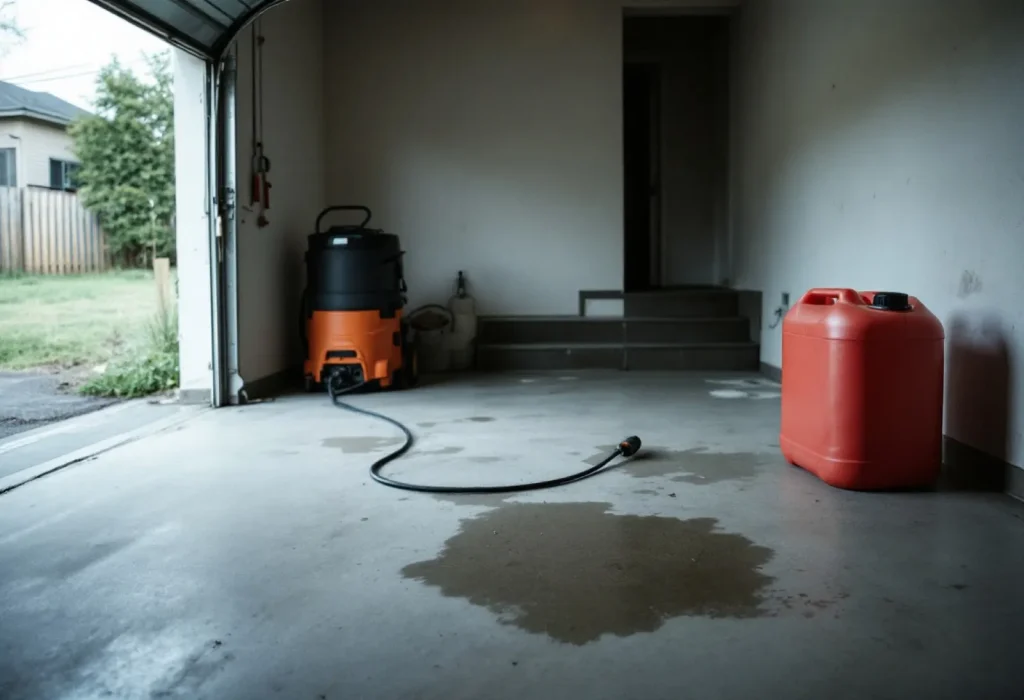
- Do not start a car in an attached garage or run a shop vacuum on the spill. The Tomball, Texas fire marshal's gasoline page lists electrical devices and anything with a pilot flame or spark as ignition sources, and the Wisconsin Department of Health Services says not to clean a fuel spill with a shop vac or any electric appliance or power tool.
- If something catches fire, the Tomball fire marshal says not to try to put it out or stop the flow of gasoline: leave and call for help.
- If the odor is rotten egg rather than fuel, it is natural gas or propane, which utilities odorize with mercaptan per Connecticut PURA: leave and call the gas company or 911 from outside.
How far is a smell you can notice from the 1.4 percent mix that ignites?
According to the ATSDR Medical Management Guidelines for gasoline, people can smell gasoline at 0.025 parts per million (ppm), and its odor gives adequate warning of hazardous levels. Per the NIOSH Pocket Guide entry for gasoline, the lower explosive limit (LEL) is 1.4% and the upper explosive limit is 7.6%. One percent of air is 10,000 ppm, so per the NIOSH figure the LEL is 14,000 ppm, about 560,000 times the ATSDR odor threshold.
A trace you can just detect is far below an ignitable mix. A smell that is sharp across a room says nothing about how close the air near the floor is to the 14,000 ppm LEL, per the NIOSH figure, and ATSDR says gasoline vapors are heavier than air and collect in low-lying areas.
Workplace rules draw the danger line well below the LEL. OSHA’s permit space standard, 29 CFR 1910.146, defines a hazardous atmosphere to include flammable vapor above 10 percent of its lower flammable limit, which for gasoline is 1,400 ppm. According to ATSDR, the ACGIH 8 hour limit of 300 ppm and the AIHA 1 hour ERPG 2 of 1,000 ppm sit lower still. Health effects of exposure are outside this page; the ATSDR ToxFAQs for automotive gasoline answer those questions.
Where is the smell strongest? Eight sources and who to call for each
Where the odor is strongest narrows the source faster than anything else, because ICSC 1400 puts gasoline vapor at 3 to 4 times the density of air. The table lists eight sources with the first action and the agency or trade to call, each tied to a primary source.
| Source | Where it is strongest | First action | Who to call | Source |
|---|---|---|---|---|
| Spill or overfill in an attached garage | Garage floor, door to the house, low spots | Leave; ventilate from outside; absorb once safe | Fire department if strong; local household hazardous waste site | Washington Department of Ecology publication 03-08-005 |
| Mower, trimmer or generator stored in the garage or basement | Near the engine and fuel tank cap | Move it outside once cool; check cap and fuel line | Small engine repair shop | Tomball, Texas fire marshal's gasoline page |
| Leaking or venting fuel can | At the can, strongest at the spout and cap | Move it outside; replace a cracked can | Household hazardous waste program for old fuel | 40 CFR 59.611 |
| Car with a fuel leak in an attached garage | Under the car, near the tank or engine bay | Do not start it inside; push or tow it out | Fire department if strong; a mechanic | ATSDR Medical Management Guidelines for gasoline |
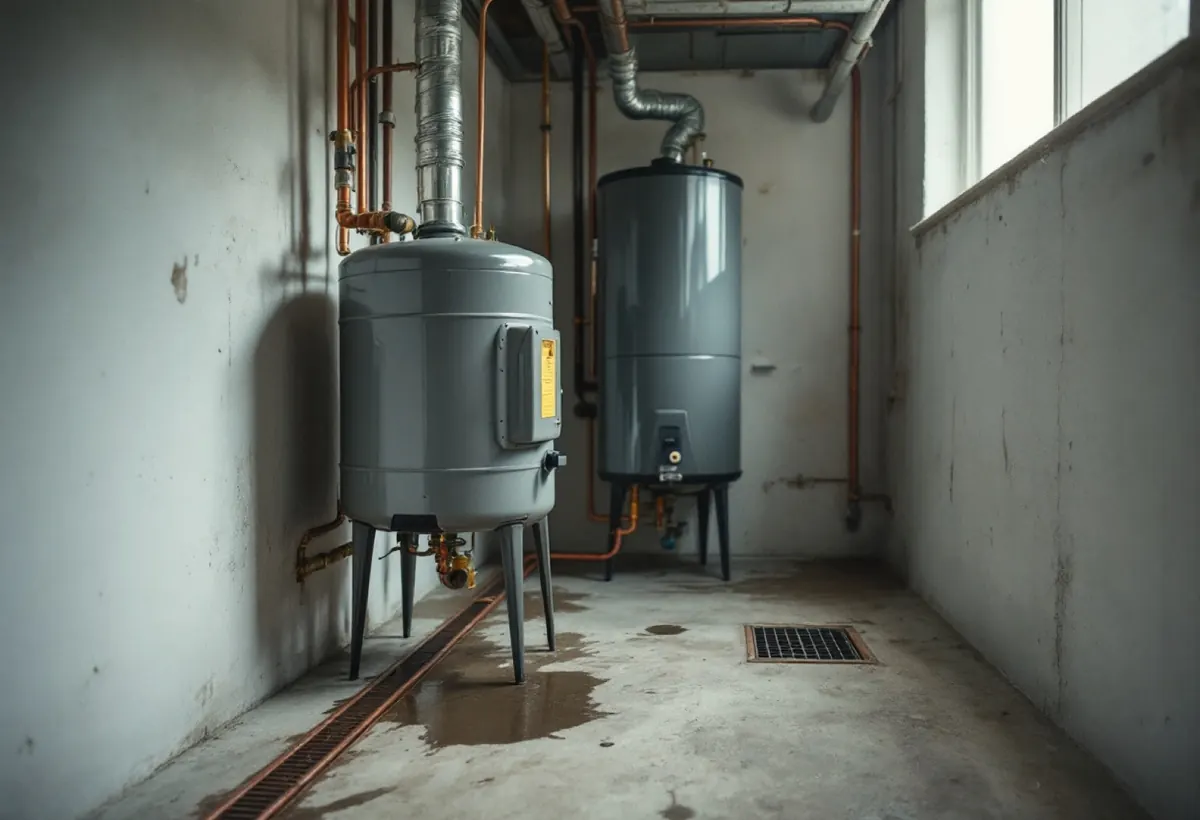
| Heating oil tank, filter or line (a different fuel) | Basement or utility room near tank or burner | Shut the burner off; absorb drips; block floor drains | Oil dealer; state spill line | Connecticut DEEP heating oil leak guidance; Wisconsin Department of Health Services |
| Vapor intrusion from a leaking underground tank nearby | Basement, sump, floor drains, slab cracks; comes and goes | Leave if strong; note when and where | Fire department; state UST program or health department | EPA 510-R-15-001; EPA's vapor intrusion page |
| Fuel on clothes or shoes after refueling | Laundry room, entry, closet | Air the items outside before washing | No one | ATSDR ToxFAQs for automotive gasoline |
| Smell no one else notices | Everywhere, follows you between rooms | Ask someone else to check the room | A physician | NIDCD smell disorders page |
A container sold to the federal standard in 40 CFR 59.611 may not emit more than 0.3 grams of hydrocarbons per gallon per day, must be free of leaks upright or inverted, and has a useful life of 5 years under the rule. A can that smells from across the garage is leaking above that design limit or is past it, and a cracked can is replaced, not taped.
Sewer gas from drains and traps is a plumbing problem, covered by theplumbingbrief.com.
Why does the gasoline smell settle in the basement and come and go?
The International Chemical Safety Card 1400 gives gasoline a relative vapor density of 3 to 4, where air equals 1, and ATSDR quotes the same range. Vapor that is three to four times as heavy as air flows down stairs, pools in basements, sumps and pits, and drifts across a garage floor under a door to the house.
Smells that come and go with weather point at the ground. EPA's vapor intrusion page describes vapors in soil gas entering buildings through foundation cracks and utility openings, and its figure shows atmospheric conditions and building ventilation influencing that entry. Per the EPA's petroleum vapor intrusion page, petroleum vapor intrusion covers gasoline, diesel and jet fuel, and the concern includes explosive concentrations as well as inhalation.
EPA’s 2015 guide, EPA 510-R-15-001, tells regulators to investigate every petroleum odor report near a leaking underground tank and names an oily sheen in a sump or drain as a reason to notify the fire department.
House smells like gasoline but you have electric heat and no gas car: what is left?
An all electric house rules out a burner, not the fuel: small engines, stored cans and a neighbor’s garage remain. EPA's vapor intrusion page lists household solvents, gasoline and cleaners as indoor sources that can carry some of the same chemicals as vapor intrusion, which is why investigators remove indoor sources before sampling.
If no source turns up and the smell is worst at the slab, look outward. EPA 510-R-15-001 says further investigation is generally unnecessary when more than 6 feet of clean soil separates dissolved petroleum contamination from a building, or more than 15 feet for liquid fuel (LNAPL) under a building with at least one side shorter than 66 feet. A home closer than that to a known release is one the state should hear about.
EPA directs vapor intrusion concerns to the state health department: ask whether a leaking tank is on record nearby and whether the agency samples indoor air. VOC sampling options for a home are on our indoor air quality testing page.
How much spilled gasoline does it take to fill a garage to the LEL?
This is a labelled calculation, not a measurement. The NIOSH Pocket Guide gives a conversion of 1 ppm = 4.5 mg per cubic meter and a specific gravity of 0.72 to 0.76. Per the NIOSH figures, the 14,000 ppm LEL is 63 grams of vapor per cubic meter. Multiply by the room volume and divide by density to get the liquid that would fill the room evenly.
| Space (8 ft ceiling unless stated) | Volume, cu ft | Vapor at LEL, g | Liquid at LEL, liters | Liquid at 10% LEL, mL |
|---|---|---|---|---|
| One car garage, 12 x 22 x 8 ft | 2,112 | 3,768 | 5.0 to 5.2 | 496 to 523 |
| Two car garage, 22 x 22 x 8 ft | 3,872 | 6,907 | 9.1 to 9.6 | 909 to 959 |
| Basement utility room, 10 x 12 x 7 ft | 840 | 1,499 | 2.0 to 2.1 | 197 to 208 |
For a 2,112 cu ft one car garage the answer is about 5.0 to 5.2 liters, or 1.3 to 1.4 gallons, for the whole room; the 10 percent OSHA line takes roughly 496 to 523 mL, about 2.1 to 2.2 cups. Real rooms do not mix evenly. ICSC 1400 states that the vapor is heavier than air, may travel along the ground and allows distant ignition, so a few cups poured on a slab can create an ignitable layer near a water heater pilot or a freezer compressor while the air at head height is far below the LEL.
How do you clean up a cup of gasoline on a concrete garage floor?
Only once the smell is faint and the door is open. The steps follow the Washington Department of Ecology publication 03-08-005 (May 2023 revision) for spills on concrete or paved surfaces, with two additions from ICSC 1400.
- Stop the source: upright the can, close the valve, put a pan under the drip, per Washington Ecology.
- Block floor drains. ICSC 1400 says not to wash gasoline into a sewer, and Ecology says to keep fuel out of storm drains and sanitary sewers.
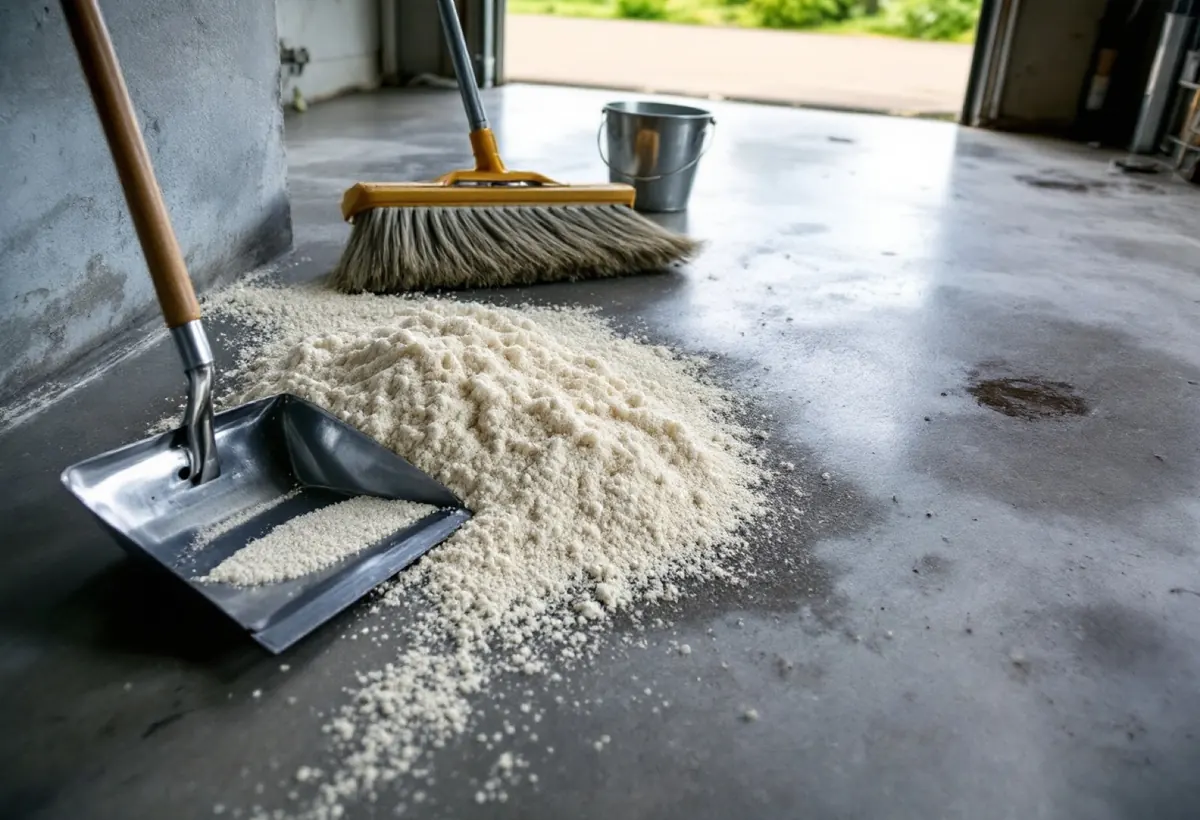
- Cover the spill with absorbent: pads, kitty litter, peat moss, sawdust or granular absorbent are on the Ecology list; ICSC 1400 names dry earth, sand or other non combustible material.
- Sweep or scoop it up and double bag it or put it in a 5 gallon bucket, as Ecology describes.
- Take residential spill waste to a household hazardous waste facility. Ecology says small quantities of absorbent that are not soaked may go to a landfill only with the landfill’s approval.
Do not hose the slab: water carries gasoline into the drains that ICSC 1400 and Washington Ecology say it must not reach. If the garage also has damp walls or a musty smell, that is a separate moisture issue covered in mold in the garage.
Why do concrete, wood and carpet keep smelling after the fuel is gone?
The Wisconsin Department of Health Services spells this out for home heating oil, the closest household fuel with published state cleanup guidance: oil that soaks into concrete floors and wooden support beams, or flows into cracks and drains, is harder to clean, and when walls and floors become saturated the only option may be to demolish and remove them. ATSDR notes most chemicals in a surface gasoline release evaporate, but bare concrete and unfinished wood still absorb it.
Wisconsin DHS lists the porous items to remove if they cannot be cleaned: carpeting, clothing, drywall, flooring, furniture and wood. Hard surfaces get soap and hot water. The agency says a spill is not cleaned up until the odor is gone, which should take a few days if the cleanup was done correctly; a smell that lasts longer suggests fuel left in a saturated cinder block or in the soil.
Wisconsin DHS also warns that air fresheners add volatile chemicals and mask the odor you need to track. Solvent odor from paint is covered in how to get rid of paint smell.
Heating oil is not gasoline: what changes when the tank or line leaks?
A heating oil leak is reported to the state, not just cleaned up. The Connecticut DEEP heating oil leak guidance tells residents to report any leak from a tank or piping to the DEEP Emergency Response and Spill Prevention Division at 866-337-7745. When a leaking tank comes out, the guidance calls for more digging if soil samples exceed 500 ppm (mg/kg) of extractable petroleum.
Wisconsin DHS sets one gallon as the line: under a gallon is usually a homeowner cleanup with cat litter or sawdust; over a gallon calls for a hazardous materials cleanup company, a report to the Department of Natural Resources hotline at 800-943-0003 and a call to the fire department about explosion risk. It also says to close basement cold air returns and heat registers.
On cost, Connecticut DEEP says to ask your insurance agent whether the release is covered, and notes the state requires heating oil dealers to carry environmental damage insurance; the Connecticut Insurance Department takes questions at 1-800-203-3447.
For contractors: what does OSHA and NIOSH guidance require before entering a gasoline odor job?
Meter before working. Per the OSHA rule in 29 CFR 1910.146, flammable vapor above 10 percent of the LFL makes a permit space atmosphere hazardous, so a crawl space or pit at or above 1,400 ppm of gasoline vapor is a no entry reading until it is ventilated. The NIOSH Pocket Guide lists no numeric exposure limit for gasoline (its REL refers to Appendix A, and OSHA has no PEL), and recommends a pressure demand self contained breathing apparatus at any detectable concentration.
NIOSH classes gasoline as a Class IB flammable liquid with a flash point of minus 45 F. Use explosion proof electrical equipment and grounding against static, as ICSC 1400 advises. Wisconsin DHS allows electric fans for fuel oil odor only where the basement is not in danger of exploding, which a meter reading below 10 percent of the LEL documents. The odor side of the job sits in the fire and smoke hub, alongside the burnt smell in the house triage.
Questions people actually ask
What smells can be mistaken for gasoline?
Home heating oil, paint thinners and other solvents are the usual candidates, and EPA’s vapor intrusion page lists household solvents and cleaners alongside gasoline as indoor sources of similar chemicals. Natural gas is different: Connecticut PURA says utilities add mercaptan for a rotten egg smell. If the smell is strong and you cannot tell which it is, treat it as fuel: leave and call 911 from outside.
Why do I keep smelling gasoline when there is none?
First rule out a real source: ask another person to check the room, look in the garage, basement and laundry, and smell clothes and shoes worn while refueling, which ATSDR names as the most likely exposure. If no one else smells it, the NIDCD smell disorders page describes phantosmia, the sensation of an odor that is not there; a physician is the person to ask.
Is it safe to sleep in a house that smells like gasoline?
Not with a strong smell. The Mississippi fire preparedness guidance says to leave, call the fire department from a neighbor’s house and not re-enter until the fire department allows it. For larger fuel oil spills, Wisconsin DHS suggests staying at a hotel or with relatives until cleanup is complete, especially with young children or older adults in the home.
Why do I smell gasoline in my apartment?
Common causes are an attached or under building garage, a neighbor’s stored fuel, or a nearby leaking underground tank. Gasoline vapor is 3 to 4 times as heavy as air per ICSC 1400, so ground floor and basement units notice it first. Call 911 if it is strong, then tell the landlord in writing; for a smell that comes and goes, EPA directs vapor intrusion concerns to the state health department.
Does a gasoline smell go away on its own?
A small surface spill mostly evaporates, per ATSDR, and removing the bagged absorbent removes most of what is left. Wisconsin DHS expects a cleaned up fuel oil odor to clear within a few days; odor that persists longer points to fuel soaked into concrete block, wood or soil, the same pattern Wisconsin DHS describes for heating oil, or to an ongoing source such as a venting can or a fuel line leak.
Sources
- NIOSH Pocket Guide entry for gasoline: NIOSH Pocket Guide to Chemical Hazards, Gasoline (CAS 8006-61-9), National Institute for Occupational Safety and Health, CDC. Retrieved 21 November 2026.
- International Chemical Safety Card 1400: ICSC 1400 Gasoline, International Chemical Safety Cards, International Labour Organization and World Health Organization, card dated October 2001. Retrieved 21 November 2026.
- ATSDR Medical Management Guidelines for gasoline: Medical Management Guidelines for Gasoline, Agency for Toxic Substances and Disease Registry. Retrieved 21 November 2026.
- ATSDR ToxFAQs for automotive gasoline: ToxFAQs for Automotive Gasoline, Agency for Toxic Substances and Disease Registry, page last reviewed 6 May 2014. Retrieved 21 November 2026.
- 29 CFR 1910.146: Permit required confined spaces, definition of hazardous atmosphere, Occupational Safety and Health Administration, Electronic Code of Federal Regulations. Retrieved 21 November 2026.
- 40 CFR 59.611: Evaporative emission requirements for portable fuel containers, US EPA, Electronic Code of Federal Regulations. Retrieved 21 November 2026.
- Mississippi Insurance Department fire preparedness page: Fire Preparedness, Mississippi Insurance Department and State Fire Marshal. Retrieved 21 November 2026.
- Tomball, Texas fire marshal's gasoline page: Gasoline and Propane, Tomball Fire Department Fire Marshal, City of Tomball, Texas. Retrieved 21 November 2026.
- Connecticut PURA natural gas page: What To Do If You Smell Natural Gas, Connecticut Public Utilities Regulatory Authority. Retrieved 21 November 2026.
- Washington Department of Ecology publication 03-08-005: Focus on Small Spill Cleanup, Publication 03-08-005, Washington State Department of Ecology, revised May 2023. Retrieved 21 November 2026.
- Wisconsin Department of Health Services: Air: Home Heating Oil Spills, Wisconsin Department of Health Services. Retrieved 21 November 2026.
- Connecticut DEEP heating oil leak guidance: Guidance for Residential Home Heating Oil Tank Leaks, Connecticut Department of Energy and Environmental Protection. Retrieved 21 November 2026.
- EPA's vapor intrusion page: What is Vapor Intrusion?, US EPA, last updated 21 August 2026. Retrieved 21 November 2026.
- EPA's petroleum vapor intrusion page: Petroleum Vapor Intrusion, US EPA Office of Underground Storage Tanks. Retrieved 21 November 2026.
- EPA 510-R-15-001: Technical Guide for Addressing Petroleum Vapor Intrusion at Leaking Underground Storage Tank Sites, US EPA Office of Underground Storage Tanks, June 2015. Retrieved 21 November 2026.
- NIDCD smell disorders page: Smell Disorders, National Institute on Deafness and Other Communication Disorders, NIH. Retrieved 21 November 2026.
The garage vapor table and the chart’s 10% line are calculations from the cited NIOSH and OSHA figures, shown with their assumptions. How we read and calculate: methodology. This page describes published guidance; for a strong fuel odor the first call is 911. Other household odors: fish smell in the house.