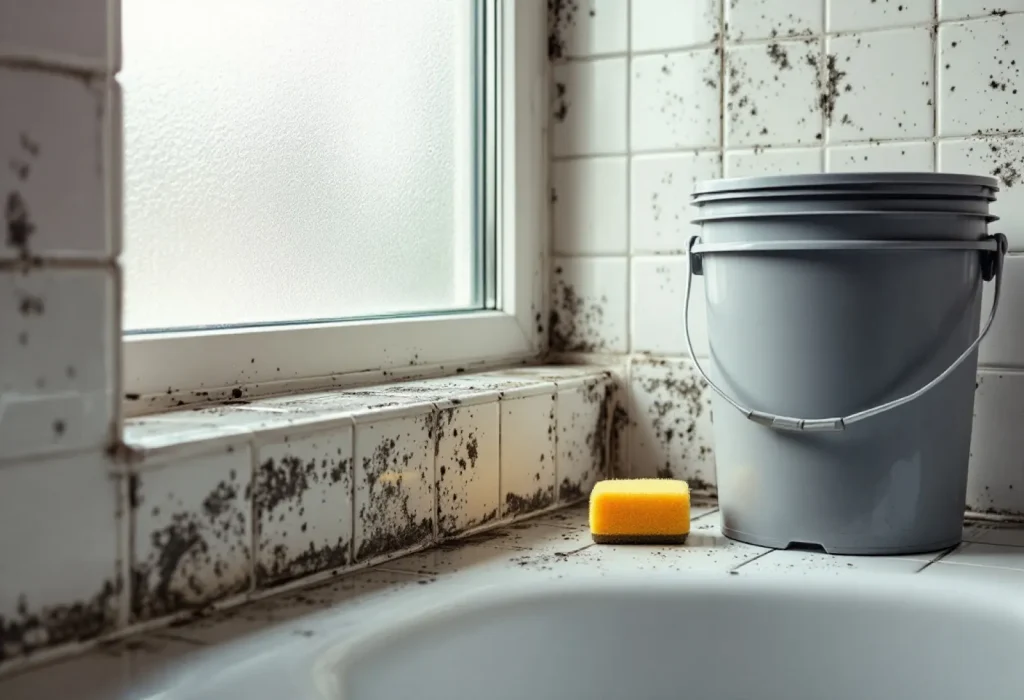
The short answer
Can you mix bleach and vinegar to kill mold? No. Vinegar is an acid, and acid added to sodium hypochlorite bleach releases chlorine gas, which the National Capital Poison Center and New Jersey’s health department both warn about. The mix does not kill mold better. EPA recommends scrubbing hard surfaces with detergent and water, and says bleach is not a routine mold step.
Why does vinegar turn bleach into chlorine gas?
Bleach is a balance, and acid tips it. Per the ATSDR Toxicological Profile for Chlorine, chapter 4, chlorine in water sits in equilibrium between three forms: dissolved chlorine gas (Cl2), hypochlorous acid (HOCl) and the hypochlorite ion (OCl). Which form wins depends on pH. Sodium hypochlorite bleach is sold at pH 11 to 13, per the same chapter, where nearly all of it is hypochlorite and almost none can leave the liquid as gas.
Vinegar is 4 to 7% acetic acid in US white distilled products, per the National Capital Poison Center vinegar page, and it pulls the pH down. ATSDR states that adding acid to a hypochlorite solution “can drive the pH low enough to result in the release of dangerous amounts of molecular chlorine gas.” The CDC MMWR report on bleach mixed with a 4% phosphoric acid cleaner puts it more plainly: when sodium hypochlorite and an acid are mixed, chlorine gas and water are released.
Two numbers from the chart do the explaining. Hypochlorous acid and hypochlorite split 50 to 50 at pH 7.54, the value that follows from ATSDR’s K2. Below that, the acid form takes over, and at the chart’s assumed chloride level the dissolved gas overtakes it near pH 2.4. Vinegar does not add a new killing agent. It converts the bleach toward a form that escapes into the room.
How much of the bleach becomes chlorine gas at pH 2 to 7?
The share depends on two things: how acidic the mix gets and how much chloride is already dissolved, because chloride drives the reaction back toward Cl2. The table runs the ATSDR Toxicological Profile for Chlorine equations at three chloride levels. They are assumptions chosen to bracket a range, not measurements of a bottle or a spray mix, which is why the result is shown as a spread.
| Chloride in the mix | pH 2 | pH 3 | pH 4 | pH 5 | pH 6 | pH 7 |
|---|---|---|---|---|---|---|
| 0.01 mol/L chloride | 20% | 2.5% | 0.3% | 0.03% | under 0.01% | under 0.01% |
| 0.1 mol/L chloride | 72% | 20% | 2.5% | 0.3% | 0.02% | under 0.01% |
| 1 mol/L chloride | 96% | 72% | 20% | 2.5% | 0.2% | 0.02% |
Read across any row and the pattern holds: each step of one pH unit downward multiplies the gas share by roughly 10 until it levels off. At 0.1 mol/L chloride, the calculation gives 0.02% at pH 6 and 20% at pH 3, per the ATSDR constants. No household mix needs a lab to reach the acid end. ATSDR’s own example is bleach with acid drain cleaner, and the cases in the MMWR report involved a 4% phosphoric acid product.
The calculation stops at the liquid. Once Cl2 forms faster than it can stay dissolved, it leaves as gas, and the CDC chlorine fact sheet, dated 11 June 2026, says chlorine gas is heavier than air and sinks to lower areas. The relative gas density in the NIOSH Pocket Guide entry for chlorine is 2.47. A shower stall or a closed bathroom keeps it close to the person doing the scrubbing.
Which other cleaners make a toxic gas with bleach on a moldy wall?
Vinegar is one acid among several under the sink. The EPA-accepted Clorox label 5813-120 carries the governing rule in its physical and chemical hazards panel: “Mix only with water according to label directions,” because mixing with ammonia, acids or organic matter may release hazardous gases. The table pairs each common mold-cleaning partner with the product named by a health agency.
| Combination | What forms | Source |
|---|---|---|
| Bleach + vinegar | Chlorine gas; NJ adds chloramine vapors | National Capital Poison Center vinegar page; New Jersey Department of Health hazard alert |
| Bleach + lemon juice | Chlorine gas from the natural acids | New Jersey Department of Health hazard alert |
| Bleach + toilet bowl or drain cleaner | Chlorine gas (many are acids) | National Capital Poison Center chlorine gas page; CDC MMWR report; New Jersey Department of Health hazard alert |
| Bleach + mildew stain remover | Chlorine gas, per the alert | New Jersey Department of Health hazard alert |
| Bleach + ammonia or ammonia glass cleaner | Chloramine gas (monochloramine, dichloramine) | National Capital Poison Center chlorine gas page; CDC MMWR report; EPA's Brief Guide to mold |
| Bleach + rubbing alcohol (isopropyl) | Chloroform | New Jersey Department of Health hazard alert |
| Bleach + hydrogen peroxide | No gas named in the sources read; the label rule still forbids it | EPA-accepted Clorox label 5813-120: mix only with water |
| Vinegar + hydrogen peroxide | Peracetic acid | New Jersey Department of Health hazard alert |
| Bleach + plain water, per label | Nothing hazardous; this is the labelled use | EPA-accepted Clorox label 5813-120 |
Ammonia gets its own warning on every federal mold page: EPA's Brief Guide to mold says never mix chlorine bleach with cleaners that contain ammonia, and the hidden source is often a glass cleaner or a detergent. The full ammonia picture, including EPA registrations, is on our does ammonia kill mold page.
The CDC MMWR report explains why labels alone do not catch every case. CPSC requires a no-acid warning on consumer hypochlorite products of 5% or more, the report says, but in the California cases the phosphoric acid cleaner carried no warning about bleach until after the incidents. Check both labels, not only the bleach.
Is it safe to spray vinegar first, then bleach, on the same patch?
Not while any vinegar is still on the surface. The reaction does not care about the order of the bottles, only whether acid and hypochlorite end up in the same film of liquid. Vinegar left wet on grout or drywall paper is an acid layer, and bleach sprayed onto it is the acid and hypochlorite mixture that ATSDR and the National Capital Poison Center chlorine gas page describe. A Quora question in the current results describes exactly this sequence on a bathroom ceiling with no window.
No agency publishes a safe waiting time between the two, and this page does not invent one. What the EPA-accepted Clorox label 5813-120 does publish is a sequence for its own product: pre-wash the surface, keep the bleach solution visibly wet for at least 10 minutes, then rinse well and air dry. A plain water rinse, then a dry surface, before the bleach step removes the acid the reaction needs.
The simpler fix is to pick one. Both chemicals answer the same question badly: EPA's bleach and mold page, last updated 8 September 2026, says dead mold may still cause allergic reactions, so dead mold must still be removed. Stacking a second chemical on a patch that already needs scrubbing adds a hazard and no removal.
Is bleach or vinegar better for mold on tile, drywall or carpet?
On a hard, nonporous surface, bleach is the one with a federal label. Under 40 CFR 152.15, any product whose seller claims, states or implies it can be used as a pesticide must be registered, and the EPA-accepted Clorox label 5813-120 carries a mold and mildew direction for hard, nonporous surfaces with a 10 minute wet time. Vinegar sold for the kitchen makes no pesticide claim, so it has no reviewed mold direction to follow. The evidence on each chemical is set out on our does bleach kill mold page and our does vinegar kill mold page.
| Surface | Bleach (label) | Vinegar | EPA cleanup advice |
|---|---|---|---|
| Glazed tile, glass, sealed countertop | Clorox 5813-120 carries a mold direction for hard, nonporous surfaces | No reviewed kill claim on a kitchen bottle | Detergent and water, then dry |
| Painted drywall, ceiling tile | No porous direction on the label | No reviewed claim | May have to be thrown away if moldy |
| Carpet, upholstery | No porous direction on the label | No reviewed claim | May have to be thrown away if moldy |
On porous material, neither wins. EPA's Mold Cleanup in Your Home page says absorbent or porous materials such as ceiling tiles and carpet may have to be thrown away if they become moldy. Two ranking pages get this wrong in opposite directions. MedicineNet's bleach or vinegar article, reviewed 11 November 2025, says vinegar suits carpets and upholstery and that EPA approves vinegar, and calls 1 cup of bleach per gallon a 1:10 ratio. A gallon is 16 cups, so that mix is 1:16, and the dilutions by bottle strength are worked out on our bleach to water ratio page.
The other ranking page, a remediation company's myth-buster post from 22 July 2018, rejects both chemicals but never mentions that mixing them makes chlorine gas, and cites no test for its claims. Neither page answers the question searchers typed.
What does EPA tell homeowners to use instead of either chemical?
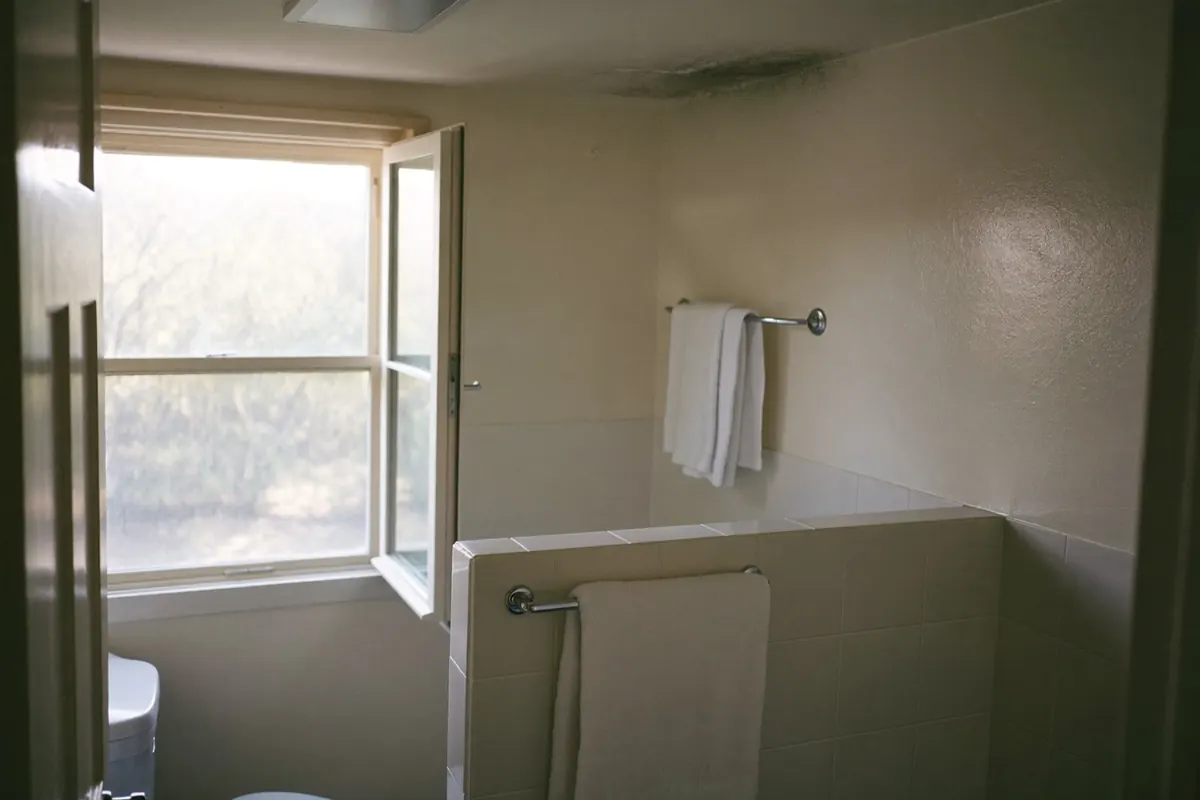
Detergent and water. EPA's Brief Guide to mold, last updated 18 February 2026, says to scrub mold off hard surfaces with detergent and water and dry completely, and to dry water-damaged areas within 24 to 48 hours. It also says a biocide such as bleach is not recommended as a routine practice during mold cleanup, with exceptions such as when immune-compromised people are present. CDC's mold clean-up page lists bleach or dish detergent for cleaning mold at home, and repeats never to mix bleach with ammonia or any other cleanser.
EPA’s size line matters more than the chemical choice. Below about 10 square feet, per EPA's Mold Cleanup in Your Home page, most people can handle the job themselves; above it, or after heavy water damage, EPA points to its remediation guidance. Step-by-step homeowner methods, with the gloves and N95 that CDC lists, are on our DIY mold remediation page. Why soap alone can be enough is covered on our does dish soap kill mold page.
What should you do if bleach and vinegar already mixed in a closed bathroom?
Leave the room first. The National Capital Poison Center chlorine gas page says that after breathing chlorine gas you should leave the area right away and get fresh air, and the CDC chlorine fact sheet notes the gas sinks, so open a window and the door from outside the space rather than staying low inside it. Do not add another chemical to neutralize the puddle.
Then call Poison Control at 1-800-222-1222, the number given by both the National Capital Poison Center chlorine gas page and the New Jersey Department of Health hazard alert. It is free and open 24 hours, per the Poison Center, which also says to seek medical attention for trouble breathing. The exposure numbers below show why a nose is a poor gauge: chlorine is smelled at a fraction of the workplace ceiling, per ATSDR and NIOSH.
| Benchmark | Chlorine in air | Source |
|---|---|---|
| Odor threshold in air | 0.2 to 0.4 ppm | ATSDR Toxicological Profile for Chlorine |
| NIOSH recommended limit | 0.5 ppm ceiling, 15 minutes | NIOSH Pocket Guide entry for chlorine |
| OSHA permissible limit | 1 ppm ceiling | NIOSH Pocket Guide entry for chlorine |
| Immediately dangerous to life or health | 10 ppm | NIOSH Pocket Guide entry for chlorine |
Out of scope: this page covers chemistry, labels and cleanup steps. For health questions after an exposure, call 1-800-222-1222 or see the CDC chlorine fact sheet, and for mold and health see CDC's mold clean-up page.
Questions people actually ask
What is the best bleach mixture to kill mold?
Bleach and plain water only, at the strength printed on your own bottle. The EPA-accepted Clorox label 5813-120, a 7.5% sodium hypochlorite product, gives a mold and mildew direction for hard, nonporous surfaces with at least 10 minutes visibly wet, then a rinse. CDC caps any mix at 1 cup per gallon. Adding vinegar, ammonia or another cleaner is never part of a labelled mixture.
What is the best homemade mold killer?
EPA’s answer is not a killer at all: scrub hard surfaces with detergent and water and dry completely, per its Brief Guide, last updated 18 February 2026. EPA says killing is not enough because dead mold may still cause allergic reactions, so it has to be removed anyway. Fix the moisture source within 24 to 48 hours or the growth returns.
Does vinegar neutralize bleach?
No. It acidifies it, which is the problem. ATSDR’s chlorine profile shows that lowering the pH of hypochlorite shifts it toward hypochlorous acid and then dissolved chlorine gas, and states that adding acid to bleach can release dangerous amounts of chlorine. Rinse spilled bleach with plain water instead, and ventilate.
Can you mix bleach and dish soap for mold?
Only if the soap contains no ammonia, and the bleach label still says mix only with water. EPA warns against bleach with detergents that contain ammonia, which makes chloramine gas. The safer order is to wash with detergent, rinse, and use diluted bleach as a separate step on hard, nonporous surfaces, per the Clorox 5813-120 directions.
Can you mix vinegar and hydrogen peroxide for mold?
Not in the same bottle. The New Jersey Department of Health lists hydrogen peroxide plus vinegar among its dangerous combinations because together they form peracetic acid (CH3CO3H), a corrosive chemical. If you use both on one patch, rinse with plain water and let the surface dry between them so the two never share a wet film.
Sources
- ATSDR Toxicological Profile for Chlorine, Chapter 4, Chemical and Physical Information, Agency for Toxic Substances and Disease Registry, US CDC. Retrieved 9 November 2026.
- CDC MMWR report, Chlorine Gas Toxicity from Mixture of Bleach with Other Cleaning Products, California, US CDC. Retrieved 9 November 2026.
- National Capital Poison Center chlorine gas page, Chlorine Gas, National Capital Poison Center. Retrieved 9 November 2026.
- National Capital Poison Center vinegar page, Vinegar, National Capital Poison Center. Retrieved 9 November 2026.
- New Jersey Department of Health hazard alert, Mixing Bleach with Other Cleaning Products Can Be Deadly, New Jersey Department of Health. Retrieved 9 November 2026.
- CDC chlorine fact sheet, Chlorine, US CDC, dated 11 June 2026. Retrieved 9 November 2026.
- NIOSH Pocket Guide entry for chlorine, Chlorine, NIOSH Pocket Guide to Chemical Hazards. Retrieved 9 November 2026.
- EPA-accepted Clorox label 5813-120, Clorox Disinfecting Bleach, EPA Reg. No. 5813-120, label dated 8 July 2024 in EPA’s label system. Retrieved 9 November 2026.
- EPA's Brief Guide to mold, A Brief Guide to Mold, Moisture and Your Home, US EPA, last updated 18 February 2026. Retrieved 9 November 2026.
- EPA's Mold Cleanup in Your Home page, Mold Cleanup in Your Home, US EPA, last updated 4 June 2026. Retrieved 9 November 2026.
- EPA's bleach and mold page, Should I use bleach to clean up mold?, US EPA, last updated 8 September 2026. Retrieved 9 November 2026.
- CDC's mold clean-up page, Mold Clean Up Guidelines and Recommendations, US CDC, dated 16 February 2024. Retrieved 9 November 2026.
- 40 CFR 152.15, Pesticides requiring registration, Legal Information Institute, Cornell Law School. Retrieved 9 November 2026.
- MedicineNet's bleach or vinegar article, Is Bleach or Vinegar Better to Kill Mold?, MedicineNet, reviewed 11 November 2025, read as a ranking page. Retrieved 9 November 2026.
- a remediation company's myth-buster post, Myth Buster: Bleach and Vinegar Kill Mold, Moldtech Inc., 22 July 2018, read as a ranking page. Retrieved 9 November 2026.
- The speciation chart and the chlorine share table are our calculation from ATSDR’s published constants at stated chloride assumptions. Our methodology sets out the standing rules, and more mold pages are on the mold hub.
Follow the label of the product you use. Never mix bleach with anything but water.